IBM Milestone Brings MRI Technology to the Nanoscale

Achievement marks significant advance toward the imaging of molecular structures

24-Apr-2007

IBM today announced that researchers at its Almaden Research Center have demonstrated magnetic resonance imaging (MRI) techniques to visualize nanoscale objects. This technique brings MRI capability to the nanoscale level for the first time and represents a major milestone in the quest to build a microscope that could "see" individual atoms in three dimensions, according to IBM.

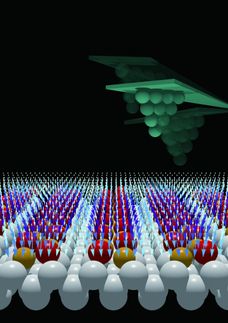
Using Magnetic Resonance Force Microscopy (MFRM), IBM researchers have demonstrated two-dimensional imaging of objects as small as 90 nanometers, a key advancement on the path of 3D imaging at the atomic scale. Such imaging could ultimately provide a better understanding of how proteins function, which in turn may lead to more efficient drug discovery and development.

MFRM offers imaging sensitivity that is 60,000 times better than current magnetic resonance imaging (MRI) technology. MFRM uses what is known as force detection to overcome the sensitivity limitations of conventional MRI to view structures that would otherwise be too small to be detected.

To achieve this, the research team developed specialized magnetic tips for their microscope, optimizing their ability to manipulate and detect the very weak magnetism of atomic nuclei. Conventional medical MRI typically operates on a scale at least 1,000 times coarser; even the most specialized MRI microscopy is limited to about 3 micrometers, or 3,000 nanometers.

This achievement could eventually have major impact on the study of materials - ranging from proteins and pharmaceuticals to integrated circuits - for which a detailed understanding of the atomic structure is essential. Knowing the exact location of specific atoms within tiny nanoelectronic structures, for example, would enhance designers' insight into manufacture and performance. The ability to directly image the detailed atomic structure of proteins would aid the development of new drugs.

Original publication: H. J. Mamin, M. Poggio, C. L. Degen, D. Rugar; "Nuclear magnetic resonance imaging with 90-nm resolution."; Nature Nanotechnology 2007.
Other news from the department science

Most read news

More news from our other portals

Last viewed contents

Creating crystals from gold - Crystals of an antibody peptide complex related to AIDS research

Creating crystals from gold - Crystals of an antibody peptide complex related to AIDS research

Next generation solar fuels: How a record-breaking copper catalyst converts CO₂ into liquid fuels - Researchers have made real-time movies of copper nanoparticles as they evolve to convert carbon dioxide and water into renewable fuels and chemicals

Next generation solar fuels: How a record-breaking copper catalyst converts CO₂ into liquid fuels - Researchers have made real-time movies of copper nanoparticles as they evolve to convert carbon dioxide and water into renewable fuels and chemicals

Enzyme shown to regulate inflammation and metabolism in fat tissue

Enzyme shown to regulate inflammation and metabolism in fat tissue

Transplantation Safety: New Virus Detected Using Genome Sequencer Technology

MolecularHealth Partners with GATC Biotech for Genetic Sequencing Technology and Expertise

Ångström-Resolution Fluorescence Microscopy - This innovation is poised to usher in a paradigm shift in our approach to study biological systems with thus far unprecedented detail

Ångström-Resolution Fluorescence Microscopy - This innovation is poised to usher in a paradigm shift in our approach to study biological systems with thus far unprecedented detail

Study gives clues to increasing X-rays' power - 3-D, real-time X-ray images may be closer to reality

Roche Diagnostics Licenses the Technology used for the LightCycler System to BIOTECON

Track and trace members of the plant microbiome with DNA barcodes

Track and trace members of the plant microbiome with DNA barcodes

Innovative microscopy technique reveals secrets of lipid synthesis inside cells - Two-color infrared photothermal microscopy (2C-IPM) opens new avenues for long-term study of lipid metabolism in living cells

Innovative microscopy technique reveals secrets of lipid synthesis inside cells - Two-color infrared photothermal microscopy (2C-IPM) opens new avenues for long-term study of lipid metabolism in living cells

Millipore Names New VP of Life Science Business Unit - John Sweeney to focus on technology development and partnerships

The deadly toxin acrolein has a useful biological role