New rapid diagnostics could reduce antibiotic consumption for urinary tract infections
Fast, precise and cost-effective method developed to analyze disease-causing bacteria and their susceptibility to antibiotics
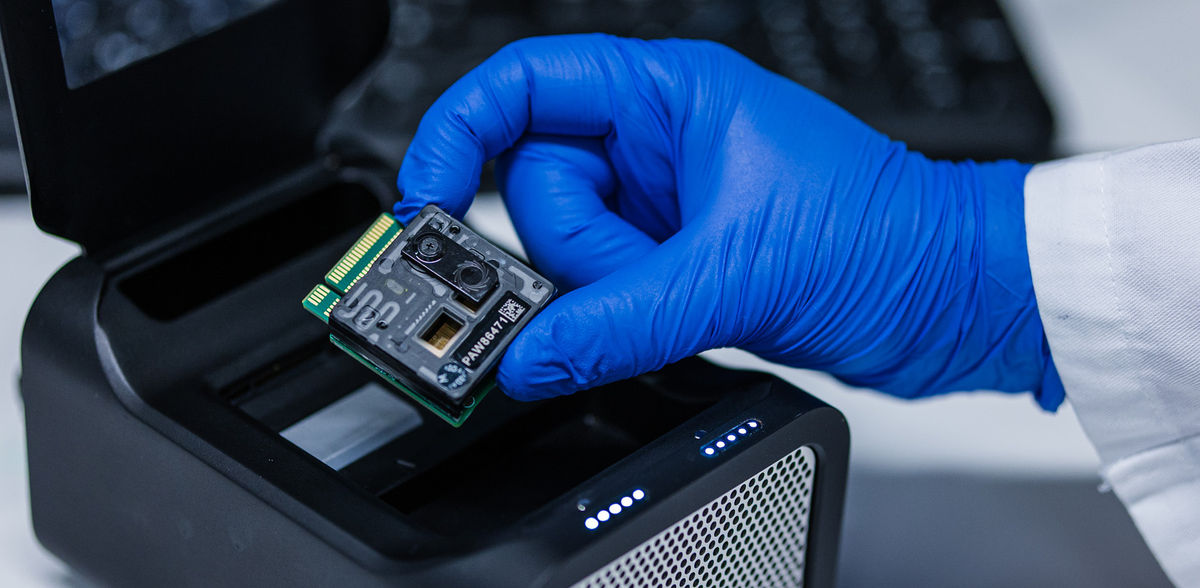
urinary tract infections are one of the most common reasons for prescribing antibiotics. As conventional pathogen identification in the laboratory usually takes two to three days, initial treatment is often carried out with broad-spectrum antibiotics. However, this unspecific use promotes the development of multi-resistant germs, against which conventional agents are increasingly ineffective. An international team of researchers from Justus Liebig University Giessen (JLU), the German Center for Infection Research (DZIF), Inland University Norway, the University of Oslo (Norway) and Aarhus University (Denmark) has now developed an innovative, cost-effective and precise method for obtaining diagnostic information from patient samples in the shortest possible time. The results have been published in the journal "Nature Communications".
Every year, around 405 million people worldwide are affected by urinary tract information. Doctors currently generally use bacterial cultures to detect an infection. This process usually takes two to four days or even longer before the results are available. The new method works without the need for a time-consuming bacterial culture: The researchers have combined direct sequencing of all DNA material in patient samples with real-time data analysis. "This so-called metagenomic sequencing enables precise pathogen and antibiotic resistance profiling in complicated urinary tract infections in around four hours," explains PD Dr. Torsten Hain, Acting Head (Research and Teaching) of the Institute of Medical Microbiology at JLU. "The method is also extremely reliable: it detects the disease-causing bacterium in 99 percent of cases."
PD Dr. Can Imirzalioglu, Acting Head of the Institute (Diagnostics/Clinical Microbiology) of the Institute of Medical Microbiology at JLU, says: "The common practice is that large quantities of broad-spectrum antibiotics are used while doctors wait for the results of the laboratory diagnostic confirmation of the pathogen and its sensitivity. We can prove that our method can replace this practice and has several advantages: it means better treatment for patients by optimizing the use of antibiotics and avoiding unnecessary treatments. Last but not least, the risk of resistance development is reduced."
The new method can predict with 90 percent accuracy which antibiotic the respective pathogens are sensitive to - i.e. which antibiotic will be effective. This is of great importance, as antibiotic resistance is increasing worldwide and jeopardizes an important tool of modern medicine. The reduced and targeted use of antibiotics is therefore essential.
The study also shows that the new method can be up to 30 percent more cost-effective than the alternatives. "Cost efficiency is of great importance when introducing new technologies," emphasizes Prof. Dr. Florian Wagenlehner, Director of the Clinic for Urology, Paediatric Urology and Andrology at JLU and the University Hospital Giessen and Marburg (UKGM) at the Giessen site. "Our method is an affordable solution for hospitals and clinics. It also saves costs through shorter hospital stays."
Note: This article has been translated using a computer system without human intervention. LUMITOS offers these automatic translations to present a wider range of current news. Since this article has been translated with automatic translation, it is possible that it contains errors in vocabulary, syntax or grammar. The original article in German can be found here.
Original publication
Anurag Basavaraj Bellankimath, Sverre Branders, Isabell Kegel, Jawad Ali, Fatemeh Asadi, Truls E. Bjerklund Johansen, Can Imirzalioglu, Torsten Hain, Florian Wagenlehner, Rafi Ahmad; "Metagenomic sequencing enables accurate pathogen and antimicrobial susceptibility profiling in complicated UTIs in approximately four hours"; Nature Communications, Volume 17, 2025-12-3

Other news from the department science