More sustainability for rapid medical tests
"BioMat" project researches technologies for the use of biocompatible materials in point-of-care diagnostics
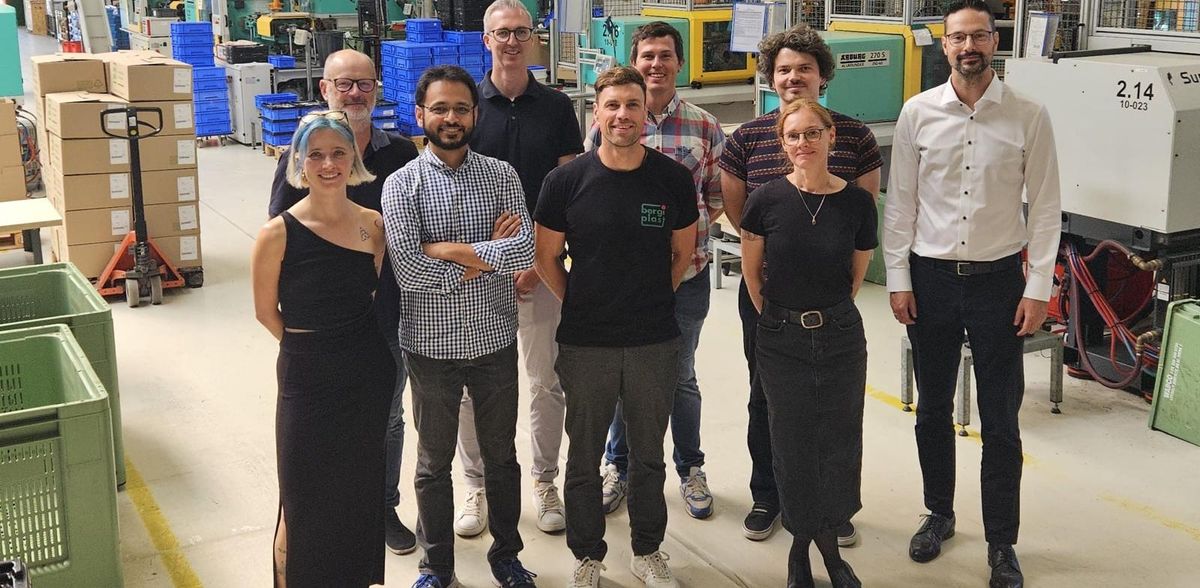
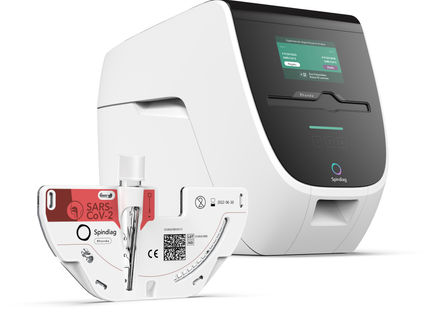
Millions of tons of additional plastic waste have been generated worldwide during the coronavirus pandemic. In addition to masks, protective clothing and vaccination kits, rapid tests played a significant role in this. Diagnostic tests are typically made from petroleum-based plastics and end up in the trash after a single use. Tests made from bio-based compostable materials offer a more environmentally friendly and resource-saving alternative. In the "BioMat" project, the Dresden University of Applied Sciences (HTWD) is working with partners to research the basis for the use of sustainable materials in medical diagnostics. A novel point-of-care test (POCT) for the detection of hepatitis D serves as an application example.
The hepatitis D virus (HDV) triggers chronic liver inflammation, which can cause liver cirrhosis and increase the risk of liver cancer. POCTs, which also work in places without laboratory access, could quickly identify infected persons and enable HDV diagnostics even in countries with limited medical infrastructure.
Biobased base material
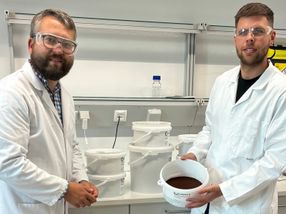
The interdisciplinary joint project is divided into two sub-areas: the development of a bio-based base material and its manufacturing process, and the development of a rapid test for diagnosing HDV infection. "We at HTW Dresden are primarily contributing our experience in the field of bioplastics research and sensor development," explains project manager Marc-Peter Schmidt, Professor of Design and Technology at the Faculty of Electrical Engineering. "The demands on the material are very high. We need a surface that can be easily micro-structured and components that are durable and stable on the one hand and completely biodegradable under certain conditions on the other."
After investigating various material combinations, polybutylene succinate (PBS) was identified as a suitable material. PBS can be obtained from plant starch, is easy to process, stable and storable and is almost completely degraded in industrial composting at 60 degrees Celsius and high humidity within 90 days. The decomposition process even takes place in landfill or in the open air, but then takes longer.
Electronics in microstructure
The components for rapid tests are manufactured using the injection molding process, in which the material is injected as a viscous mass under pressure into a mold. "Together with the Fraunhofer IWU and the Saxon industrial companies Bergi-Plast and Otto Injection Molding, we have already succeeded in optimizing the standard process for processing PBS so that the necessary moulding accuracy is achieved," says project team member Matthieu Fischer. "We are currently investigating how electrical functional structures can be applied to the base material, which will play a role in later applications. In contrast to the hepatitis D test, for example, electrical sensors are used in mobile performance diagnostics in sport."
The researchers use thick-film technology to apply the circuit design, whose structures measure just a few micrometers. This is a type of screen printing process in which pastes are applied in layers through a fine grid to form the electrical circuits. Sensors can be produced easily and cost-effectively using this technique. Because the electronics of the test kits also need to be biocompatible, Matthieu Fischer is experimenting with various sustainable pastes. Using a test structure, he is examining their suitability and the technical requirements for manufacturing the very small and high-precision structural details.
Development of the reagents
The biological reagents for virus detection are being researched and developed in close collaboration between Roboscreen and the Fraunhofer IZI. The Fraunhofer IZI is contributing its know-how in antigen production and Roboscreen its expertise in the development and production of reagents and tests for laboratory diagnostics. Both are also familiar with the regulatory aspects and approval procedures for medical products.
There are still numerous hurdles to overcome before compostable or recyclable biomaterials can be used in diagnostics. In addition to medical studies, this primarily involves the removal of regulatory barriers. "At present, medical waste such as used rapid tests must be sent for thermal recycling, especially if they contain blood. It is also not permitted to reuse the material by melting it down," says Marc-Peter Schmidt. "In view of the large quantities of waste generated here, the substitution of petroleum-based diagnostic products is urgently needed."
The project aims to pave the way for inexpensive, mass-produced rapid test systems made from biodegradable plastics that can be used worldwide - not only for HDV tests, but also for other diagnostic applications.
Under the leadership of HTW Dresden, the following companies are involved in the BioMat research project:
- Bergi-Plast GmbH, Bad Gottleuba-Berggießhübel
- Otto Injection Molding GmbH & Co. KG, Niederwiesa
- Roboscreen GmbH, Leipzig
- Fraunhofer Institute for Machine Tools and Forming Technology IWU, Chemnitz
- Fraunhofer Institute for Cell Therapy and Immunology IZI, Leipzig
Note: This article has been translated using a computer system without human intervention. LUMITOS offers these automatic translations to present a wider range of current news. Since this article has been translated with automatic translation, it is possible that it contains errors in vocabulary, syntax or grammar. The original article in German can be found here.
Other news from the department science














Most read news






More news from our other portals























See the theme worlds for related content
Topic world Diagnostics
Diagnostics is at the heart of modern medicine and forms a crucial interface between research and patient care in the biotech and pharmaceutical industries. It not only enables early detection and monitoring of disease, but also plays a central role in individualized medicine by enabling targeted therapies based on an individual's genetic and molecular signature.
Topic world Diagnostics
Diagnostics is at the heart of modern medicine and forms a crucial interface between research and patient care in the biotech and pharmaceutical industries. It not only enables early detection and monitoring of disease, but also plays a central role in individualized medicine by enabling targeted therapies based on an individual's genetic and molecular signature.