Scientists open doors to diagnosis of emphysema
EMBL development may provide powerful new test for inflammatory lung diseases
Chronic inflammatory lung diseases like chronic bronchitis and emphysema are a major global health problem, and the fourth leading cause of death and disability in developed countries, with smoking accounting for 90% of the risk for developing them. Work by scientists at the European molecular biology Laboratory (EMBL) and its Molecular medicine Partnership Unit (MMPU) with the University of Heidelberg, Germany, has shed new light on the underlying disease process of emphysema using a technique which could in future be adapted for use in diagnosis. The study is published in Nature chemical biology .
The researchers present a new strategy for testing the activity of MMP12, an enzyme known to be involved in the development of emphysema. Emphysema is characterised by the damage and destruction of the alveoli, the tiny air-sacs of the lungs that are crucial for respiration and uptake of oxygen from the air.
Cigarette smoke and other irritants activate immune cells, like macrophages, in the lungs to destroy the foreign material, and chronic exposure causes inflammation. MMP12 is an enzyme secreted by macrophages which usually helps them to break down the extracellular matrix (the complex network of proteins and fibers that surround and support the cells of the body), a process important for normal wound healing. However, over-stimulation of macrophages by irritants leads to build up of excess MMP12, which starts to damage the delicate structure of the small airspaces of the lungs, eventually leading to emphysema.
"We developed a tool which, for the first time, allows us to study MMP12 activity in specific cells, as if we were actually looking inside the lungs," says Carsten Schultz, whose group carried out the research at EMBL.
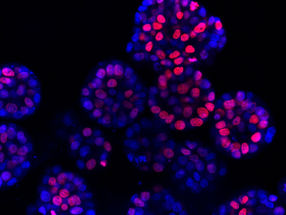
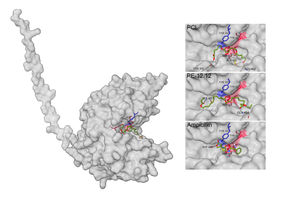
The researchers designed a special fluorescent probe that essentially allows MMP12 activity in macrophages to be quantified by the amount of fluorescence they take up. Applying this test to samples of lung cells from a mouse model of acute lung inflammation showed that MMP12 activity in macrophages was indeed increased.
Although the study was performed in mice, the researchers hope that in future it will be possible to adapt the test for use in patients. "It would allow us to use MMP12 as a biomarker to monitor disease evolution and the risk of emphysema formation. It could also serve to examine the response to therapeutic interventions in patients with inflammatory lung diseases," says Marcus Mall, group leader at the Children's Hospital at the University of Heidelberg.
The EMBL and University researchers hope that the new testing strategy can be extended to other enzymes involved in lung inflammation and that, with a better picture of the processes underlying these diseases, future treatments could be more specific, reducing the side-effects often caused by broad spectrum treatments.
Other news from the department science