Sequencing the cow's genetic code
Researchers from the Universities of Geneva and Lausanne, as well as the Swiss Institute of bioinformatics have been part of a major international project to sequence the bovine (cow) genome, a female Hereford cow named L1 Dominette. Sequencing the bovine genome is now complete, paving the way for research into more sustainable food production, taking into account the needs of an increasing world population. The genome provides a major novel resource to study not only mammalian evolution but also cattle-specific biology, reported an international consortium of researchers in Science. A companion study on the genetic bases of mammalian milk is published in parallel.
The large-scale undertaking mobilized more than 300 scientists from 25 countries over six years. The findings of this study provide the means to select animals with a smaller environmental footprint, particularly animals with less greenhouse gas emissions.
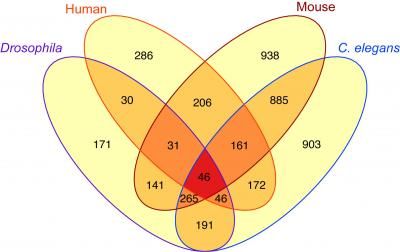
“The bovine genome is more similar to that of humans than mice or rats at all levels, from genomic DNA rearrangements, to shared genes and identity of their protein sequences” said Evgeny Zdobnov, one of the lead analysts from the project and a researcher at the University of Geneva and the Swiss Institute of Bioinformatics. He explains that “the finding that about 75% of human genes are well conserved across mammals is striking. The bovine genome gives us further insight into human biology, allowing us to highlight the loss or gain of certain gene families in hominoids. For example, humans have lost a large number of genes which encode the receptors that recognize molecules surrounding a cell and activate the necessary answers."
The research conducted by the teams of Professor Alexandre Reymond at UNIL and Professors Stylianos E. Antonarakis and Evgeny Zdobnov at UNIGE, has determined that the cow genome is made up of at least 22'000 protein-coding genes and 500 miRNAs, a class of genes that regulates the production of most of these proteins. The majority of the genes in the former group can encode several different proteins through a mechanism called alternative splicing. “The sequencing of the cow genome allowed us to determine that this diversification mechanism is more evolutionary conserved than previously thought”, says Alexandre Reymond, the leader of the analysis.
It appears that chromosomal rearrangements are essential for the acquisition of differences between mammals. In cattle biology, they have an influence on the genes involved in the processes of immunity, lactation, digestion and metabolism. These changes could help explain the amazing ability of cattle to efficiently convert low-quality forage into energy-dense meat and milk, processes long exploited by man.
Other news from the department science