Extending cryo-electron microscopy beyond water
Tohoku University solves the problem of rapidly evaporating organic solvents in sample preparation
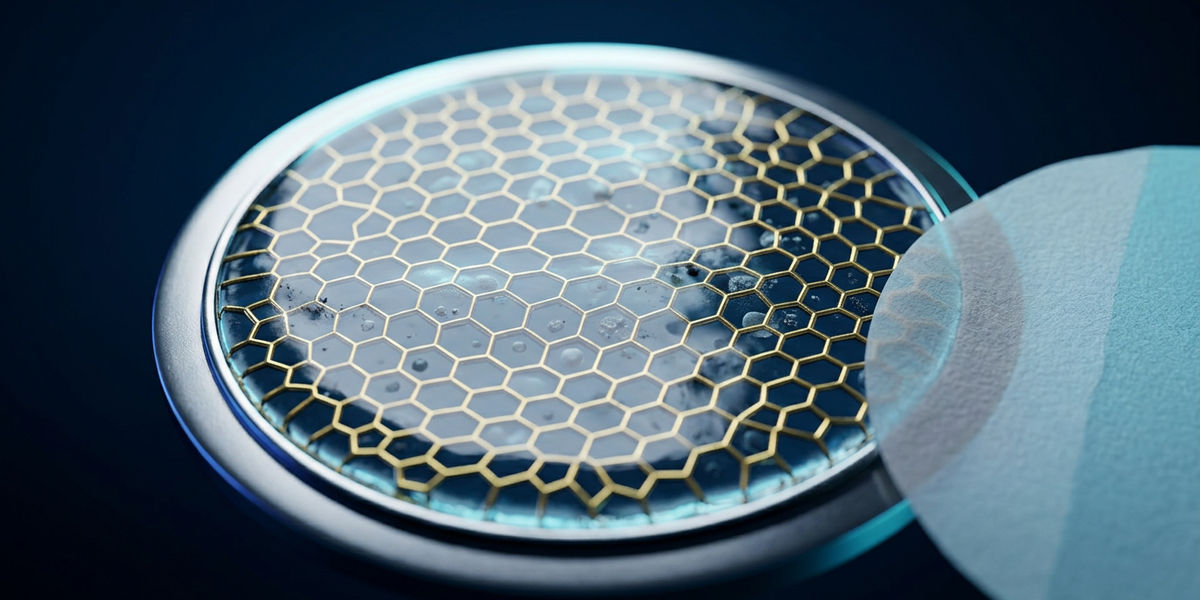
From paints and inks to catalysts and drug-delivery materials, many advanced technologies rely on substances dispersed in organic solvents. Yet directly observing these materials in their native liquid environments has remained a major challenge, limiting scientists' ability to understand how microscopic structures and elemental distributions influence performance. Researchers at Tohoku University have now overcome this barrier by extending cryo-electron transmission microscopy (cryo-TEM) to frozen methanol, opening a new avenue for studying materials under conditions much closer to their real-world operating environments.
Cryo-TEM is widely used to observe biological specimens in their native solution states and has recently been applied to non-biological materials dispersed in water. However, extending the technique to organic solvents has proven difficult because conventional sample-preparation methods were developed for aqueous systems. Rapid evaporation often causes organic solvent films to dry out or become too thick for observation, preventing the reproducible preparation of vitrified thin films suitable for cryo-TEM analysis.
To address this challenge, the research team developed a new sample-preparation technique called "gradient blotting." Rather than blotting the entire TEM grid with filter paper, the method contacts only half of the grid, creating a gradual thickness variation across the grid. This approach consistently produces regions with optimal film thicknesses of approximately 100–300 nanometers for cryo-TEM observation.
The achievement expands the applicability of cryo-TEM beyond water-based systems and provides a new analytical tool for investigating materials under realistic processing conditions. Because organic solvents play central roles in numerous industrial and functional materials, the method could support the development and quality evaluation of paints, inks, coatings, catalysts, and drug-delivery materials.
Original publication
Other news from the department science