Dog Noses and AI Provide New Clues About Long COVID
What dogs can sniff out, mass spectrometry can reveal
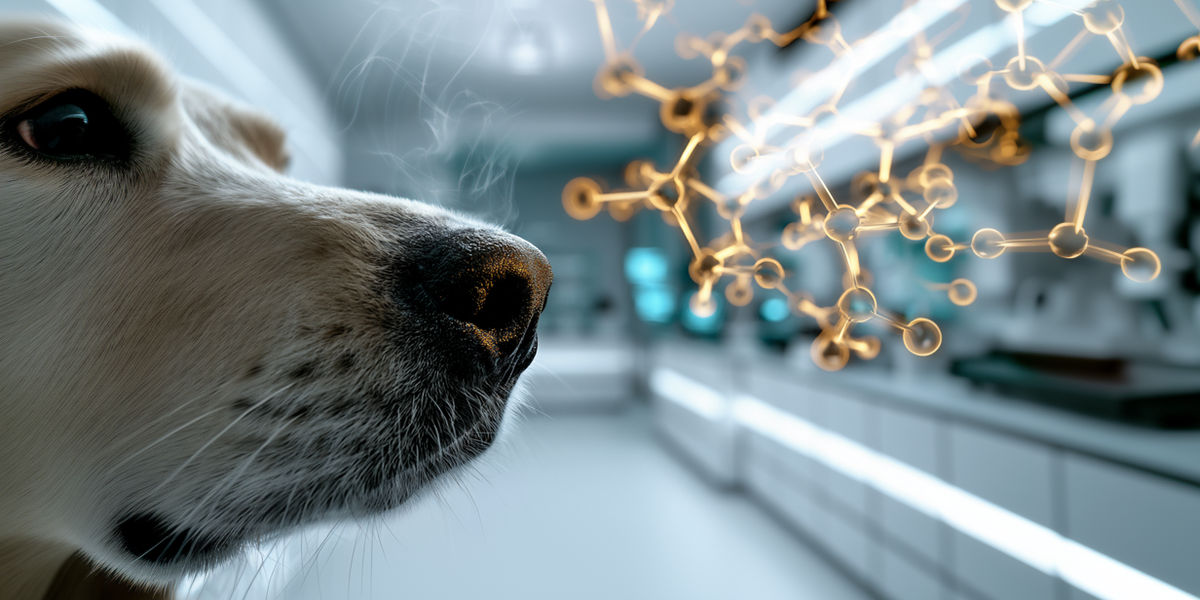
Researchers at the Technical University of Braunschweig, Hannover Medical School, and the University of Veterinary Medicine Hannover were able to demonstrate that post-COVID syndrome can be identified based on olfactory signatures. The results also show a correlation between the assessments of specially trained detection dogs and modern mass spectrometric analyses combined with machine learning methods. In doing so, the researchers provide new insights into disease-specific metabolic patterns and open up new possibilities for innovative diagnostic approaches.
Why can specially trained dogs detect people with Long COVID? And can the odor signatures that the animals perceive also be detected using modern analytical methods and artificial intelligence? These are the questions addressed by the “COVID Dogolomics” research project, a collaboration among researchers from the Technical University of Braunschweig, Hannover Medical School (MHH), and the University of Veterinary Medicine Hannover (TiHo). The research was honored at the closing symposium of the Lower Saxony COVID-19 Research Network (COFONI). The findings will also be presented at the international conference “Metabolomics 2026” in Buenos Aires.
In Search of Objective Markers for Long COVID
Although millions of people worldwide are affected by Long COVID, objective diagnostic methods are still lacking. Symptoms such as chronic fatigue, difficulty concentrating, breathing difficulties, or exercise intolerance also occur in other diseases, making a clear diagnosis difficult.

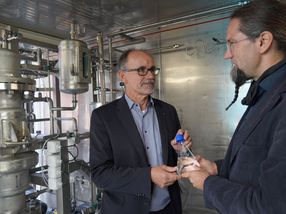
“For many patients, the situation remains difficult to this day because we still do not fully understand the biological processes underlying Long COVID,” says Professor Karsten Hiller, head of the Department of Bioinformatics and Biochemistry at the Technical University of Braunschweig. “That’s why we’re looking for measurable metabolic changes that can help us better characterize the condition and develop more objective diagnostic methods in the long term.”
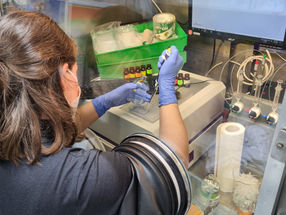
The analytical foundation of the project was established at the Technical University of Braunschweig. In her doctoral thesis, Lea Woyciechowski developed a new method for analyzing volatile metabolites in very small urine samples. The methodology, published in the journal “Metabolites,” forms the basis for the studies now being presented. Using this method, so-called volatile organic compounds (VOCs) can be detected at high resolution and utilized for further analysis using machine learning techniques.
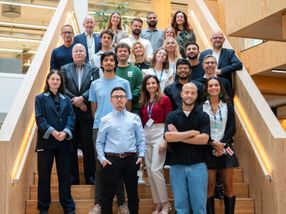
The project brings together the clinical expertise of the Hannover Medical School under Prof. Dr. Georg Behrens, research on medical detection dogs at the University of Veterinary Medicine Hannover under the direction of Prof. Dr. Holger Volk, and the analytical and bioinformatics studies of the Department of Bioinformatics and Biochemistry at the Technical University of Braunschweig under the direction of Prof. Dr. Karsten Hiller. Together, the partners aim to better understand the biological signatures of post-COVID syndrome and, in the long term, to develop new diagnostic approaches.
As part of the project, Hannover Medical School provided patient cohorts and biological samples. The University of Veterinary Medicine Hannover used specially trained detection dogs to investigate whether Long COVID samples could be identified by their odor. Researchers at the Technical University of Braunschweig analyzed the same samples using state-of-the-art mass spectrometry and developed machine learning methods to decipher the underlying metabolic patterns.
The Results
The results were remarkable: The dogs were able to reliably distinguish Long COVID samples from healthy control samples and even from similar clinical conditions. This suggests that Long COVID may be associated with a characteristic odor signature. But what biological changes lie behind this odor?
From the Dog’s Nose to Mass Spectrometry
This is where Lea Woyciechowski’s work comes in. The doctoral student in the Department of Bioinformatics and Biochemistry developed a new analytical method that can detect volatile organic compounds (VOCs) from very small urine samples with high resolution. These molecules are produced as byproducts of metabolism and can provide clues about physiological or disease-related processes.
“Volatile metabolites are, in a sense, chemical fingerprints of biological processes,” explains Lea Woyciechowski. “We wanted to find out whether the signature that dogs perceive can also be analytically detected and described using data-driven methods.”
In the process, characteristic patterns were identified that distinguish Long COVID samples from control groups.
Two completely different systems detect the same signature
It is particularly interesting that the dogs’ results and the analytical evaluations corresponded surprisingly well: samples that the dogs identified as abnormal also exhibited characteristic metabolic patterns in the statistical models. Thus, two fundamentally different systems point to the same disease-associated changes.
“The fact that two completely different detection systems independently recognize the same signature is particularly exciting from a scientific perspective,” says Professor Hiller. “This gives us additional confidence that we are indeed observing relevant biological changes and not just statistical random effects.”
The results thus provide new evidence that post-COVID syndrome is associated with measurable changes in metabolism. At the same time, they demonstrate the potential of combining biological sensor systems with modern data analysis.
What’s Next: The Molecules Behind Long COVID
The researchers are now facing the next important step. Although several candidates have already been identified that play a key role in distinguishing between the samples, their exact chemical structure has not yet been fully elucidated. In the coming years, these molecules will be definitively identified and then experimentally verified. The central question is: Are these indeed the compounds that the dogs detect?
Note: This article has been translated using a computer system without human intervention. LUMITOS offers these automatic translations to present a wider range of current news. Since this article has been translated with automatic translation, it is possible that it contains errors in vocabulary, syntax or grammar. The original article in German can be found here.

Other news from the department science







Most read news







More news from our other portals
























See the theme worlds for related content
Topic World Mass Spectrometry
Mass spectrometry enables us to detect and identify molecules and reveal their structure. Whether in chemistry, biochemistry or forensics - mass spectrometry opens up unexpected insights into the composition of our world. Immerse yourself in the fascinating world of mass spectrometry!

Topic World Mass Spectrometry
Mass spectrometry enables us to detect and identify molecules and reveal their structure. Whether in chemistry, biochemistry or forensics - mass spectrometry opens up unexpected insights into the composition of our world. Immerse yourself in the fascinating world of mass spectrometry!
Topic world Diagnostics
Diagnostics is at the heart of modern medicine and forms a crucial interface between research and patient care in the biotech and pharmaceutical industries. It not only enables early detection and monitoring of disease, but also plays a central role in individualized medicine by enabling targeted therapies based on an individual's genetic and molecular signature.

Topic world Diagnostics
Diagnostics is at the heart of modern medicine and forms a crucial interface between research and patient care in the biotech and pharmaceutical industries. It not only enables early detection and monitoring of disease, but also plays a central role in individualized medicine by enabling targeted therapies based on an individual's genetic and molecular signature.