Method aims to predict allergenic potency of chemicals
Researchers at Lund University in Sweden have developed a method which determines not only whether a chemical or substance is allergenic, but also how strong its potential for causing hypersensitivity is. This will aid in the establishment of so-called threshold values - or how much of a substance is safe to use in a product. Until now, the only way of achieving similar results has been through animal testing.
"We have to deal with the fact that industrial chemicals are present and necessary in our society, as are natural substances, some of which can also make us allergic. Testing their effects on health before using them in cosmetics, paint, cleaning products and others, allows us to replace them with safer substances and thereby avoid clinical symptoms. This way you can avoid making the corrections later on", says Malin Lindstedt, professor of Immunotechnology at Lund University.
There are gaps in our knowledge of how chemicals affect our health and environment. In recent years, the EU has therefore tightened legislation. The new rules will require companies to demonstrate that they have improved knowledge of up to 30 000 chemicals - without using animal testing. In addition to allergy testing these substances, the requirements include determining exactly how allergenic they are.
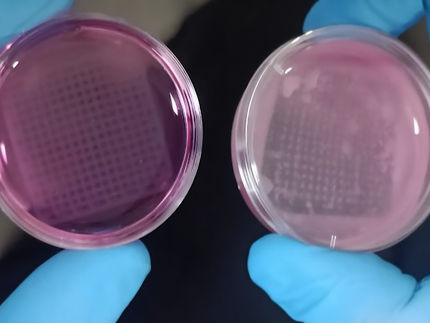
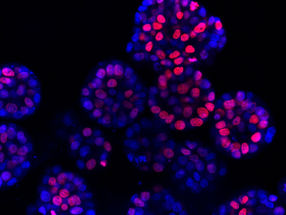
Malin Lindstedt and her colleagues expose human cells to various chemical substances. Using their own genetic analysis, called GARDpotency, they are able to determine how the cells of the body's immune system react: a strong allergic reaction, weak, or none at all.
"We have identified 52 biomarkers which can predict how potent an allergenic substance actually is. Based on how the genetic expression changes after exposure to the substance, we are able to make a comprehensive assessment. This predicts the strength with high accuracy", says Malin Lindstedt.
The researchers themselves are motivated by ethics - reducing animal experimentation - but also basic scientific curiosity. It is not only for ethical reasons that there is much to be gained by leaving animal experiments out, according to Malin Lindstedt:
"We want to know more about what triggers allergy at the genetic level. We are often asked ?how good is your model compared with the mouse model?' We don't want to compare ourselves with that model, for ethical reasons, but also because animal models are not sufficiently good at predicting allergy in humans."
The test is already being used to a limited extent. However, it has not yet been validated by the OECD, which is necessary for chemical producers to roll it out fully.
Food additives are the next area that Malin Lindstedt wants to examine more closely. According to her, we know far too little about whether additives affect genetic regulation in our immune cells.
Other news from the department science