Tomosynthesis Detects Breast Cancer More Frequently in Screening
A study involving nearly 100,000 women compares X-ray tomosynthesis with conventional mammography
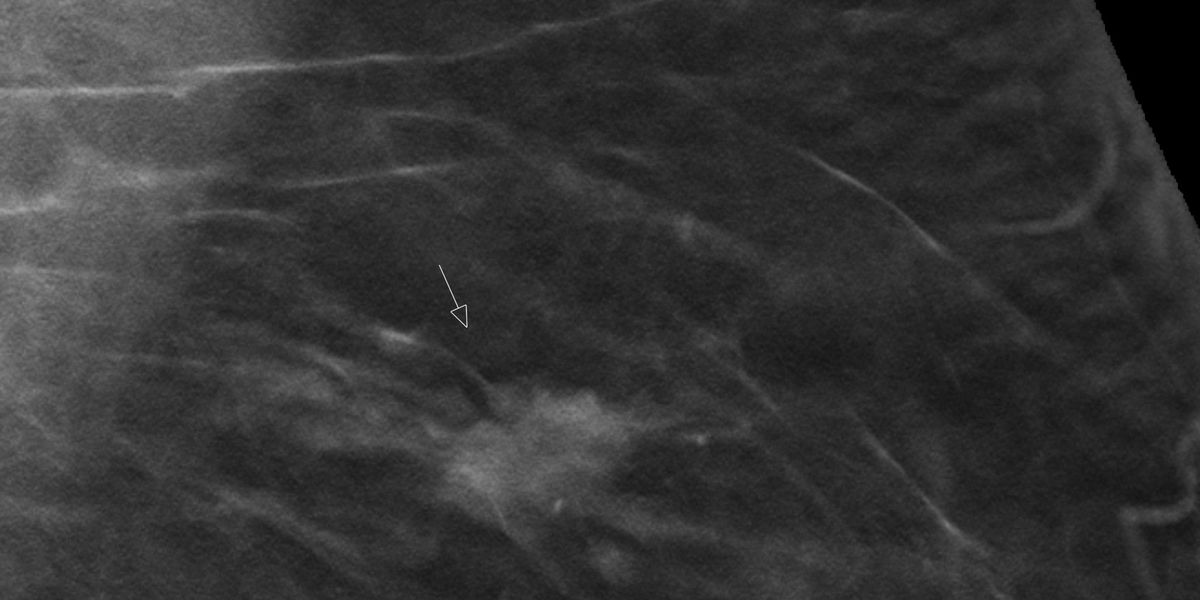
Digital breast tomosynthesis could prevent about a quarter of the invasive breast cancer cases detected between two regular screening exams. In the first year following a normal screening result, the rate of these so-called interval cancers was 29 percent lower than with conventional mammography. This is shown by TOSYMA, the world’s largest comparative study to date. A research team from the University of Münster and the University Hospital Münster (UKM) published the results, in collaboration with other partners, in the journal *The Lancet Oncology*.
With approximately 75,000 new cases per year, breast cancer is by far the most common cancer among women in Germany. The use of digital breast tomosynthesis in the breast cancer screening program could potentially prevent about one-quarter of so-called invasive interval cancers that occur within two years of a conventional digital mammogram. In the first year following a normal screening result, the rate of these breast cancer diagnoses was 29 percent lower in the tomosynthesis group than in the mammography group. This is according to the results of the “TOSYMA” study, the world’s largest comparative study to date of the two diagnostic methods.
In tomosynthesis, multiple images are captured from different angles using low-dose X-rays. From these images, cross-sectional images of the breast with a thickness of no more than one millimeter can be reconstructed. As a result, signs of a tumor are less likely to be obscured by overlying tissue. A research team from the University of Münster and the University Hospital of Münster (UKM) has published the results, in collaboration with other partners, in the journal “The Lancet Oncology.”

Experts refer to breast cancer diagnosed between two regular screenings as interval cancer. These tumors are generally more aggressive and have a poorer prognosis than tumors detected during a screening. For this reason, experts use them as a proxy measure for the effectiveness of early detection.
The first analysis of the study (TOSYMA-1) from 2022 showed that tomosynthesis detects significantly more invasive breast cancers—specifically, 7.1 instead of 4.8 per 1,000 women screened. However, it remained unclear whether tomosynthesis is also clinically more effective. This is precisely where the second analysis (TOSYMA-2) comes in, in which the experts compare interval cancers in both groups.
In the tomosynthesis group, 4.5 out of 10,000 women were diagnosed with an invasive interval carcinoma in the first year following a normal screening; in the mammography group, the figure was 6.3 women. However, the study focused on the two-year rate. In the tomosynthesis group, this rate was 14.2 per 10,000 women, which was 24 percent lower than in the mammography group (18.6 per 10,000 women). Unlike the results for the first year after screening participation, this difference is not statistically significant. The authors cite the COVID-19 pandemic, among other factors, as a possible reason why approximately 20,000 fewer women participated in the study than planned.
The protective effect was particularly pronounced among women who were participating in the screening for a second time. Among them, the rate after two years was 13.5 per 10,000 women, whereas it was nearly identical among women in their first round of screening (18.8 per 10,000 women). In addition, interval cancers in the tomosynthesis group were less frequently locally advanced, and axillary lymph nodes were less frequently involved. These characteristics are generally considered indicators of effective early detection. “Our study makes a decisive contribution to the scientific basis for the use of tomosynthesis in breast cancer screening,” says Prof. Dr. Stefanie Weigel of the Department of Radiology at the UKM and the University of Münster. “It expands and refines the previously limited body of research on follow-up after tomosynthesis screening.”
Between 2018 and 2020, as part of the study, nearly 100,000 women aged 50 to 70 at 17 screening sites in North Rhine-Westphalia and Lower Saxony were randomly assigned to one of two groups. One group received a tomosynthesis exam, supplemented by a two-dimensional image calculated from the cross-sectional images. The other group received a conventional digital mammogram. The study was integrated into the nationwide, quality-assured mammography screening program and thus took place under real-world conditions. To identify interval cancers, the research team cross-referenced the participants’ data with the cancer registries of the two states. These registries cover more than 95 percent of new breast cancer cases. The research team reviewed the suspected cases using a multi-step process. Throughout this process, staff at the cancer registries and reference centers, as well as the independent data safety committee, were unaware of which group each woman had been assigned to.
In both analyses, 83.5 percent of all invasive tumors diagnosed within two years had already been detected during the screening examination in the tomosynthesis group. In the mammography group, the figure was 72.3 percent. The accuracy with which women without breast cancer were classified as normal was similar in both groups. “In the next step, we want to analyze the detected carcinomas in the regular follow-up screening round for women in both groups using conventional mammography,” explains study leader Prof. Dr. Walter Heindel from the Department of Radiology at the University of Münster. “By analyzing this data, we hope to determine whether tomosynthesis is more effective than mammography at reducing advanced tumor stages in screening.”
Note: This article has been translated using a computer system without human intervention. LUMITOS offers these automatic translations to present a wider range of current news. Since this article has been translated with automatic translation, it is possible that it contains errors in vocabulary, syntax or grammar. The original article in German can be found here.
Original publication
Stefanie Weigel, Hans-Werner Hense, Veronika Weyer-Elberich, et al.; "Invasive interval breast cancer rates after digital breast tomosynthesis plus synthesised mammography versus digital mammography screening (TOSYMA): 24-month follow-up of the multicentre, open-label, randomised, controlled, superiority trial"; The Lancet Oncology

Other news from the department science