Protein Mapping for Everyone
Deep Visual Proteomics (DVP) enables the spatially resolved analysis of proteins in tissues and a better understanding of disease processes
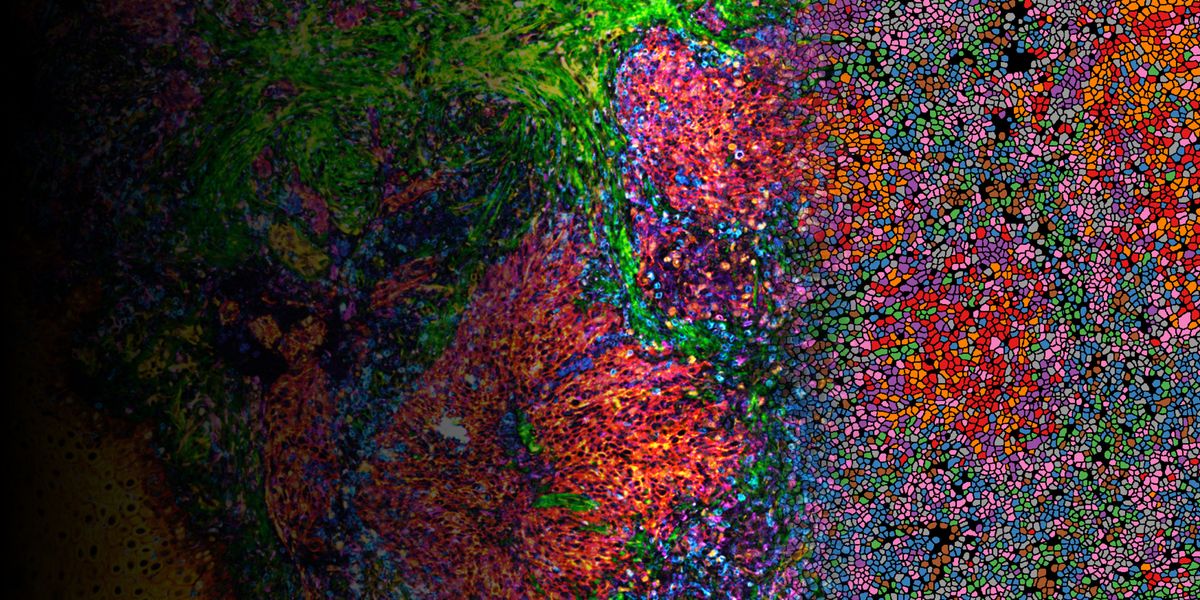
Today, satellites map landscapes with a level of detail that was unattainable 20 years ago: They can detect individual trees, cracks in buildings, and even the details of traffic signs. In proteomics research, a method called Deep Visual Proteomics (DVP) helps scientists achieve similar results at the cellular and molecular levels: Using this method, they can determine the amount of proteins in individual cells while simultaneously identifying where these cells are located within the tissue.
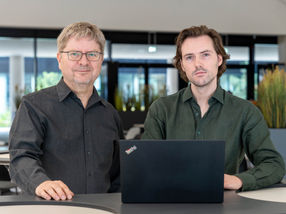
The team led by Dr. Fabian Coscia, head of the “Spatial Proteomics” research group at the Max Delbrück Center, has now developed the first open-source tool for a holistic workflow: “openDVP” is designed to simplify the application of this—further optimized—technology and make it accessible to a wider group of users. The researchers present their new pipeline in the journal “Nature Methods.”
Coscia’s research group helped develop DVP; the method was first published in 2022. Due to its conceptual novelty and already proven translational significance, “Nature Methods” has honored “Spatial Proteomics”—of which DVP is a part—as the “Method of the Year 2024,” explains Coscia, the last author of the current publication.

“We are very pleased that the method has evolved significantly in recent years—thanks to the joint efforts of several international research groups,” says Coscia. “However, we also realized that open-source tools are necessary for further progress and for widespread use and acceptance within the scientific community. We developed openDVP to bridge this critical gap.”
DVP combines high-resolution imaging, artificial intelligence, and mass spectrometry to create maps of thousands of proteins inside cells within a tissue. The ability to catalog and visualize proteins in such detail helps researchers deepen their understanding of how diseases develop and, building on that, develop better therapies. The method is not limited to specific diseases but can be applied to biological samples of any kind.
Expanding the Method’s Reach
With openDVP, Coscia’s team has optimized the image analysis process and developed an accelerated workflow. It enables researchers to quickly highlight and measure individual cells or tissue sections of particular interest. No specialized knowledge of computer-aided image analysis is required for this. In addition, the group has introduced a new strategy for tissue sampling, which they refer to as “cellular neighborhood-guided DVP” (cnDVP for short). This strategy guides tissue sampling based on recurring functional cell groups—clusters of various specialized cells that collectively perform a specific task in the body. “cnDVP speeds up sample collection by about 100-fold,” says Jose Nimo, first author of the publication. “Our entire openDVP workflow significantly lowers the barriers to entry for a growing DVP community.”
To demonstrate the technology’s capabilities, the researchers analyzed and characterized the spatially resolved proteomes of cells in three different tissue samples: from a placenta, a lung adenocarcinoma, and a breast tumor. “We selected these samples to demonstrate the versatility of our method. They allow us to illustrate how the technique can provide unique insights into the function of proteins in various cellular environments that have been largely unexplored until now,” says Coscia.
The analysis of the placental tissue revealed details of cellular communication that would have been difficult to decipher using other technologies. In the lung cancer sample, openDVP identified several drug targets for which approved therapies already exist. The method also identified the glucose transporter GLUT1, which helps metastatic tumor cells take up glucose. “Patients with tumors that express high levels of this protein have significantly lower survival rates—which underscores its clinical relevance,” explains Nimo. In breast cancer, the technology revealed elevated and potentially drug-treatable inflammatory signaling pathways associated with resistance to chemotherapy.
Many Clinical Applications
In the future, the openDVP method could support clinical trials by, for example, helping researchers better understand the mechanisms of action of drugs—or the biological processes that cause cancers to stop responding to treatment, says Nimo. Furthermore, it could help identify molecular patterns associated with response or non-response to drugs. This, in turn, would provide valuable insights for developing better therapies and diagnostics.
To make the technology even more clinically useful, the team is already planning to integrate histological “foundation models”—large artificial intelligence neural networks trained on histopathological data. “This will enable us to conduct large-scale spatial proteomics studies on many different diseases,” says Nimo. “openDVP is a fantastic technological trailblazer for these important next steps,” adds Coscia. “We can now explore questions that were completely unthinkable just a few years ago.”
Note: This article has been translated using a computer system without human intervention. LUMITOS offers these automatic translations to present a wider range of current news. Since this article has been translated with automatic translation, it is possible that it contains errors in vocabulary, syntax or grammar. The original article in German can be found here.
Original publication
Other news from the department science










Most read news








More news from our other portals

























See the theme worlds for related content
Topic World Mass Spectrometry
Mass spectrometry enables us to detect and identify molecules and reveal their structure. Whether in chemistry, biochemistry or forensics - mass spectrometry opens up unexpected insights into the composition of our world. Immerse yourself in the fascinating world of mass spectrometry!

Topic World Mass Spectrometry
Mass spectrometry enables us to detect and identify molecules and reveal their structure. Whether in chemistry, biochemistry or forensics - mass spectrometry opens up unexpected insights into the composition of our world. Immerse yourself in the fascinating world of mass spectrometry!