AI scientist autonomously generates and validates new biological discoveries
Researchers at Chalmers University have developed a closed AI laboratory that plans and evaluates experiments with baker’s yeast itself
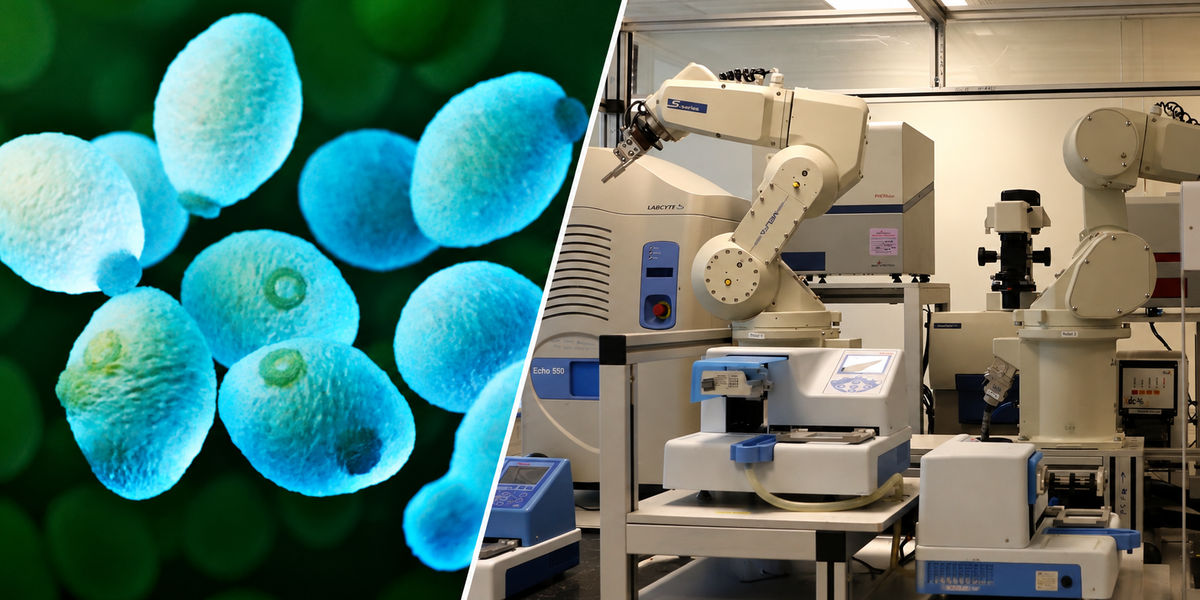
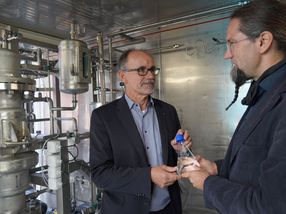
Researchers at Chalmers University of Technology in Sweden have developed an AI scientist capable of generating scientific hypotheses, designing experiments, and interpreting results. Making new biological discoveries with minimal human intervention is an important advance in self-driving laboratories.
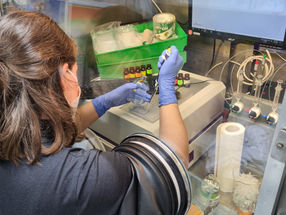
By combining advances in large language models, automated reasoning and laboratory automation, the researchers created a closed-loop AI laboratory, capable of conducting research on brewer’s yeast, Saccharomyces Cerevisiae. As the basis of the research, the AI was input scientific knowledge, including the yeast’s genome, metabolism and previous studies.
“It is too much information for a human to analyse, but our AI scientist could identify promising biological questions, recommend experiments to test them, evaluate experimental outcomes and iteratively refine its understanding based on new evidence. Rather than serving solely as decision supporting tools, the AI scientist actively generates new scientific knowledge”, says Ievgeniia Tiukova, postdoctoral researcher at the department of Life Sciences at Chalmers University of Technology, and one of the authors of the new study.
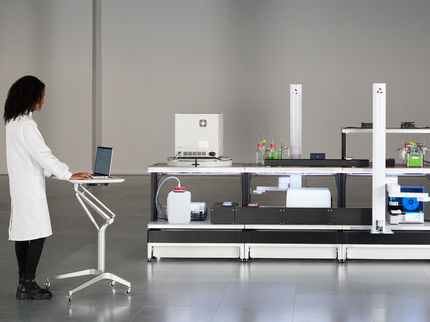
Integrating the thinking power of AI with an experimental capability is unusual, and cutting edge within a rapidly expanding area, where AI scientists autonomously perform extensive research. Tiukova compares the development to that of self-driving cars, where AI and machine learning are also used to process information, draw conclusions, and take action.
According to Ross King, Professor at the Department of Computer Science and Engineering at Chalmers and the University of Gothenburg, and the study’s senior author, autonomous laboratories will revolutionise research by systematically investigating biological systems much faster than is possible today.
“AI Scientists will collaborate with human scientists to accelerate discoveries across biology, medicine and biotechnology. Such AI systems have the potential to reduce the time required to explore complex scientific questions, and optimise the use of laboratory resources”, says Professor King.
Both authors emphasise that autonomous AI will, for now, augment rather than replace scientists, by increasingly undertaking the routine cycles of hypothesis generation and experimental testing.
“Human scientists remain essential for defining research priorities, interpreting broader scientific significance and ensuring ethical oversight. Future generations of autonomous discovery systems will become increasingly capable of collaborating with human scientists, becoming valuable partners in addressing some of the most challenging questions in biology and medicine”, says Professor King.
Original publication

Other news from the department science