Electronic Nose Sniffs Out Prostate Cancer
We may soon be able to make easy and early diagnoses of prostate cancer by smell. Investigators in Finland have established that a novel noninvasive technique can detect prostate cancer using an electronic nose. In a proof of principle study, the eNose successfully discriminated between prostate cancer and benign prostatic hyperplasia (BPH) by “sniffing” urine headspace (the space directly above the urine sample). Results using the eNose are comparable to testing prostate specific antigen (PSA), reports The Journal Of Urology®.
Prostate cancer is the second most common cancer in males and one of the leading causes of cancer death. The heterogeneity of prostate cancer makes it difficult to diagnose and predict tumor progression. Both of the current cornerstones of diagnosis, i.e. digital rectal examination (DRE) and PSA have limitations, while ultrasound guided biopsies are costly, uncomfortable for the patient, and have a risk of infection. Additionally, significant numbers of diagnosed prostate cancers are of low grade and will not cause symptoms or disease-specific mortality. Therefore, aggressive treatment can lead to decreased quality of life without extending the patient’s life. Thus, there is a need for novel diagnostic tools.
In the 1980s incidental reports of dogs that detected cancer in their owners sparked a number of experimental studies that have since confirmed that trained sniffer dogs can detect cancer. However, variations in the performance of dogs during and between studies have meant that these findings are of limited application. A more promising development is the growth of sensor technology (generally referred to as artificial olfaction) that has led to the invention of numerous new types of olfactory electronic sensors.
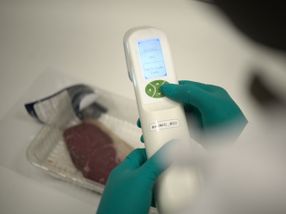
eNoses are best suited for qualitative analysis of complex gaseous mixtures of molecules, and are routinely used in food and agricultural quality control and military applications. The eNose used in the current study is a device that consists of a cluster of nonspecific sensors. When the device is exposed to the sample, it produces a profile or a “smell print.”
“eNoses have been studied in various medical applications, including early detection of cancer, especially from exhaled air,” says lead investigator Niku KJ. Oksala, MD, PhD, DSc, of the Department of Surgery, School of Medicine, University of Tampere and Department of Vascular Surgery, Tampere University Hospital, Finland. “However, exhaled air is a problematic sample material since it requires good cooperation and technique from the patient and immediate analysis, while urine is simple to attain and store, and is therefore more feasible in clinical practice. Preliminary data suggested that detection of urologic malignancies from urine headspace was possible. Our own preliminary results on prostate cancer cells encouraged us to launch this prospective clinical study.”
The ChemPro® 100–eNose (Environics Inc., Mikkeli, Finland) was tested on 50 patients who had been diagnosed with prostate cancer confirmed by biopsy, and 15 patients with BPH. Both groups were scheduled for surgery. The patients provided urine samples before surgery and those with benign disease also provided samples three months after surgery to be used as a pooled control sample population. Patients with prostate cancer underwent robotic assisted laparoscopic radical prostatectomy, while the benign disease group underwent transurethral resection of prostate.
Results with the eNose confirmed that using urine headspace, the eNose is able to discriminate prostate cancer from BPH. The eNose achieved a sensitivity of 78%, specificity of 67% and AUC of 42.0.
“The performance with the eNose matches that of PSA results in previous literature and the results are achieved rapidly and in a completely noninvasive manner,” comments Dr. Oksala. “PSA is known to correlate positively with prostate volume, which is a potential source of diagnostic error when comparing prostate cancer with benign disease. According to our current analysis, prostate volume did not affect the eNose results, potentially indicating high specificity of our sensor array to cancer. We also studied whether eNose signal correlates with the size of the tumor. No such correlation was found. Further studies are now warranted to enhance current technology and to identify the molecules behind the distinct odors.”
Original publication

Other news from the department science