Cell membrane model studied as future diagnostic tool
Researchers at the National Institute of Standards and Technology (NIST) and in Lithuania have used a NIST-developed laboratory model of a simplified cell membrane to accurately detect and measure a protein associated with a serious gynecological disease, bacterial vaginosis (BV), at extraordinarily low concentrations. The work illustrates how the artificial membrane could be used to improve disease diagnosis.
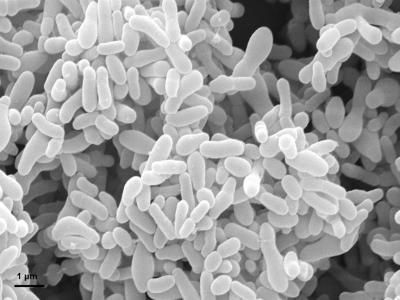
This image shows a scanning electron micrograph of Gardnerella vaginalis bacteria.
K.K. Jefferson, Virginia Commonwealth University
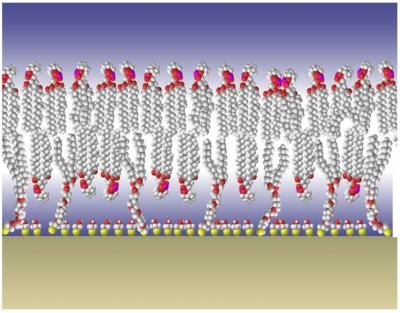
This image shows a scanning electron micrograph of Gardnerella vaginalis bacteria.
NIST
Caused by the bacteria Gardnerella vaginalis, BV is a very common health problem in women and has been linked to infertility, adverse pregnancy outcomes, post-surgery infections and increased risk for acquiring sexually transmitted diseases. Current diagnosis relies on time-consuming, labor-intensive and somewhat inconsistent laboratory cultures or immunological assays.
Researchers at NIST and Vilnius University (Vilnius, Lithuania) reported that they were able to reveal the presence of G. vaginalis by rapidly detecting and quantifying vaginolysin (VLY), a protein toxin produced exclusively by the bacteria, using the NIST model of cell membranes known as a tethered bilayer lipid membrane (tBLM).
The NIST tBLM is a two-layer sheet of simple lipid molecules analogous to the more complex structures that form the outer shell of animal cells. The membrane is anchored to a substrate with molecular "tethers" that allow it to be surrounded, top and bottom, by typical cellular fluids.
In nature, the protein VLY binds to cholesterol-containing membranes and forms pores in the structure, causing the cell to burst open and die. The researchers prepared a molecular fishing line by baiting their laboratory membrane with cholesterol in concentrations ranging from 0 percent (serving as the control) to 40 percent. VLY proteins hooked by the cholesterol obligingly created pores in the test membranes, which in turn altered the electrochemical behavior of the membranes in a way that could be detected in real time by a sensitive technique called electrochemical impedance spectroscopy (EIS).
The researchers found that they could detect the presence of VLY down to 28 nanograms (billionths of a gram) per milliliter, a four-fold improvement over antibody detection methods now in use. The speed of detection also is faster, with the tBLM-EIS system yielding results in hours rather than days. Additionally, different G. vaginalis strains produce different amounts of VLY, so in many cases, the corresponding EIS readings can help define the specific type of bacteria present in an infection.
Now that they have proven the viability of the tBLM-EIS detection system, the researchers plan to begin tests on clinical samples early this year.
Original publication
Other news from the department science







Most read news








More news from our other portals

























See the theme worlds for related content
Topic World Spectroscopy
Investigation with spectroscopy gives us unique insights into the composition and structure of materials. From UV-Vis spectroscopy to infrared and Raman spectroscopy to fluorescence and atomic absorption spectroscopy, spectroscopy offers us a wide range of analytical techniques to precisely characterize substances. Immerse yourself in the fascinating world of spectroscopy!

Topic World Spectroscopy
Investigation with spectroscopy gives us unique insights into the composition and structure of materials. From UV-Vis spectroscopy to infrared and Raman spectroscopy to fluorescence and atomic absorption spectroscopy, spectroscopy offers us a wide range of analytical techniques to precisely characterize substances. Immerse yourself in the fascinating world of spectroscopy!