Test developed to detect early-stage diseases with naked eye
Prototype ultra sensitive disease sensor developed
Scientists have developed a prototype ultra-sensitive sensor that would enable doctors to detect the early stages of diseases and viruses with the naked eye, according to research published in Nature Nanotechnology.
The team, from Imperial College London, report that their visual sensor technology is ten times more sensitive than the current gold standard methods for measuring biomarkers. These indicate the onset of diseases such as prostate cancer and infection by viruses including HIV.
The researchers say their sensor would benefit countries where sophisticated detection equipment is scarce, enabling cheaper and simpler detection and treatments for patients.
In the study, the team tested the effectiveness of the sensor by detecting a biomarker called p24 in blood samples, which indicates HIV infection.
Professor Molly Stevens, from the Departments of Materials and Bioengineering at Imperial College London, says: "It is vital that patients get periodically tested in order to assess the success of retroviral therapies and check for new cases of infection. Unfortunately, the existing gold standard detection methods can be too expensive to be implemented in parts of the world where resources are scarce. Our approach affords for improved sensitivity, does not require sophisticated instrumentation and it is ten times cheaper, which could allow more tests to be performed for better screening of many diseases."
The researchers in the study also tested samples for the biomarker called Prostate Specific Antigen (PSA), which is an early indicator for Prostate Cancer. The team say the sensor can also be reconfigured for other viruses and diseases where the specific biomarker is known.
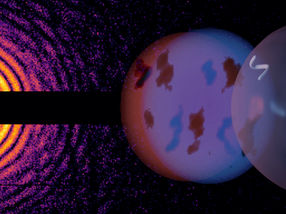
The sensor works by analysing serum, derived from blood, in a disposable container. If the result is positive for p24 or PSA, there is a reaction that generates irregular clumps of nanoparticles, which give off a distinctive blue hue in a solution inside the container. If the results are negative the nanoparticles separate into ball-like shapes, creating a reddish hue. Both reactions can be easily seen by the naked eye.
The team also report that the sensor was so sensitive that it was able to detect minute levels of p24 in samples where patients had low viral loads, which could not be diagnosed using existing tests such as the Enzyme-linked Immunosorbent Assay (ELISA) test and the gold standard nucleic acid based test.
The next stage of the research will see the team approaching not-for-profit global health organisations, which could provide strategic direction and funding for manufacturing and distributing the sensor to low income countries.
Other news from the department science