New mechanism involved in memory loss associated with aging discovered
A study led by Luísa Lopes, Group Leader at Instituto de Medicina Molecular João Lobo Antunes describes a new mechanism involved in memory loss associated with aging. The work developed over 3 years by a team of Portuguese, French and German scientists now shows that specific changes in the signaling of circuits involved in memory induce an abnormal response of the neurons in the brain that is associated with aging. Understanding these processes is crucial in defining new therapeutic strategies as aging is the greatest risk factor for neurodegenerative diseases.
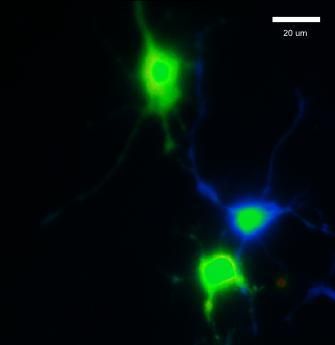
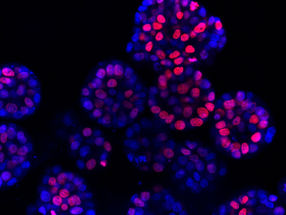
Hippocampal neurons in which we can oberve the calcium increase (in green) through NMDA and mGluR5 receptor upon overactivation of adenosine A2A receptors.
Mariana Temido, iMM.
The researchers studied the brains of elderly patients and found for the first time that an adenosine receptor, called A2A (caffeine target in the brain) is specifically located in neurons. "We already knew that this receptor was increased under these conditions, but little was known about the type of cells in which the receptors would actually be located. We have demonstrated that these receptors are mainly concentrated in neurons, and less in glial cells, at least in elderly patients, "explains Luísa Lopes, iMM researcher and leading scientist of the study.
To better understand its function, the team of researchers generated an animal model that reproduces the increase of adenosine receptor in the same brain areas as those observed in patients. The team found that in these neurons, there is an increased release of glutamate, the most abundant neurotransmitter in the brain. Using a combination of electrical records and calcium measurements it was possible to detect that under these conditions an overactivation of glutamate signaling occurs. "Just by altering the amount of the adenosine receptor in hippocampal and cortex neurons we induced a profile that we have called early aging, as it causes cognitive deficits and changes in neuronal transmission," explains Mariana Temido, the first author of the study and student of the iMM BioMed PhD programme.
"To prove the importance of this finding, we wanted to test if the same mechanism occurs in older animals and not only in our model. On the one hand we have demonstrated that the overactivation of glutamate receptors is detected in elderly animals. On the other hand, we have shown that the A2A receptor is indeed involved in this circuit, because when we blocked its action, we normalised both neuronal function and reversed memory deficits, "says Luísa Lopes.
This work opens new perspectives for the design of drugs that regulate this new aberrant signaling, namely the caffeine family that was also tested effectively in the study. In addition, it allows to create new models that are useful in the understanding of aging.
Original publication
Other news from the department science