AI detects cancer cells and evaluates the accuracy of its diagnosis
Researchers Are Developing a Transparent AI System for Diagnosing Lymphomas
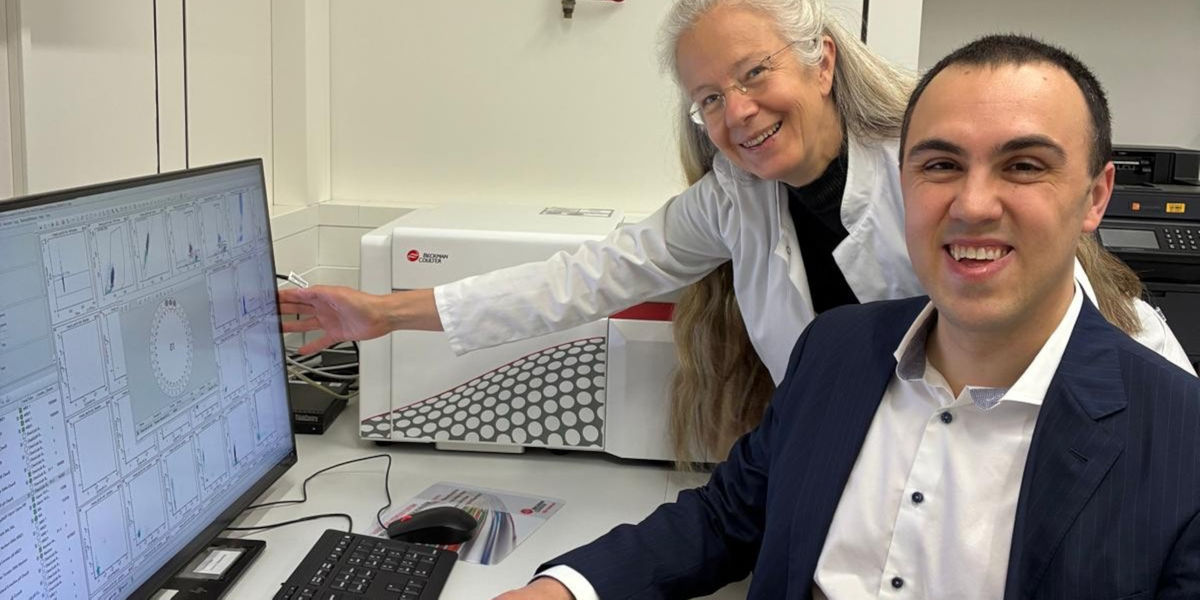
Diagnosing certain types of blood and lymph node cancers could become easier and more transparent in the future. Researchers at the University of Marburg have developed “FlowXAI,” a new AI system that assists doctors in classifying B-cell lymphomas. Unlike many existing methods, the application not only provides a diagnostic recommendation but also explains which cellular characteristics were decisive for that recommendation and how reliable the assessment is. This allows physicians to focus their attention specifically on difficult or uncertain cases, according to the research team led by computer scientist Prof. Dr. Michael Thrun and oncologists PD Dr. Cornelia Brendel and PD Dr. Jörg Hoffmann. The researchers are publishing their findings in the latest issue of the journal PLOS Medicine.
Huge and Complex Datasets
Cancer diagnosis is increasingly shaped by large and complex datasets. Especially with rare diseases, a great deal of experience is needed to correctly interpret the often high-dimensional measurement data. At the same time, there is often only a limited amount of training data available for modern AI methods for such clinical conditions. Furthermore, many existing AI models cannot explain their decisions in a transparent manner. “This is problematic for clinical use, as doctors need to understand and evaluate the basis for a recommendation,” reports Thrun from the Department of Mathematics and Computer Science at the University of Marburg. The Marburg researchers are therefore taking a different approach: artificial intelligence should specifically complement medical expertise, not replace it.
Flow cytometry analyzes thousands of blood components
The study focuses on so-called B-cell non-Hodgkin lymphomas. This category of cancers affects specific cells of the immune system and accounts for about 90 percent of lymph node cancers. It represents about four percent of all new cancer cases in Germany. Standard diagnostic methods include flow cytometry. This technique analyzes thousands of individual cells in a blood sample and characterizes them based on their biological features. The resulting datasets are very extensive, and their evaluation requires specialized expertise. To develop and evaluate FlowXAI, the research team used data from approximately 20,000 blood samples. The new method achieved an accuracy comparable to that of modern deep learning systems—reaching a level of performance previously attainable only by human experts—yet required significantly less training data. In some analyses, just a few hundred carefully selected cases were sufficient to achieve results on par with those of clinical experts.
AI rates its own diagnosis as certain, probable, or difficult
The researchers view FlowXAI as a decision-making aid and sparring partner for doctors. Medical responsibility remains with humans. Particularly important here is the system’s ability to self-assess: It classifies cases as certain, probable, or difficult, thereby making it transparent how confident the AI’s assessment is based on the trained datasets and when additional expertise is required.
The development was the result of close collaboration between computer science and medicine. While the physicians contribute their diagnostic knowledge, the computer scientists develop the algorithms and ensure that their decisions are presented in a transparent manner. An initial prototype already maps the entire process, from the analysis of a sample to the transmission of a reasoned assessment. In the next steps, the system will be further validated under real-world clinical conditions and using data from various laboratories. In the long term, the technology could be used in training, quality assurance, and as a support tool in specialized diagnostic laboratories.
Note: This article has been translated using a computer system without human intervention. LUMITOS offers these automatic translations to present a wider range of current news. Since this article has been translated with automatic translation, it is possible that it contains errors in vocabulary, syntax or grammar. The original article in German can be found here.
Original publication
Other news from the department science






Most read news







More news from our other portals






















See the theme worlds for related content
Topic world Diagnostics
Diagnostics is at the heart of modern medicine and forms a crucial interface between research and patient care in the biotech and pharmaceutical industries. It not only enables early detection and monitoring of disease, but also plays a central role in individualized medicine by enabling targeted therapies based on an individual's genetic and molecular signature.

Topic world Diagnostics
Diagnostics is at the heart of modern medicine and forms a crucial interface between research and patient care in the biotech and pharmaceutical industries. It not only enables early detection and monitoring of disease, but also plays a central role in individualized medicine by enabling targeted therapies based on an individual's genetic and molecular signature.
Topic World Cell Analysis
Cell analyse advanced method allows us to explore and understand cells in their many facets. From single cell analysis to flow cytometry and imaging technology, cell analysis provides us with valuable insights into the structure, function and interaction of cells. Whether in medicine, biological research or pharmacology, cell analysis is revolutionizing our understanding of disease, development and treatment options.
Topic World Cell Analysis
Cell analyse advanced method allows us to explore and understand cells in their many facets. From single cell analysis to flow cytometry and imaging technology, cell analysis provides us with valuable insights into the structure, function and interaction of cells. Whether in medicine, biological research or pharmacology, cell analysis is revolutionizing our understanding of disease, development and treatment options.