A shortage of synapses in schizophrenia?
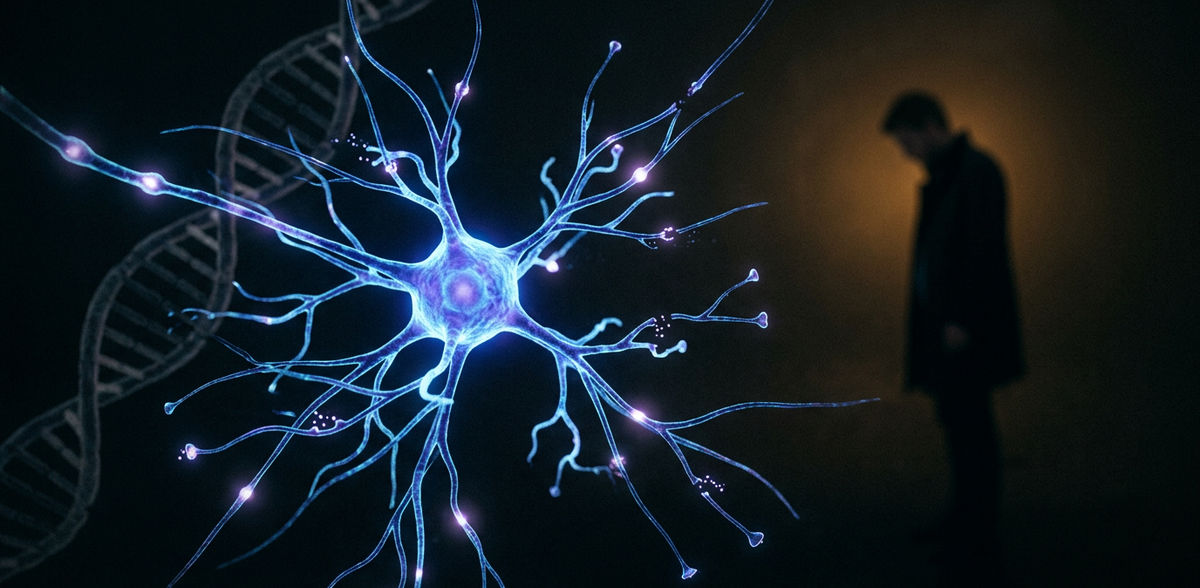
Researchers showed that the level of synaptic impairment seen in stem cell-derived neurons of schizophrenia patients, generated from blood samples, predicted their level of cognitive impairment. This is the first time that researchers could show an intraindividual mechanistic explanation for the individual degree of schizophrenia’s cognitive symptoms.
Schizophrenia is a severe mental disorder affecting around one percent of the population worldwide, and is notoriously difficult to treat. Current treatments successfully target the disorder’s positive symptoms, such as hallucinations and delusions. However, they are unable to treat negative symptoms, such as lacking motivation and social withdrawal, or cognitive symptoms, such as problems with attention or memory, which determine the long-term functional outcome of patients.
In order to develop effective treatments for the cognitive symptoms of schizophrenia, it is essential to understand the biological mechanisms behind them. In a previous study, Florian Raabe, leader of the Project Group Translational Deep Phenotyping at the Max Planck Institute of Psychiatry in Munich, and Michael Ziller from the University of Münster had already established that iPSC (induced pluripotent stem cell)-derived neurons from patients with schizophrenia showed synaptic deficits, and therefore may be involved in the cognitive symptoms of the disorder. IPSCs are made by collecting mature cells from patients, for example through a blood draw. These cells are then “reprogrammed” back to their pluripotent state, from which they can be differentiated to become any cell type in the body.
Clinical and cellular data
In their study recently published in JAMA Psychiatry, Florian Raabe, Michael Ziller and their teams aimed to show that the degree of synaptic impairment observed in vitro correlated with the cognitive impairments seen in vivo. To do so, the researchers combined two sets of data: First, MRI, EEG and cognitive testing data from over 400 patients and healthy controls. Second, the researchers gathered data on gene expression and synaptic density, based on iPSC-derived neurons from 80 donors within this larger cohort. This allowed them to analyze clinical and cellular data from the same patients.
“Combining this data allowed us to show, for the first time, that the level of synaptic impairment seen on the cellular level actually predicted the level of cognitive impairment seen in the patient”, Raabe explains. “This is the first time we have been able to show an intraindividual mechanistic explanation for the cognitive symptoms seen in schizophrenia”. Raabe and his team hypothesize that genetic predispositions lead to reductions in synaptic density, which contribute to more wide-spread alterations in the brain, potentially amplified by environmental factors. These alterations then contribute to schizophrenia’s cognitive symptoms.
Bridging this translational gap between cellular and clinical data in schizophrenia is central to developing more targeted treatments. Since iPSC-derived neurons essentially only require a blood draw from patients, these findings hold great promise for future biomarker discoveries as well as for patient stratification, in order to better understand who responds to which treatment and why.
Other news from the department science