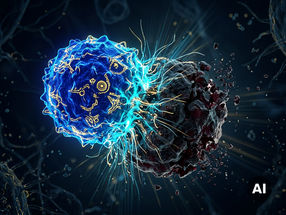
Brain tumor spread in the living brain observed live for the first time
Three-photon microscopy reveals: immune cells of the brain actively influence how far the tumor advances

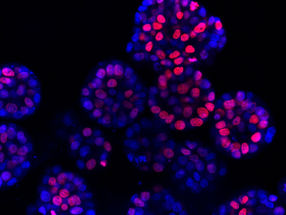
glioblastoma, the most common and most aggressive brain tumor type in adults, remains difficult to treat because it can infiltrate surrounding brain tissue and spread far beyond the main tumor. Researchers from DZNE, University Hospital Bonn and the Cluster of Excellence “ImmunoSensation” at the University of Bonn have captured this infiltration process in the living brain with advanced microscopy. Their study is based on observations in mice affected by a brain cancer very similar to human glioblastoma
The results, published in the scientific journal “Immunity”, reveal complex and situation-dependent interactions between glioblastoma cells and the brain’s resident immune cells, also known as “microglia”. These cells patrol the brain in search of threats. The current findings suggest that microglia are not passive bystanders, but actively influence both the containment and the spread of the tumor.
The scientists observed these processes by means of so-called three-photon microscopy that employs infrared light. Focus was on the “far infiltration zone”, which designates a tissue region located several millimeters away from the primary tumor.
Changing behavior
Among other things, the team discovered that the behavior of microglia changed as a tumor spread. Specifically, microglia showed increased motility and surveillance activity when only a few glioblastoma cells were present. However, as tumor infiltration intensified, this immune response declined. Besides, the scientists investigated the effects of disabling a certain receptor that microglia use to sense their environment. Furthermore, they looked into pharmacological depletion, i.e., drastically reducing the number of immune cells.
“Our data shows that interactions between tumor cells and microglia play an important role in glioblastoma invasion,” says Dr. Felix Nebeling, first author of the current publication. “Targeting microglial function, potentially by drugs, may therefore represent a promising avenue for limiting tumor spread and improving patient outcomes.”
Original publication
Felix C. Nebeling, Falko Fuhrmann, Manuel Mittag, Fabrizio Musacchio, Henrike Antony, Nala Gockel, Lea L. Friker, Sonia Leonardelli, Severin Filser, Deli A., Miriam Stork, Daniele Bano, Torsten Pietsch, Frank A. Giordano, Qihui Zhou, Simona Parrinello, Michael Hölzel, Ulrich Herrlinger, Paolo Salomoni, Martin Fuhrmann; "Microglia-glioblastoma crosstalk mediates glioblastoma invasion at the far infiltration zone"; Immunity, Volume 59
Other news from the department science