What happens when the immune system ages—and can this process possibly be stopped?
Aging in fast motion: Short-lived fish offer new insights into the aging immune system
Our immune system protects the body from infections and harmful changes throughout our lives. However, it loses its effectiveness with age, resulting in an increased risk of disease. But what happens when the immune system ages—and can this process possibly be stopped?
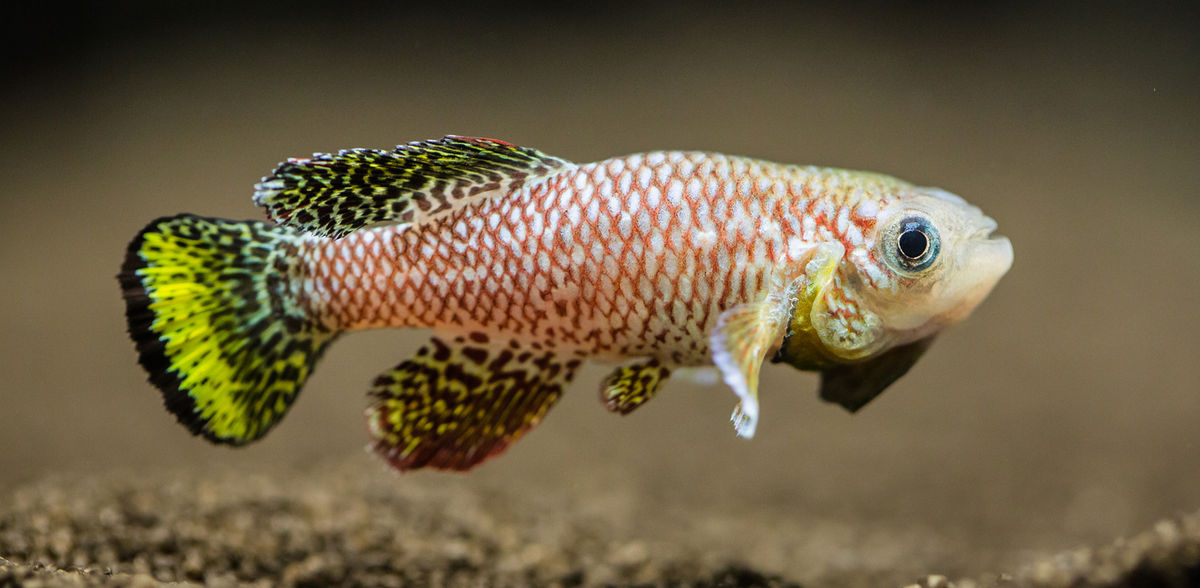
In a study now published in Nature Aging (Cover article), researchers at the Leibniz Institute on Aging – Fritz Lipmann Institute (FLI) have taken an important step towards answering these questions. They used the extremely short lifespan of the turquoise killifish (Nothobranchius furzeri) and identified key characteristics of immune aging within a few weeks. This makes this model particularly well suited for rapid mechanistic discoveries and testing potential interventions.
The study combines various analytical methods, such as cytometry, single-cell transcriptomics, proteomics, AI-supported image classification, in situ imaging, histology, and functional immunoassays. With the new established open multi-omics resource KIAMO, it thus provides a comprehensive overview of immune aging in a short-lived vertebrate. The work began at the Max Planck Institute for Biology of Ageing (MPI-AGE) in Cologne and was alter continued at the FLI in Jena.
The researchers show that key features of immune aging are present in killifish and are strikingly similar to those seen in mammals and humans. The study provides unique insights into the mechanisms of so-called “immune aging”. Since killifish only live for a few months, aging processes can be observed in fast motion within a few weeks—a major advantage for experimental research.
“The killifish system once again surprises us as it reveals that key aspects of immune aging—both at molecular and cellular level—are deeply conserved evolutionary,” says Prof. Dario Riccardo Valenzano, pioneer of killifish research and Scientific Director at the FLI. “Our findings prove that killifish could be an optimally suited model to test interventions that by targeting immune aging improve systemic aging.”
Inflammatory processes increase with age
One of the central findings of the study is the presence of a pronounced systemic inflammatory signature in older fish, often referred to as “inflammaging.” Blood analyses revealed increased levels of acute-phase proteins as well as markers of metabolic imbalance. Similar inflammatory signatures are well known in aging mammals and humans and are associated with a wide range of age-related diseases.
Changes in the immune cell factory
Age-related changes were particularly evident in the kidney marrow, main hematopoietic organ in fish and the functional counterpart of mammalian bone marrow. With increasing age, the researchers observed structural remodeling, fibrosis, tissue alterations, and shifts in immune-cell populations.
At the same time, the data indicates an expansion of progenitor and stem-like immune cells. However, these cells accumulate DNA double-strand damage and show reduced markers of active DNA repair. Importantly, this accumulation of DNA damage cannot be explained by replication alone, suggesting a state consistent with cellular senescence and impaired differentiation capacity.
“I have always been fascinated by the idea that biological processes, including aging, follow principles that can be understood and eventually translated into interventions. Rather than accepting decline as inevitable, the Killifish model gives us a way to dissect aging mechanisms in a compressed time frame, while recapitulating key aspects of immune aging seen in mammals”, explains Gabriele Morabito, PhD student and first author of the study.
Impaired immune response in old age
Functional experiments confirmed these observations. Immune cells isolated from older killifish responded significantly less strongly to bacterial stimulation than cells from young animals.
In cell-culture experiments, pre-treatment with a senolytic partially restored youthful immune responses in vitro, indicating that senescent cells may contribute to the functional decline of the aging immune system.
This suggests that senescent cells actively contribute to the age-related impairment of the immune response. The killifish therefore represents a promising model to test interventions targeting immune aging.
New open resource for research community
Alongside the study, the researchers established a publicly accessible multi-omics platform called KIAMO (Killifish Immune Aging Multi-Omics). The platform provides the international research community with extensive molecular datasets, including single-cell gene-expression profiles, proteomics data, and imaging resources.
A model organism for studying immune aging
Although the study provides detailed insights into immune aging in the hematopoietic system, important questions remain. It is still unclear how strongly these changes influence aging processes in other organs.
However, the killifish offers a unique opportunity to experimentally investigate these relationships, according to Prof. Valenzano. With its short lifespan, conserved immune biology, and the newly established KIAMO resource, the turquoise killifish provides a powerful experimental platform to study immune aging in vertebrates and to accelerate the development of strategies aimed at improving health during aging.
Original publication

Other news from the department science














Most read news









More news from our other portals






















See the theme worlds for related content
Topic World Cell Analysis
Cell analyse advanced method allows us to explore and understand cells in their many facets. From single cell analysis to flow cytometry and imaging technology, cell analysis provides us with valuable insights into the structure, function and interaction of cells. Whether in medicine, biological research or pharmacology, cell analysis is revolutionizing our understanding of disease, development and treatment options.
Topic World Cell Analysis
Cell analyse advanced method allows us to explore and understand cells in their many facets. From single cell analysis to flow cytometry and imaging technology, cell analysis provides us with valuable insights into the structure, function and interaction of cells. Whether in medicine, biological research or pharmacology, cell analysis is revolutionizing our understanding of disease, development and treatment options.