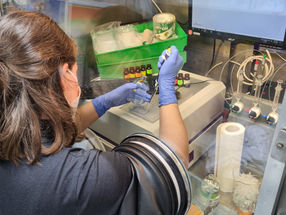
DNA steps out of the "blueprint" role to become an active "field agent"
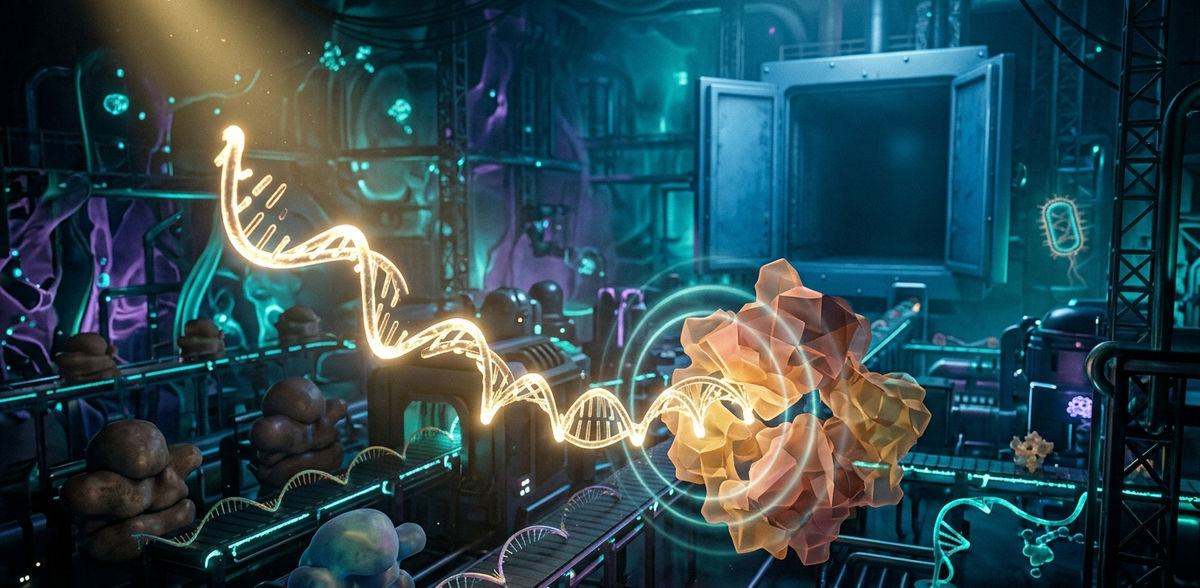
Stepping away from its billions-of-years-old role as a genetic "blueprint," DNA is now embarking on a new journey as an active "field agent" within cells. This research by a team led by Professor Jongmin Kim and Ph.D. candidate Geonhu Lee from the Department of Life Sciences at POSTECH (Pohang University of Science and Technology) was published in the online edition of the international chemistry journal, Nature Chemistry.
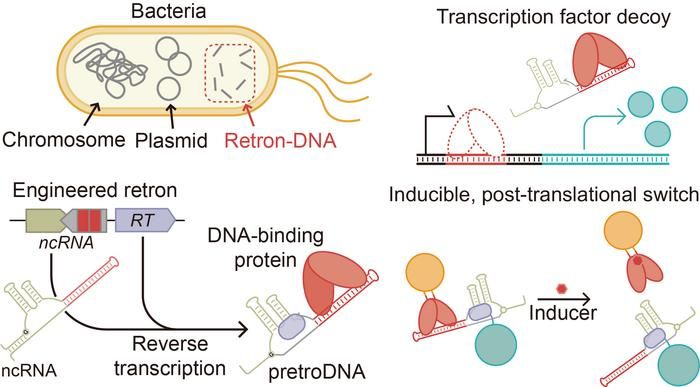
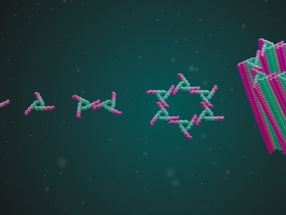
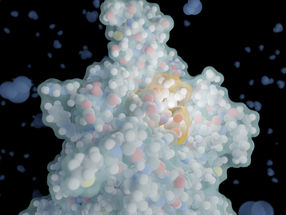
Schematic illustration of the intracellular production of protein-binding non-genetic DNA and its application in controlling protein activity.
POSTECH
A cell is like a small, tirelessly operating factory. Within this factory, "proteins" and "RNA" act as the "field workforce," being produced when needed and degraded once their roles are fulfilled. In contrast, "DNA" serves as the "blueprint" orchestrating all these programmed activities. Thus, it is critical to store this blueprint safely within the factory, and it should not be misplaced or modified unintentionally.
While DNA can sometimes be utilized as a tool rather than a genetic material—such as in PCR tests to check for coronavirus infections—these manipulations of DNA typically are operational only outside the cell. When inside a living cell, DNA becomes restrained once again to play its original role as a "blueprint."
The research team aimed to address this particular feature that has limited the use of DNA in a broader context. Their breakthrough innovations to license DNA for free use inside the cell was achieved by repurposing a unique bacterial DNA synthesis system called "Retron." Typically, DNA multiplies by directly copying existing DNA templates inside the cell. However, the retron system employs "reverse transcription," to synthesize new DNA by reading an intermediate genetic material called RNA. More importantly, the retron DNA created in this manner can show remarkable stability and independence from other genomic DNA in the cell. In essence, the blueprint of the cell can now go around and do groundwork in the factory rather than staying in the cabinet.
By carefully engineering the retron system, the research team succeeded in directly generating DNA fragments with programmable functions inside the cell. These DNA fragments bind to specific proteins and modulate cellular behavior without destabilizing the cell's genetic information.
Based on this technology, the research team demonstrated three synthetic biological applications:
- regulating specific gene expression by utilizing DNA as a "bait" to attract proteins,
- instantaneously controlling the localization and functionality of proteins within the cell by detecting specific signals, and
- semi-permanently recording molecular events for brief exposure to input signals. Now, DNA has become a "field agent" that can follow orders, change its location, and perform actions such as recording of molecular events for transient signals.
This novel platform technology has far reaching implications beyond the state-of-art DNA-based circuit designs. The ability to capture and record transient disease markers in real-time—such as for cancer or inflammation—provides the framework to develop "smart biotherapeutics" with autonomous control and feedback regulation for therapeutic regimen. The engineered living biosensors can also be deployed to detect pollutants like microplastics or heavy metals in the environment.
Graduate student Geonhu Lee, who led the study, highlighted the contribution to the field, stating, "We have provided the necessary framework to open up a whole new design space that unfetters DNA from its role as 'genetic material.'" Professor Jongmin Kim added, "We now have access to a foundational technology that can potentially be used to revolutionize multiple application areas, including medicine, environment, and energy."
Original publication

Other news from the department science