Lithuanian chemists developed oxygen sensors that can be applied from food packaging to cancer diagnostics
Record-breaking sensitivity
Researchers at Kaunas University of Technology (KTU), Lithuania, have developed new organic compounds that act as highly sensitive oxygen sensors. These sensors can accurately detect even the slightest amounts of oxygen in the environment – information that is crucial in situations where oxygen concentration can determine the success of a process or even a person’s life.
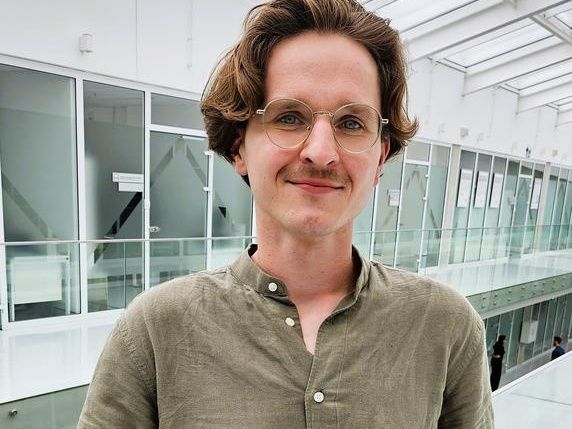
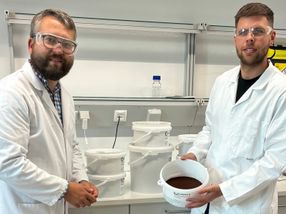
Dr Matas Gužauskas.
KTU
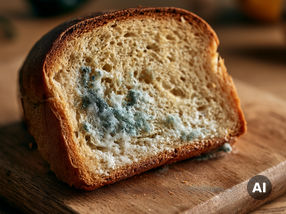
The sensors can be applied in medicine, for example, in diagnosing tumour hypoxia – a condition in which there is almost no oxygen around a tumour, in the food industry – to check whether packaging has lost its seal, and in biotechnology – to precisely monitor cell cultivation processes. Moreover, their performance can be observed with the naked eye, while their record-high sensitivity ensures rapid and reliable detection.
No toxic compounds used
“We developed two new materials that act as highly sensitive oxygen sensors. Their luminescence depends on the presence of oxygen in the environment – without it, the light not only intensifies but also changes colour from blue to green. This change can be observed with the naked eye, allowing oxygen detection without complex equipment,” says one of the authors of the innovation, Dr Matas Gužauskas.
The compounds developed at KTU operate through phosphorescence – a type of glow that occurs at room temperature. This is a rare and highly valuable property for organic compounds, as most of them glow only at very low temperatures.
Phosphorescence arises when a molecule is excited and enters a special energy state called the triplet state. From this state, light is emitted for a longer time than in normal fluorescence. This long-lived emission is extremely sensitive to oxygen: when oxygen molecules encounter an excited molecule, they capture its energy and suppress the glow.
Traditionally, heavy metal complexes such as iridium or platinum are used to achieve phosphorescence. “These metals are very expensive, which greatly increases the cost of the final product. In addition, their derivatives are often toxic and harmful to the environment. For these reasons, their use is particularly problematic in biology, medicine or food industry, where safety is the highest priority,” explains Gužauskas, a researcher of the KTU Faculty of Chemical Technology (CTF).
An alternative, discovered by KTU scientists, is made of thianthrene derivatives. These are organic molecules containing two sulphur atoms in their structure and having a unique, bent, non-flat structure. “It is precisely the sulphur atoms and the specific structure of the molecule that it to emit light for a long time,” adds Dr Gužauskas.
Record-breaking sensitivity
The compounds developed show record-breaking sensitivity, as demonstrated by the Stern–Volmer constant. For one of the compounds, this constant is among the highest ever recorded for organic, metal-free sensors, enabling the reliable and rapid detection of even the smallest amounts of oxygen.
This exceptional sensitivity opens a wide range of applications. “We see particular potential in medicine and are keen to find partners who could help us assess the materials’ biological compatibility and explore their use in cell or tissue research,” says Gužauskas.
The compounds could be employed in biomedical sensors and bioimaging tools for monitoring cells, tissues, or metabolic processes in real time. They are also well-suited for environmental monitoring devices measuring oxygen levels in water or air, as well as for smart packaging in the food and pharmaceutical industries, where they could test a product’s integrity.
In addition, the materials may be adapted for use in security inks, whose authenticity can only be verified under specific conditions, and in various optoelectronic devices.
According to the researcher, the synthesis of these compounds is relatively straightforward: it relies on well-established chemical reactions, meaning that once the conditions are optimised, production could be scaled up for wider application.
The research, carried out as part of the Technological and Physical Sciences Excellence Centre (TiFEC) project, involved work of dr. Rasa Keruckienė and KTU PhD student Lukas Dvilys. According to the researchers, it does not open an entirely new field but it sets a new standard within the existing area. M. Gužauskas is convinced that the findings could lay the foundation for major scientific breakthroughs.
Original publication
Other news from the department science