What paralyzes Europe's laboratories and which levers have an impact
Growing willingness to innovate meets structural blockades, financing problems and stress
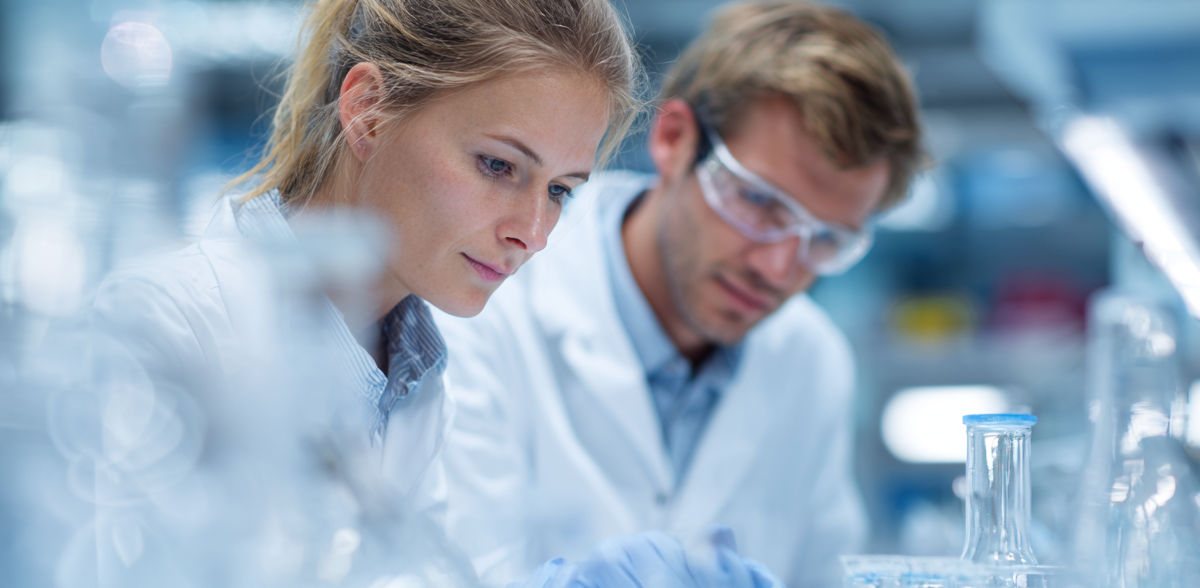
Never before has the willingness to change been so pronounced in Europe's laboratories - and never before have laboratory employees been held back so much. This is shown by the new Starlab Mood Barometer 2026, for which over 360 laboratory employees from six European countries were surveyed. Under the title "Ready to unlock: What paralyzes Europe's laboratories, which levers have an effect", the current study by Starlab International GmbH paints a multi-layered picture. Growing willingness to innovate meets structural blockages, financing problems and stress.
Financing is becoming the biggest challenge
For the first time, a lack of budget is at the top of the list of the biggest challenges: 44% of respondents cite a lack of financing as their top problem in 2026. Last year, rising prices for consumables (42%) dominated the industry's concerns. Today, it is the fundamental lack of financial resources. "The problem appears to be more structural than cyclical. This is a warning signal," says Benedikt Geldmacher-Voss, Head of Starlab Group. "If financing becomes the number one concern, the entire future viability of the industry will come under pressure."
Savings are being made in the wrong places
57% of laboratories have introduced active cost-cutting measures - a slight decrease compared to 64% in the previous year. But where savings are being made is alarming: 74% are cutting back on equipment and infrastructure, i.e. precisely where research will be carried out tomorrow. 54 percent are stopping new hires. A contradiction in an industry that is already suffering from staff shortages. 22 percent are cutting back on training and conferences first. "Those who cut back on future investments are cutting back on their own foundations," warns Geldmacher-Voss. The satisfaction of laboratory employees has fallen noticeably compared to the previous year: while 76% were still happy with their work in 2025, only 63% are happy today. One in three people surveyed also reported a high or very high level of stress.
The willingness to change is greater than ever
Despite all the blockades, the study shows an industry that is thinking about the future. Take sustainability, for example: 78% have already implemented recycling programs, 67% rely on bulk orders to conserve resources and 58% use reusable systems. 64% would use recycled materials if the quality is right - the fundamental resistance to sustainable products has almost disappeared. As motivators for greater sustainability, 42% cite environmental protection and 36% cost savings - together around 80% with intrinsic or economic motivation.
According to Starlab, digitalization and artificial intelligence have also arrived in the labs. 46% already use AI occasionally, 13% even regularly. Only 15 percent are afraid of losing their job. The industry is approaching the topic in a relaxed and pragmatic manner. In terms of future skills, interdisciplinary thinking is in first place with 61%, ahead of digital skills (54%) and soft skills (47%). A surprising finding: 64% of the laboratory employees surveyed rate social skills as equally or more important than technical expertise, with Germany leading the way at 74%.
Unlocking potential - the call to action
"The potential for change is there - it just needs to be unlocked. Ready to unlock means: the keys are on the table," says Lennart Walter, Product Manager at Starlab, responsible for TipOne pipette tips, which have established themselves as Starlab's best-selling product. The TipOne recycling service is a concrete example of the fact that customers are prepared to rethink if they are given the right framework: laboratories send in used PP packaging, Starlab processes it into granulate and produces new racks from it - a completely closed material cycle. The development speaks for itself: the number of participants rose from 23% of registered customers in 2024 to 31% in 2025, while the amount of regrind produced grew from 60 to 100 tons in the same period, an increase of almost 68%. "Sustainability is not just an environmental issue, but a cost lever. If you think holistically across departmental boundaries, you can see that there is a lot of potential for savings in ventilation rates, temperatures and outdated routines. This savings potential can be consciously reinvested in AI-competent staff, future-proof technology and sustainable processes."
According to the Starlab Barometer, recycling programs, interdisciplinary collaboration and a willingness to innovate are no longer wishful thinking in laboratories. "The mood in Europe's laboratories may be cloudy and sometimes it takes rain for something to grow. However, sustainability, cooperation and a willingness to innovate have already been sown. The laboratories have the tools, the will and the knowledge. Now they need the right framework conditions and the courage to question existing structures and change them themselves," says Benedikt Geldmacher-Voss.
About the study
Starlab has been surveying the mood of the European laboratory sector every year since 2021. For the 2026 mood barometer - the sixth survey in a row - the company surveyed a total of 368 laboratory employees from Germany, the United Kingdom, Switzerland, Italy, France and Austria in January 2026. Participants were reached via the Starlab newsletter, LinkedIn and the company website. The majority of respondents (58 percent) work as laboratory managers or laboratory technicians. Other participants include Master's, PhD and post-doc students (8 percent), purchasers (8 percent), researchers and medical researchers (7 percent), professors and project managers (4 percent) and laboratory directors (2 percent). 13 percent work in other laboratory areas.
Note: This article has been translated using a computer system without human intervention. LUMITOS offers these automatic translations to present a wider range of current news. Since this article has been translated with automatic translation, it is possible that it contains errors in vocabulary, syntax or grammar. The original article in German can be found here.

Other news from the department business & finance