‘Glow-in-the-dark’ proteins could help diagnose viral diseases
Diagnose diseases more quickly and easily
Despite recent advancements, many highly sensitive diagnostic tests for viral diseases still require complicated techniques to prepare a sample or interpret a result, making them impractical for point-of-care settings or areas with few resources. But now, a team reporting in ACS Central Science has developed a sensitive method that analyzes viral nucleic acids in as little as 20 minutes and can be completed in one step with “glow-in-the-dark” proteins.
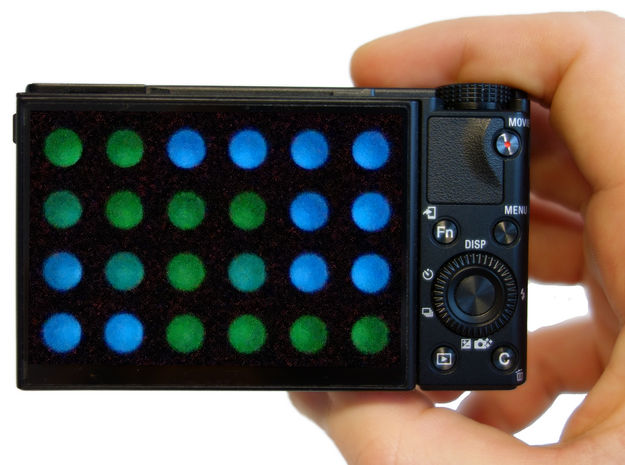
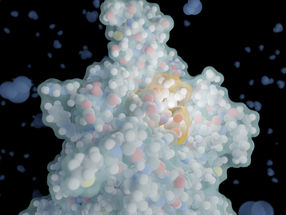
Proteins that glow bright blue or green, as pictured here, could make disease diagnosis quicker and easier.
Maarten Merkx
The firefly’s flash, the anglerfish’s glowing lure and the ghostly blue of phytoplankton-covered beaches are all powered by the same scientific phenomenon known as bioluminescence. A chemical reaction involving the luciferase protein causes the luminescent, glow-in-the-dark effect. The luciferase protein has been incorporated into sensors that emit an easily observed light when they find their target. This simplicity makes these types of sensors ideal for point-of-care testing, but so far, they’ve lacked the incredibly high sensitivity required of a clinical diagnostic test. The gene-editing technique known as CRISPR could provide this ability, but it requires many steps and additional specialized equipment to detect what can be a low signal in a complex, noisy sample. So, Maarten Merkx and colleagues wanted to use CRISPR-related proteins, but combine them with a bioluminescence technique whose signal could be detected with just a digital camera.
To make sure there was enough sample RNA or DNA to analyze, the researchers performed recombinase polymerase amplification (RPA), a simple method that works at a constant temperature of about 100 F. With the new technique, called LUNAS (luminescent nucleic acid sensor), two CRISPR/Cas9 proteins specific for different neighboring parts of a viral genome each have a distinct fragment of luciferase attached to them. If a specific viral genome that the researchers were testing for was present, the two CRISPR/Cas9 proteins would bind to the targeted nucleic acid sequences and come close to each other, allowing the complete luciferase protein to form and shine blue light in the presence of a chemical substrate. To account for this substrate being used up, the researchers used a control reaction that shined green. A tube that changed from green to blue indicated a positive result.
When tested on clinical samples collected from nasal swabs, RPA-LUNAS successfully detected SARS-CoV-2 RNA within 20 minutes, even at concentrations as low as 200 copies per microliter. The researchers say that the LUNAS assay has great potential for detecting many other viruses effectively and easily.
Original publication
Other news from the department science










Most read news








More news from our other portals
























See the theme worlds for related content
Topic world Diagnostics
Diagnostics is at the heart of modern medicine and forms a crucial interface between research and patient care in the biotech and pharmaceutical industries. It not only enables early detection and monitoring of disease, but also plays a central role in individualized medicine by enabling targeted therapies based on an individual's genetic and molecular signature.
Topic world Diagnostics
Diagnostics is at the heart of modern medicine and forms a crucial interface between research and patient care in the biotech and pharmaceutical industries. It not only enables early detection and monitoring of disease, but also plays a central role in individualized medicine by enabling targeted therapies based on an individual's genetic and molecular signature.