Agilent Technologies awarded Chemical Detection Research Grant
Agilent Technologies Inc. announced it has been awarded a $930,000 Phase I research grant by the U.S. Department of Homeland Security Advanced Research Projects Agency (HSARPA). The purpose of the award is to facilitate the research and development of a next-generation chemical-agent detection system.
Agilent was one of 40 organizations selected for this award from among more than 125 proposals submitted to HSARPA. As a recipient of this award, Agilent will contribute to the first phase of projects related to the development of an Autonomous Rapid Facility Chemical Agent Monitor (ARFCAM). ARFCAM will be designed to monitor enclosed areas, such as government buildings and transportation facilities, for chemical warfare agents and toxic industrial compounds (TICs).
Other news from the department research and development














Most read news









More news from our other portals



























Last viewed contents

Recovery from spinal cord injuries can be predicted

Tenth Record-Breaking Year in a Row for ZEISS - Revenue increases by 11 percent to 6.4 billion euros
How our brains control our arms - Recording the neural activity of monkeys as they plan to reach, or just react, will help engineers design better brain controlled prosthetic limbs
Fastest sensor for heat flow tested - Relevant for alternative fuels and hydrogen

New fatty acids found in vegetable oils - Characterize vegetable oils comprehensively
Building a smaller, lighter future: Understanding polymer behaviors below 1 nanometer

Electronic skin: multisensory hybrid material - Even more sensitive than a human fingertip

Crystallography for the misfit crystals - Advanced algorithms plus an exceptional X-ray laser can reveal the structures of not-so-neat-and-tidy materials unattainable by other techniques
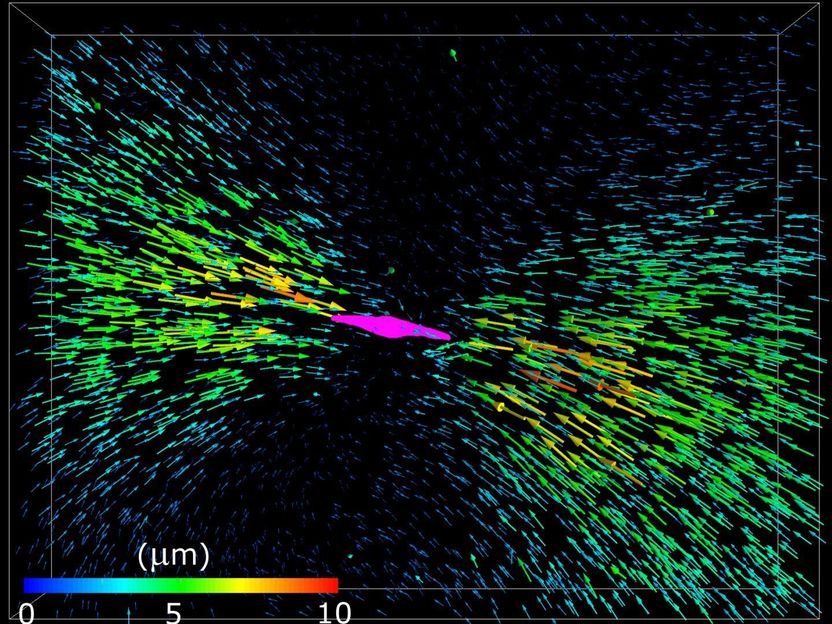
Cancer cells 'talk' to their environment, and it talks back
Mobile lab for epidemiological applications
Nano imagining takes turn for the better - Photothermal technique provides new way to track nanoparticles