PFAS detection in 15 minutes: BAM develops sensor system for rapid on-site analysis
PFAS are forever chemicals that hardly degrade in the environment. They enter soil and water, accumulate in plants, animals, and humans, and can be harmful to health. The problem: Until now, detecting them has been complicated, expensive, and only possible in a laboratory – too slow for a rapid response.
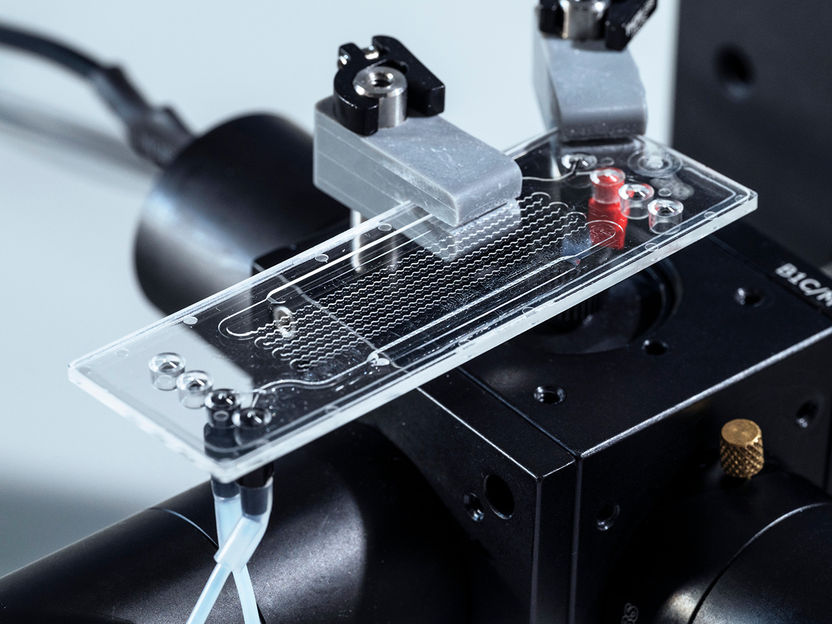
Close-up of the microfluidic chip of the sensor system
Copyright: BAM
Researchers at the Federal Institute for Materials Research and Testing (BAM) have now developed a compact sensor system that detects PFAS directly on site in aqueous samples – quickly, reliably, and cost-effectively. The new method delivers results in less than 15 minutes and can detect even small amounts of these chemicals. The results have now been published in the renowned journal Nature Communications and selected for the “Editors' Highlights” section as one of the most important articles of recent months in the field of “Materials Science and Chemistry”.
"PFAS are a global problem. With our technology, we are laying the foundation for rapid on-site analysis that will help authorities and companies monitor and remediate contaminated sites," says Knut Rurack, an expert in chemical and optical sensing at BAM.
The system works with a combination of tiny fluorescent particles and a microfluidic platform – in simple terms, a pocket-sized mini-laboratory. After preparing the water sample, the device shows a clear signal if PFAS are present. “Our goal was to create a robust, user-friendly, and scalable system. The combination of materials science and microfluidics opens up new avenues for monitoring cleaning and remediation processes in the context of environmental management—not only for PFAS, but also for other pollutants,” explains Knut Rurack.
The system is mobile, requires no complex laboratory equipment, and significantly reduces the analysis effort. In this way, BAM is making an important contribution to the protection of people and the environment and supporting the implementation of current legal requirements.
Original publication

Other news from the department science