Chewing gum rapid test for inflammation
Chewing gum to screen for oral inflammation
Dental implants occasionally entail complications: Six to fifteen percent of patients develop an inflammatory response in the years after receiving a dental implant. This is caused by bacteria destroying the soft tissue and the bone around the implant in the worst case.
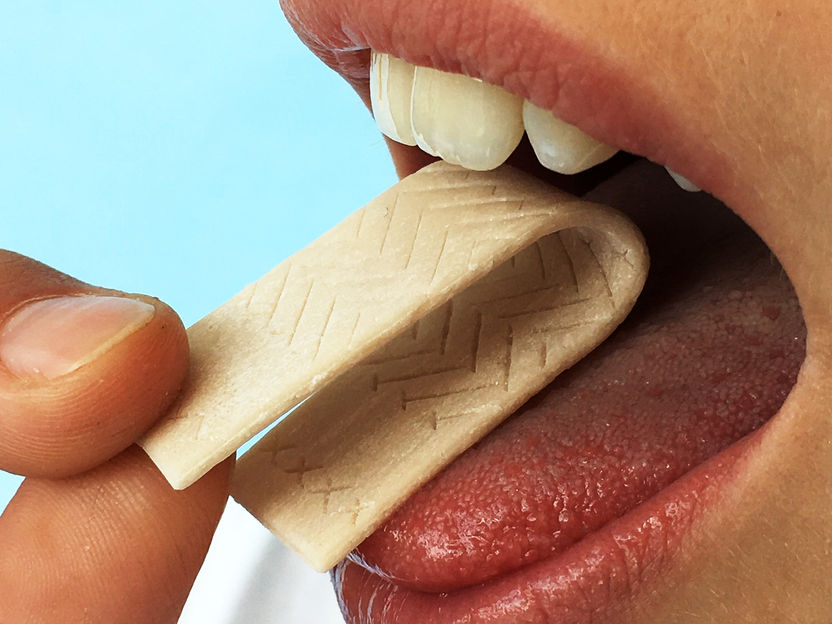
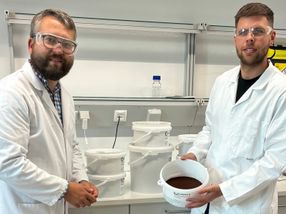
Researchers from the University of Würzburg are working on a chewing gum that is capable of detecting oral inflammation.
Uni Würzburg
In future, patients will benefit from a quick and affordable method assessing whether they carry such bacteria: using a chewing gum based diagnostic test developed by a pharmaceutical research team at the Julius-Maximilians-Universität (JMU) Würzburg in Bavaria, Germany.
In practice, the test works as follows: If there is an inflammation in the oral cavity, a bittering agent is released while chewing the gum. Patients can then visit their dentist who confirms the diagnosis and treats the disease. This type of early detection aims at preventing serious complications such as bone loss.
"Anyone can use this new diagnostic tool anywhere and anytime without any technical equipment," Professor Lorenz Meinel says; he is the head of the JMU Chair for Drug Formulation and Delivery. He developed the new diagnostic tool with Dr. Jennifer Ritzer and her team; the invention is currently featured in an article in the journal "Nature Communication".
Enzymes release bitter taste
The scientific background: In the presence of inflammatory conditions, specific protein-degrading enzymes are activated in the mouth. In just five minutes, these enzymes also break down a special ingredient of the chewing gum, thereby releasing a bittering agent that could not be tasted before.
Meinel's team provided the proof that this principle actually works. First studies using the saliva of patients were conducted at Merli Dental Clinic in Rimini.
Company establishment planned
To launch the chewing gum into the market, Meinel's team plans to set up a company. The professor assumes that it will take two to three years until the gum is commercially available.
Chewing gum rapid tests for other medical applications are presently under development. "We hope to be able to diagnose other diseases with our “anyone, anywhere, anytime” diagnostics to identify and adress these diseases as early as possible," Meinel explains.
Original publication
Other news from the department science