Physicists are taking the next step towards more sensitive sensors
Supersensitive through quantum entanglement
Entangled states of light allow for enhanced sensitivity in optical interferometry, a measurement technique in physics. Therefore, so-called path-entangled photon states in well-defined temporal pulses are required. So far, the generation of such states was possible only to a limited extent in a probabilistic process. Physicists at the University of Stuttgart have now demonstrated the deterministic generation of such entangled photon states using a single semiconductor quantum dot, and could thereby outperform fundamental sensitivity boundaries, unattainable with classical light.
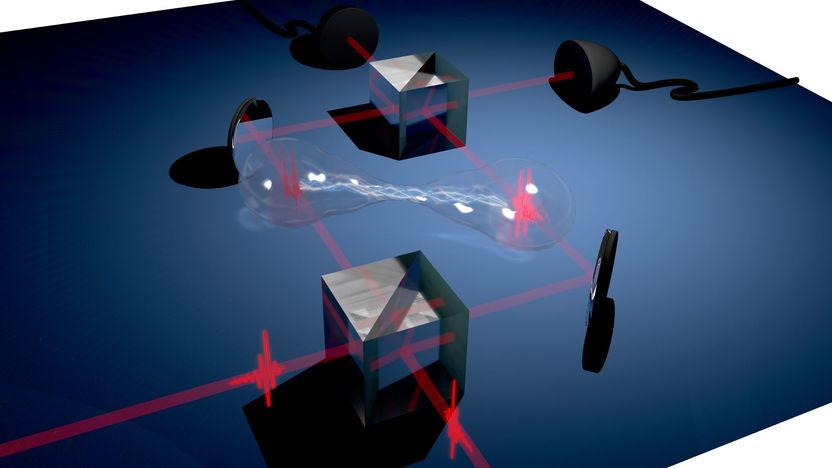
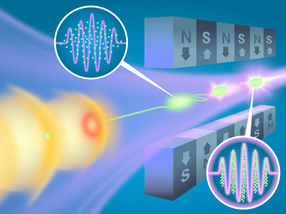
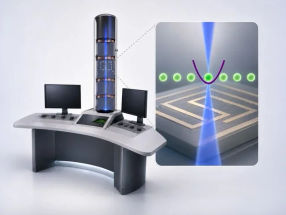
Two single-photons are overlapped on a beam splitter and generate a so-called biphotonic path-entangled NOON state.
University of Stuttgart /IHFG
Many optical sensing schemes for biomolecules or chemical substances are based on the interferometric measurement of a phase. The maximum achievable precision of such a measurement is subject to several limitations. According to the rules of classical physics, however, there is a universal sensitivity barrier, the so-called standard quantum limit, which cannot be surpassed with classical light, for example laser light. Entangled photon states allow to outperform this classical limit.
Semiconductor quantum dots are ideally suited for the generation of entangled light states. These quantum emitters can be excited by a regular sequence of short optical pulses, and emit, at suitable conditions, a single-photon after each pulse, resulting in a regular stream of single-photons. Two of these single-photons can be superimposed on a beam splitter. In the subsequent two-photon interference process, so-called NOON states are generated. In these specific states of light, the two photons are in a quantum mechanical superposition state and are optimally suitable for interferometric measurements with enhanced phase resolution.
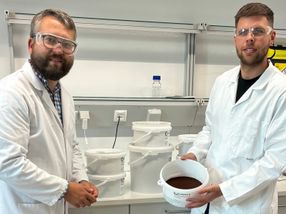
Markus Müller and Hüseyin Vural, PhD students at the Institut für Halbleiteroptik und Funktionelle Grenzflächen of the University of Stuttgart (Director Prof. Dr. Peter Michler) have now succeeded to generate high-quality NOON states that can beat the standard quantum limit, making use of the photon emission from a semiconductor quantum dot. Though, transmission and detection inefficiencies can cancel out the quantum mechanically induced improvement in phase sensitivity. For now, this was also the case in the experiment of the Stuttgart scientists. With the help of optimized semiconductor quantum dot light sources, however, these problems can be solved soon. Thus, the realization of an optical sensor based on a quantum dot source of entangled photons, with a sensitivity unattainable by classical (laser) light, is possible in the near future.
Original publication
Other news from the department science