Labexchange Wins the 2026 German Sustainability Award
Award in the “Capital Goods Wholesale” category recognizes more than 36 years of practicing the circular economy in the laboratory and analytics industry
Labexchange – Die Laborgerätebörse GmbH was awarded the 2026 German Sustainability Prize in the “Capital Goods Wholesale” category. The German Sustainability Award is one of Europe’s most prestigious honors for environmental, social, and economic commitment and is being presented this year in collaboration with the DIHK, PwC, and the WWF, among others.
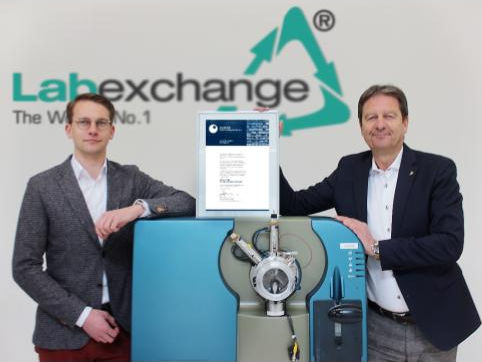
Labexchange
The award recognizes a business model that Labexchange has consistently practiced for over 36 years: laboratory equipment and analytical systems are not treated as disposable products, but are inspected, refurbished, and returned to the market with a warranty. In this way, Labexchange has been making a measurable contribution for decades to resource conservation and the circular economy in laboratories, research institutions, universities, and the chemical and pharmaceutical industries.
When Dr. Wolfgang Kuster founded Labexchange more than 36 years ago, sustainability was not yet a buzzword. Rather, the company was born out of a clear conviction: fully functional laboratory equipment should not be disposed of if it can be technically inspected, reused, and put to good use again. This principle remains at the core of the company to this day.
“For Labexchange, sustainable business practices, the prudent use of resources, and environmental protection have been a matter of course from the very beginning. This is particularly evident in the value we create by reusing used equipment, through which we make a positive contribution to the circular economy,” say Dr. Wolfgang Kuster and Maximilian Kuster, managing directors of Labexchange.
Winning the 2026 German Sustainability Award is a special milestone for Labexchange. It demonstrates that sustainable business models can be economically successful, technically reliable, and forward-looking even in the field of high-quality capital goods.
“This award represents over 36 years of conviction, perseverance, and consistent action. It demonstrates that a circular economy in the laboratory is not only possible but also creates real added value for customers, partners, and the environment,” Dr. Wolfgang Kuster and Maximilian Beckmann-Kuster continue.
Special thanks go to the entire Labexchange team, which brings the company’s vision to life day after day with expertise, passion, and a sense of responsibility. Labexchange also thanks its customers and partners, who have supported and further developed the concept of reuse and sustainable procurement in the laboratory for many years.
With the guiding principle “All your lab equipment,” Labexchange positions itself as a full-service provider of new and certified used laboratory equipment, analytical systems, services, and sustainable procurement solutions. The company combines technical quality, personalized advice, rapid availability, and comprehensive service with a clear commitment to the circular economy.
Note: This article has been translated using a computer system without human intervention. LUMITOS offers these automatic translations to present a wider range of current news. Since this article has been translated with automatic translation, it is possible that it contains errors in vocabulary, syntax or grammar. The original article in German can be found here.

Other news from the department business & finance














Most read news






More news from our other portals

























See the theme worlds for related content
Topic World Sustainability in the laboratory
The main topic of sustainability in the laboratory highlights innovative approaches and technologies that reduce the ecological footprint in laboratories. These include energy-efficient equipment, resource-saving consumables, green chemistry, recycling initiatives and sustainable laboratory management solutions.

Topic World Sustainability in the laboratory
The main topic of sustainability in the laboratory highlights innovative approaches and technologies that reduce the ecological footprint in laboratories. These include energy-efficient equipment, resource-saving consumables, green chemistry, recycling initiatives and sustainable laboratory management solutions.
Last viewed contents
Heraeus Noblelight Acquires Specialty Light Sources Company in the UK

Ovulation filmed from start to finish for the first time - New findings for fertility research
New blood test detects wide range of cancers - Test proved able to detect and indicate site of dozens of types of cancer with high accuracy
Gardner Denver Medical acquires ILS and Zinsser Analytic
Biotage AB and McMaster University sign joint agreement to develop new chemistry platform

‘Smart’ contact lenses could someday enable wireless glaucoma detection - Intelligent contact lens for quantitative intraocular pressure monitoring
Spectro Scientific acquired by AMETEK
Hach Lange announces name change

Trust in AI but not blindly - Artificial intelligence is sometimes met with scepticism but it has earned our trust
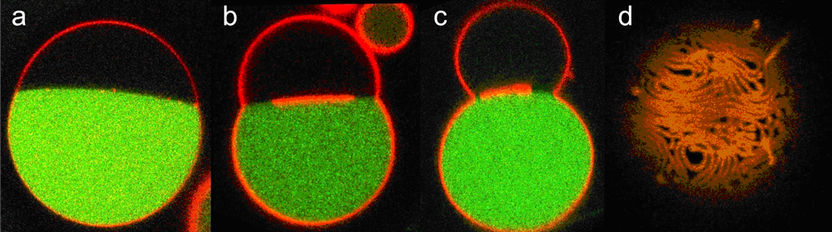
Nanotubes: cellular membranes on supply - Osmotic forces play a role in nanotube formation in cells