A map for single-atom catalysts
The precise knowledge of the atomic environments can help produce single-atom catalysts that are more uniform, and thus more effective

Using nuclear magnetic resonance, researchers at ETH Zurich have studied the atomic environments of single platinum atoms in solid supports as well as their spatial orientation. In the future, this method can be used to optimize the production of single-atom catalysts.
Catalysis – the acceleration of a chemical reaction by adding a particular substance – is extremely important in industry as well as in everyday life. Around 80 % of all chemical products are produced with the help of catalysis, and technologies like exhaust catalysts or fuel cells are also based on this principle. One particularly effective and versatile catalyst is platinum. However, because platinum is a very rare and expensive precious metal whose production causes a lot of CO2 emissions, it is important to use as little of it as possible while maximizing its efficiency.
Catalysts with single atoms
In recent years, scientists have tried to develop so-called single-atom catalysts, in which each atom contributes to the chemical reaction. These catalysts are made by depositing single platinum atoms on the surface of a porous host material, for instance carbon doped with nitrogen atoms. The nitrogen atoms act as anchoring points which the platinum atoms can latch on to.
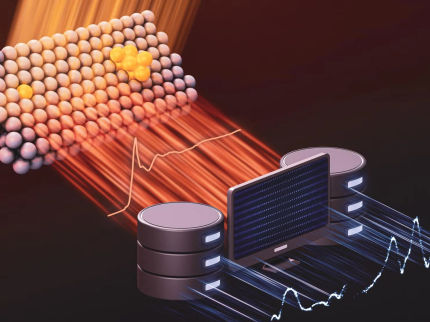
A team of researchers led by Javier Pérez-Ramírez and Christophe Copéret at the Department of Chemistry and Applied Life Sciences of ETH Zurich, together with colleagues at the Universities of Lyon and Aarhus, have now shown that such single-atom catalysts are more complex than previously thought. Using nuclear magnetic resonance, they were able to show that the individual platinum atoms in such a catalyst can have very different atomic environments, which influence their catalytic action. In the future, this discovery will make it possible to develop more efficient catalytic materials. The researchers recently published their findings in the scientific journal Nature.
Chance encounters lead to breakthrough
“Until now individual platinum atoms could only be observed through the ‘lens’ of an electron microscope – which looks impressive but doesn’t tell us much about their catalytic properties”, says Pérez-Ramírez. Together with Copéret he thought about how one might characterize the individual platinum atoms more precisely. The collaboration began with a chance encounter during a meeting in the framework of the NCCR Catalysis program.
After the meeting, the two researchers developed the idea to try nuclear magnetic resonance. This method, on which the MRI in a hospital is based and which is typically used for investigating molecules in laboratories, the spins of atomic nuclei in a strong static magnetic field react to oscillating magnetic fields of a certain resonant frequency. In molecules, this resonant frequency depends on how the different atoms are arranged inside the molecule. “Likewise, the resonant frequencies of the single platinum atoms are influenced by their atomic neighbours – for instance, carbon, nitrogen or oxygen – and their orientation relative to the static magnetic field”, Copéret explains.
This leads to many different resonant frequencies, much like the different tones in an orchestra. Finding out which instrument is producing a particular tone isn’t easy. “As luck would have it, during a visit to Lyon one of us met a simulation expert from Aarhus who was visiting there at the same time”, says Copéret. Such encounters, and the collaborations resulting from them, are essential for scientific progress, he adds. Together with the ETH-collaborator, the simulation expert developed a computer code that made it possible to filter out the many different “tones” of the individual platinum atoms from the muddle.
Mapping the atomic environment
Ultimately, this led to a breakthrough in the description of single-atom catalysts: the research team were now able to compile a kind of map showing the type and position of atoms surrounding the platinum atoms. “This analytical method sets a new benchmark in the field”, says Pérez-Ramírez.
With this method, which is broadly accessible, production protocols for single-atom catalysts can be optimized in such a way that all platinum atoms have tailored environments. This is the next challenge for the team. “Our method is also important from an intellectual property standpoint”, says Copéret: “Being able to precisely describe catalysts at the atomic level enables us to protect them through patents.”
Original publication
Jonas Koppe, Alexander V. Yakimov, Domenico Gioffrè, Marc-Eduard Usteri, Thomas Vosegaard, Guido Pintacuda, Anne Lesage, Andrew J. Pell, Sharon Mitchell, Javier Pérez-Ramírez, Christophe Copéret; "Coordination environments of Pt single-atom catalysts from NMR signatures"; Nature, Volume 642, 2025-6-4
Other news from the department science