ABB Robotics and Mettler-Toledo join forces to accelerate global adoption of flexible lab automation
Companies will redefining the limits of robotics in laboratories to accelerate innovation and address labor shortages
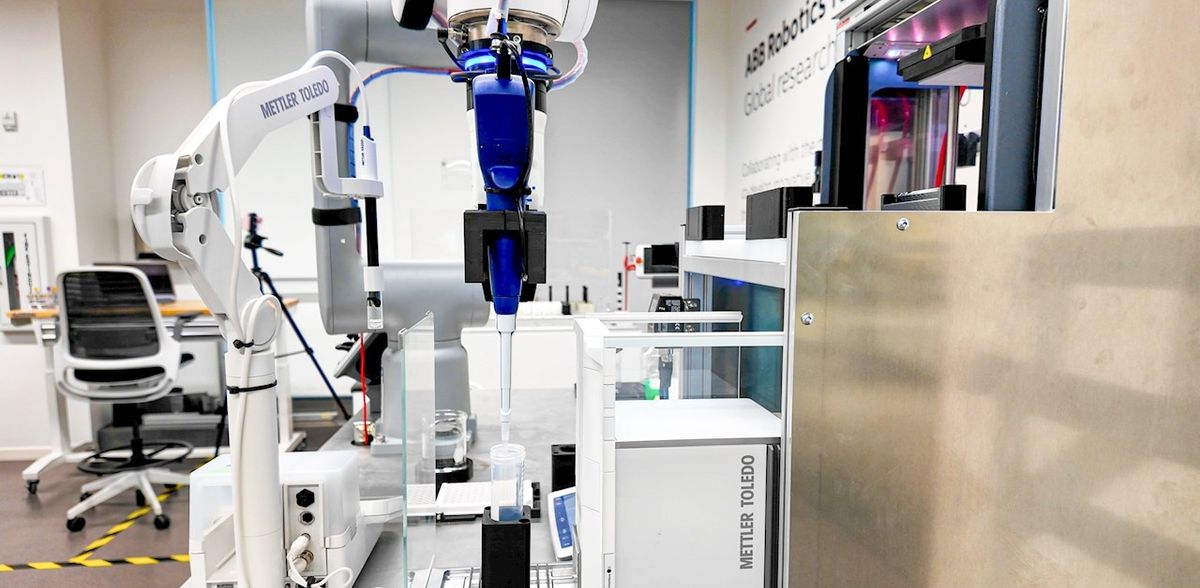
ABB Robotics and METTLER TOLEDO have signed a Memorandum of Understanding (MOU) to offer an innovative solution that seamlessly integrates ABB’s robots with LabX™, METTLER TOLEDO’s laboratory instrument management software. The combined solution will enable greater levels of efficient and high-quality automated laboratory workflows across a range of industries, making research, testing, and quality control more flexible, while accelerating time-to-market and addressing critical labor shortages.
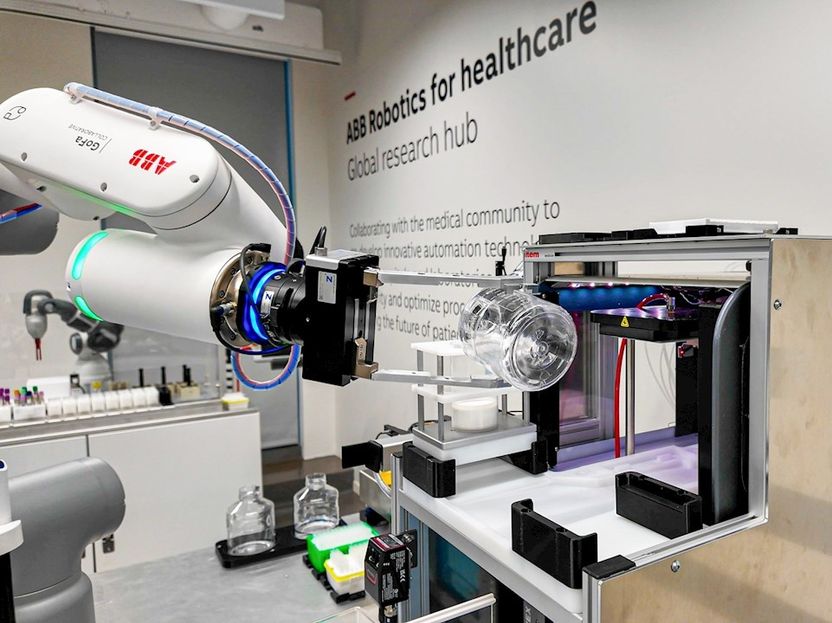
ABB Robotics
“In combining METTLER TOLEDO laboratory equipment with ABB’s collaborative robots (cobots), communicated through the LabX platform, we will support operations and enable the highest traceability, productivity, and data management in the industry,” said Jose Manuel Collados, Manager of ABB Service Robotics. “By unlocking new possibilities in lab automation, our collaboration with METTLER TOLEDO will create efficiencies and unlock resources in pharmaceuticals, chemicals, food and beverage, semiconductors, and battery industries.”
Laboratory automation, working alongside lab technicians, can perform an increasingly sophisticated range of tasks faster, more consistently and with fewer errors than human workers. Yet, the uptake of automation in laboratories is challenged by a gap in the skills needed to handle automation technology and the complexity in setting up highly sensitive workflows.
With the collaboration, METTLER TOLEDO’s LabX software will seamlessly integrate into ABB’s OmniCore ™ robot controllers, enabling LabX to orchestrate robotic lab workflows. By combining the flexibility, ease-of-use and precision of ABB robots with the secure data capture, method control and instrument management of LabX, customers can increase lab productivity, reduce system complexity, fulfill data quality, and safety and regulatory requirements. This also relieves scientists and lab technicians of mundane, repetitive tasks; eliminating common errors; and optimizing productivity – providing lab professionals additional time to pursue higher-value activities, such as data analytics.
"Great innovation starts at the bench, especially when you are able to minimize process times and human error while also supporting the generation of high-quality data and information," says Stefan Heiniger, Head of Laboratory Division for METTLER TOLEDO. "METTLER TOLEDO and ABB will provide a powerful, intuitive, and standardized toolset that meets the need of laboratories of all sizes and types that will deliver new levels of automation, speed, and insights, while also reducing costs."
The collaboration is part of ABB’s ongoing strategy to bring the benefits of automation to new segments worldwide and complements the work at the Life Sciences and Healthcare lab at the Texas Medical Center in Houston as well as the newly inaugurated Open Innovation Lab for Life Science and Healthcare in Zhangjiang Robot Valley, Shanghai.

Other news from the department business & finance












These products might interest you

Most read news





More news from our other portals

























See the theme worlds for related content
Topic world Digitalization in the laboratory
The topic world Digitalization in the lab presents innovations and trends from digital data systems (ELN, LIMS) to laboratory robots and networked devices (IoT) to AI and machine learning.

Topic world Digitalization in the laboratory
The topic world Digitalization in the lab presents innovations and trends from digital data systems (ELN, LIMS) to laboratory robots and networked devices (IoT) to AI and machine learning.