A "spy" in the belly
A band-aid with sensor function
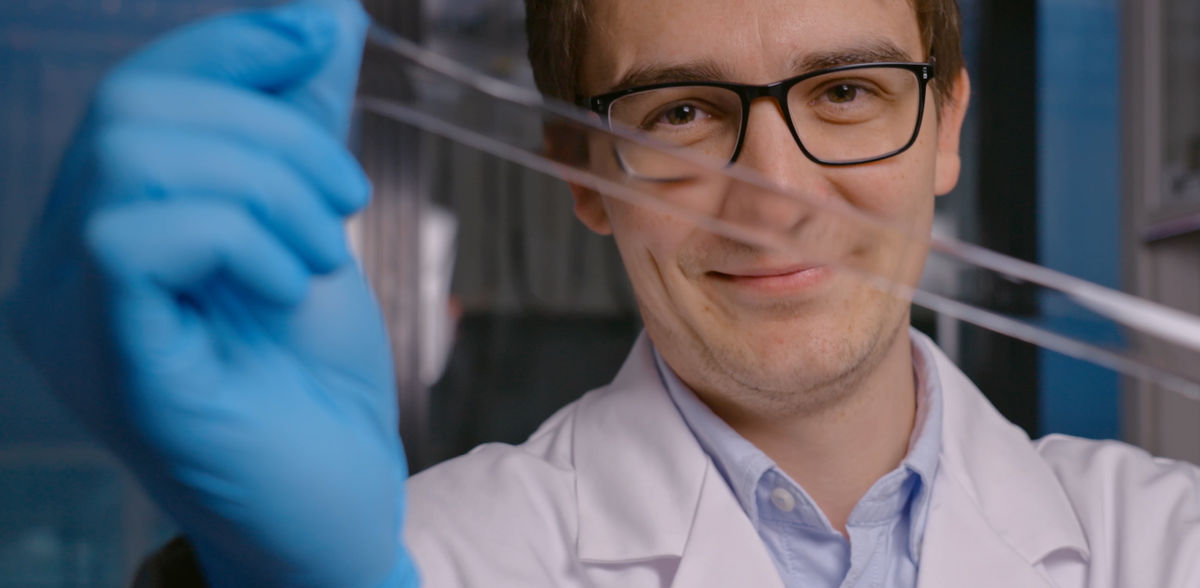
To ensure that wounds remain tightly sealed in the abdomen after surgery, researchers at Empa and ETH Zurich have developed a patch with a sensor function. The polymer patch warns before the occurence of dangerous leaks on sutures in the gastrointestinal tract take hold, while closes the areas on its own. A new material now enables a fast, easy and non-invasive leak diagnosis. The team recently published their findings in the journal Advanced Science.
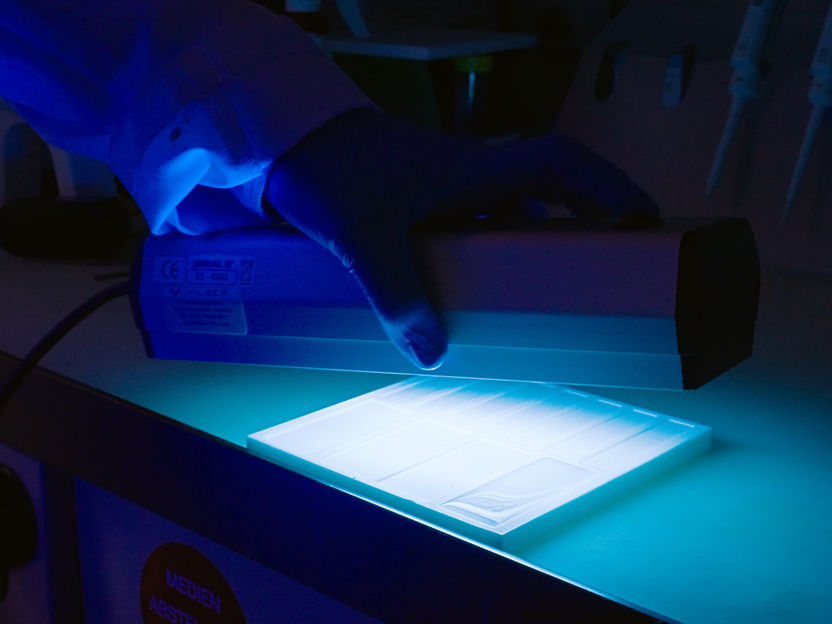
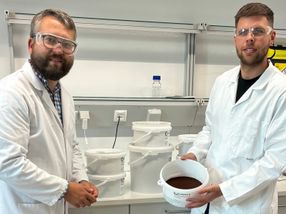
The synthetic hydrogel material consists of four different acrylic substances.
Empa
After surgery in the abdominal cavity, they are dreaded: leaks at the sutures where the contents of the digestive tract can sip into the abdomen. "Even today, such leaks are a life-threatening complication," explains Inge Herrmann, researcher at Empa and professor of Nanoparticulate Systems at ETH Zurich. The idea of sealing sutured tissue in the abdominal cavity with a plaster has already arrived in operating rooms. The problem is that clinical success is not always granted and varies depending on the adhesion of the tissue. This is because the patches made of protein-containing material dissolve too quickly when they come into contact with digestive juices. Motivated by this problem, Inge Herrmann and Andrea Schlegel, a surgeon at the University Hospital Zurich, pursued the idea of developing a new and innovative solution.
Teaching the patch to "see"
Addressing the challenge, Alex Anthis mentored by Herrmann from Empa’s Particles-Biology Interactions Laboratory in St. Gallen and the Nanoparticle Systems Engineering Laboratory at ETH Zurich, first developed a hydrogel-polymer patch that prevents the highly acidic digestive juices and germ-laden food residues from escaping from the digestive tract and triggering peritonitis or even life-threatening blood poisoning (sepsis).
But the Empa researchers wanted to go one step further: "Surgeons have told us that they keep a close eye on the surgical field during even the most complicated procedures – but as soon as the abdominal cavity is closed, they are "blind" and may not notice leaks until it is too late," says Anthis. In order for the hydrogel patch to "learn to see", the team has worked with hospitals in Switzerland and international research partners to develop a solution: The patch is equipped with non-electronic sensors, which already gives an "alarm" before digestive juices can leak into the abdominal cavity. The researchers reported on this novel technology in the renowned journal Nature Communications.
Gas bubbles in ultrasound
The novel material achieves "vision" through a sensitive reaction to changes in the pH value and the occurrence of certain proteins in the vicinity of the wound. Depending on the location of the leak, the reaction takes place within minutes or a few hours. Until now, health care professionals have had to rely on physical reactions of those affected or laboratory tests that occur much later – both indications may come too late at providing a clear indication of a leaking seam.
The sensor patch, on the other hand, makes it possible to detect digestive fluid that escapes in the event of a leak due to its composite structure. For example, acidic gastric juice reacts with the sensor material so that fine gas bubbles appear in the matrix of the patch. The bubbles can then be visualized using ultrasound. "The patches can be equipped with tailor-made sensors for different parts of the digestive tract," says Anthis. Moreover, the patch can even release medication if necessary, such as antibacterial agents.
Sensor with an eye-catching shape
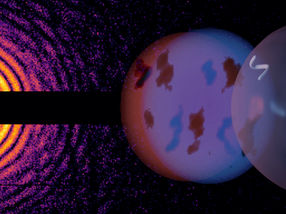
In their latest development, Empa and ETH Zurich researcher Benjamin Suter, together with Anthis and Herrmann, has equipped the patch with additional capabilities: The sensor response now also entails a visible change during an examination of the patient using computed tomography (CT). If the operated site is leaking, contrast deviations on ultrasound and CT images indicate a leak. This detection is also made easier by the new material composition of the integrated sensor, which, thanks to an insoluble tantalum oxide compound, can be shaped into a suitable form that is conspicuous in the imaging process. On contact with digestive fluid, it changes its shape for example from circular to ring-shaped. "In future, a sensor whose shape clearly stands out from anatomical structures in CT and ultrasound images, could reduce ambiguity of impending leak diagnostics," says team leader Inge Herrmann.
Biocompatible super glue
In addition, the material is equipped with the necessary properties for wound closure: a stable bond to the tissue, the formation of networks and stability against digestive fluids. In this way, the cost-effective, biocompatible super glue, which consists largely of water, could not only reduce the risk of complications after abdominal surgery, but also shorten hospital stays and save healthcare costs. "The intestinal patch project is already attracting a great deal of interest from the medical profession," reports Herrmann. Now it is important to advance the application of the clinically relevant innovation in practice.
Other news from the department science