Electronic skin: multisensory hybrid material
Even more sensitive than a human fingertip
The “smart skin” developed by Anna Maria Coclite is very similar to human skin. It senses pressure, humidity and temperature simultaneously and produces electronic signals. More sensitive robots or more intelligent prostheses are thus conceivable.

Smart skin is a wafer-thin material that reacts simultaneously to force, moisture and temperature with extremely high spatial resolution and emits corresponding electronic signals.
Lunghammer - TU Graz
The skin is the largest sensory organ and at the same time the protective coat of the human being. It “feels” several sensory inputs at the same time and reports information about humidity, temperature and pressure to the brain. For Anna Maria Coclite, a material with such multisensory properties is “a kind of ‘holy grail’ in the technology of intelligent artificial materials. In particular, robotics and smart prosthetics would benefit from a better integrated, more precise sensing system similar to human skin.” The ERC grant winner and researcher at the Institute of Solid State Physics at TU Graz has succeeded in developing the three-in-one hybrid material “smart skin” for the next generation of artificial, electronic skin using a novel process. The result of this pioneering research has now been published in the journal Advanced Materials Technologies.
As delicate as a fingertip
For almost six years, the team worked on the development of smart skin as part of Coclite’s ERC project Smart Core. With 2,000 individual sensors per square millimetre, the hybrid material is even more sensitive than a human fingertip. Each of these sensors consists of a unique combination of materials: an smart polymer in the form of a hydrogel inside and a shell of piezoelectric zinc oxide. Coclite explains: “The hydrogel can absorb water and thus expands upon changes in humidity and temperature. In doing so, it exerts pressure on the piezoelectric zinc oxide, which responds to this and all other mechanical stresses with an electrical signal.”
The result is a wafer-thin material that reacts simultaneously to force, moisture and temperature with extremely high spatial resolution and emits corresponding electronic signals. “The first artificial skin samples are six micrometres thin, or 0.006 millimetres. But it could be even thinner,” says Anna Maria Coclite. In comparison, the human epidermis is 0.03 to 2 millimetres thick. The human skin perceives things from a size of about one square millimetre. The smart skin has a resolution that is a thousand times smaller and can register objects that are too small for human skin (such as microorganisms).
Material processing at the nanoscale
The individual sensor layers are very thin and at the same time equipped with sensor elements covering the entire surface. This was possible in a worldwide unique process for which the researchers combined three known methods from physical chemistry for the first time: a chemical vapour deposition for the hydrogel material, an atomic layer deposition for the zinc oxide and nanoprint lithography for the polymer template. The lithographic preparation of the polymer template was the responsibility of the research group “Hybrid electronics and structuring” headed by Barbara Stadlober. The group is part of Joanneum Research’s Materials Institute based in Weiz.
Several fields of application are now opening up for the skin-like hybrid material. In healthcare, for example, the sensor material could independently detect microorganisms and report them accordingly. Also conceivable are prostheses that give the wearer information about temperature or humidity, or robots that can perceive their environment more sensitively. On the path to application, smart skin scores with a decisive advantage: the sensory nanorods – the “smart core” of the material – are produced using a vapor-based manufacturing process. This process is already well established in production plants for integrated circuits, for example. The production of smart skin can thus be easily scaled and implemented in existing production lines.
The properties of smart skin are now being optimized even further. Anna Maria Coclite and her team – here in particular the PhD student Taher Abu Ali – want to extend the temperature range to which the material reacts and improve the flexibility of the artificial skin.
Original publication
Other news from the department science














Most read news






More news from our other portals



























Last viewed contents

Crystallography for the misfit crystals - Advanced algorithms plus an exceptional X-ray laser can reveal the structures of not-so-neat-and-tidy materials unattainable by other techniques
Watching drug activity in single molecule
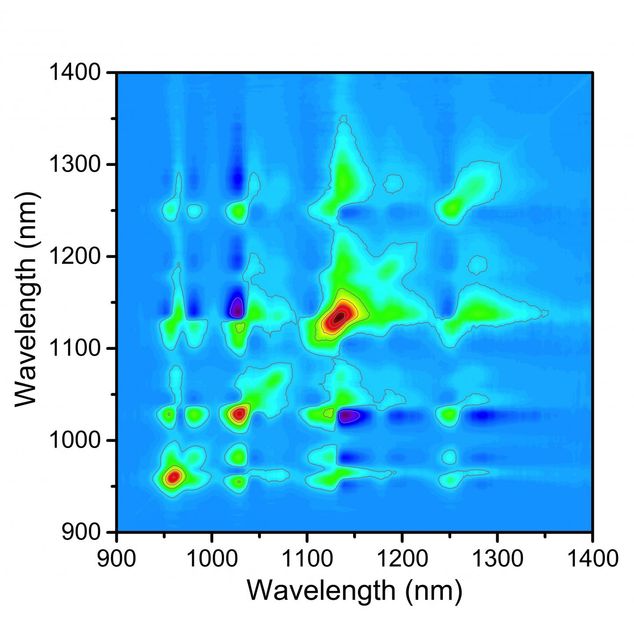
Smaller is better for nanotube analysis

Blood-based test accurately identifies viral infection before symptoms develop - The study, conducted prior to COVID-19, has broad potential for pandemic responses
'Sifting' liquid at the molecular level - Drexel University engineers develop method for using nanotubes to separate liquids
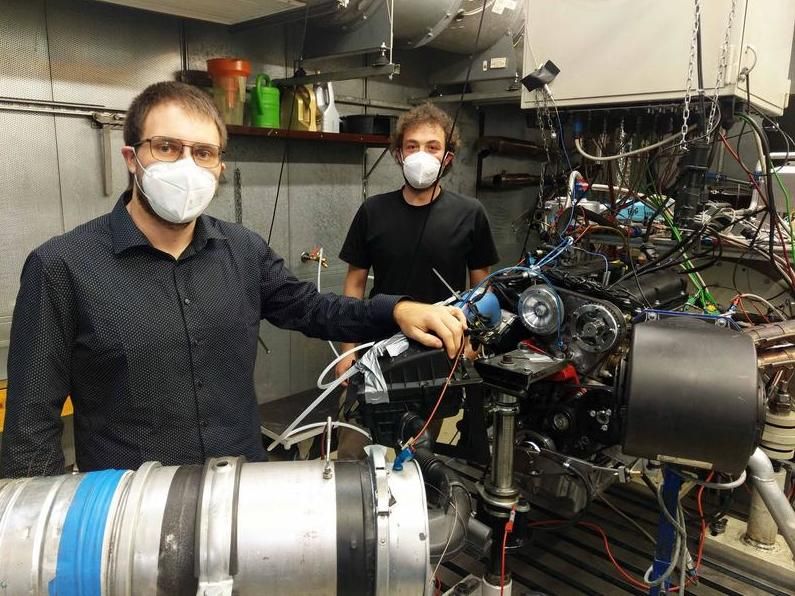
Fastest sensor for heat flow tested - Relevant for alternative fuels and hydrogen
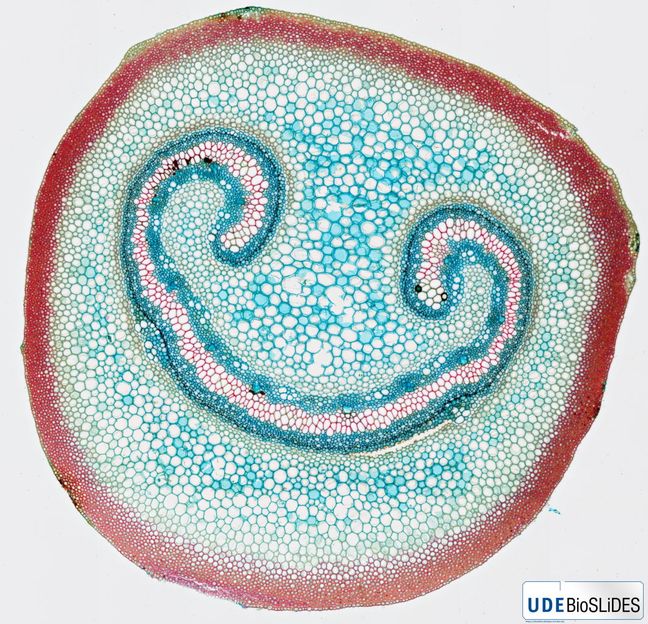
Online Microscopy Platform: See-through for Everyone! - One can focus through the high-resolution specimens just like on a microscope, in order to see details in sharp focus that are located in different layers
Research under high pressure - Why 3,000 bars are needed to take a comprehensive look at a protein
New algorithm sharpens focus of world's most powerful microscopes - Scientists develop a technique that improves the resolution of cryo-electron microscopy

Using ions to find molecules - Physicists use a single trapped ion to detect ultracold molecules
Novasep appoints two key executives - Stephen Stefano heads up Novasep North American business and Patrick Glaser leads Novasep Synthesis division