From metabolite profiles to molecular biomarkers for colorectal cancer
The aim of a European project (TRANSCAN) is to identify metabolite signatures that are associated with all stages in the development of colorectal cancer. Metabolomic analysis was performed on more than 2,000 plasma samples from individuals with colorectal cancer, colorectal adenoma and a control group.
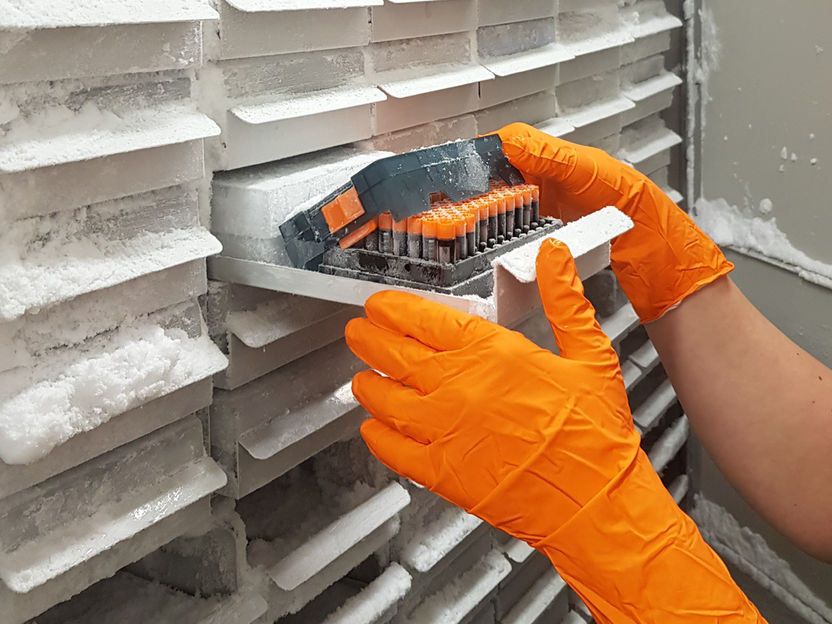
The CORSA (Colorectal Cancer Study of Austria) biobank was a valuable resource for the international research project MetaboCCC.
MedUni Wien
Colorectal cancer is one of the most common cancers worldwide. In Austria, approximately 5,000 people are diagnosed with colorectal cancer every year. It is well known that the development from benign precursors-polyps or adenomas to colorectal cancer takes about 10 years. During this time period, these precursors can be diagnosed and removed during colonoscopy, thus preventing the development of colorectal cancer.
Biobanks: valuable resources for research
Over the past 16 years, a research team from the Medical University of Vienna headed by Andrea Gsur has established a comprehensive biobank that includes DNA, plasma samples and clinical data of more than 16,000 individuals with colorectal cancer, adenomas and a control group. The CORSA (Colorectal Cancer Study of Austria) biobank was established in close cooperation with the screening programme “Burgenland Prevention Trial of Colorectal Cancer Disease with Immunological Testing” (B-PREDICT) in the Austrian province of Burgenland. CORSA is as a valuable resource for the international research project MetaboCCC.
MetaboCCC is supported by the European network “ERA-NET on Translational Cancer Research” (TRANSCAN), also supported by the Austrian Science Fund FWF. The consortium involves the Medical University of Vienna, the German Cancer Research Center (DKFZ) in Heidelberg, the Universities of Maastricht and Wageningen in the Netherlands, the International Agency for Research on Cancer (IARC) in Lyon, France, and BEVITAL in Norway.
Identification of metabolite signatures
In the course of MetaboCCC more than 2,000 plasma samples from individuals with colorectal cancer, adenomas and controls, which are confirmed by colonoscopy to be free of adenomas and colon cancer were examined. All participating TRANSCAN countries (Austria, Germany, Netherlands and Norway) sent their plasma samples to the expert laboratory at the IARC in France for metabolomic measurements. Measurements have been conducted by mass spectroscopy.
Metabolomics is an innovative and powerful approach by which a large number of metabolites are systematically screened. Metabolomics has been proven as a high-throughput method for the discovery of new biomarkers. “Metabolomics has the advantage of an easy transition from a profiling technology to a clinical assay,” explains Andrea Gsur. The MetaboCCC consortium allowed the measurement in a large sample size and enabled the validation of results in independent study population (discovery and validation set).
15 significant metabolites identified
The aim of this project was to identify metabolite signatures that are associated with all stages in the development of colorectal cancer. In a recent publication resulting from the project, metabolomic profiles of patients from the Germany cohort were used as a discovery set and samples from Austria were used for validation. Thereby, 15 statistically significant metabolites could be identified. Within the MetaboCCC consortium, statistical analyses of the comprehensive data set is ongoing and further publications are in preparation. The newly discovered metabolites could contribute to the development of tailored therapeutic approaches and prevention strategies.
Original publication
Geijsen JMRA, Brezina S., Keski-Rahkonen P. et al.; "Plasma metabolites associated with colorectal cancer: A discovery-replication strategy"; International Journal of Cancer; 2019.
Schafmayer C., Harrison JW., Buch S. et al.; "Genome-wide association analysis of diverticular disease points towards neuromuscular, connective tissue and epithelial pathomechanisms"; Gut; 2019.
Huyghe JR, Bien SA, Harrison TA et al.; "Discovery of common and rare genetic risk variants for colorectal cancer"; Nature Genetics; 2019.
Law PJ et al.; "Association analyses identify 31 new risk loci for colorectal cancer susceptibility"; Nature Communications; 2019.
Other news from the department science