Safety decisions often based on incomplete information
A new doctoral thesis from the Swedish medical university Karolinska Institutet reveals that professionals may overlook important information when they search for research findings about injury prevention and safety. The typical search uses no more than one or two online databases, and often only familiar search terms are used thereby limiting the search even further.
"Our findings are compelling because we were able to identify problems both with how professionals look for published research about safety and with the way that the online literature databases is organized," says Dr David Lawrence, Postgraduate Student at Karolinska Institutet. "This knowledge should be helpful in teaching people to be better searchers and for making improvements to the design of databases.”
The researchers conducted six studies of the information-seeking behaviors of professionals who work in the fields of injury prevention and safety promotion. They used subscribers to the weekly SafetyLit Literature Update Bulletin as a pool for a survey. Subscribers included attorneys, engineers, staff members of legislative and other government offices, community planners, physicians, psychologists, workplace safety specialists, consumer product safety specialists, building codes and standards professionals, academic researchers and others. Among the respondents there where professionals from 173 countries represented. All terms used to search the SafetyLit database during the years 2000-2005 were registered. During the six years that the web logs were examined the site averaged 2500 searches each week.
The researchers found that when injury prevention professionals search for information, they typically search no more than one or two online databases. They only use familiar search terms and often exclude professional terms commonly used by professionals in other fields. Because at least thirty distinct professional disciplines contribute to what is known about injury prevention and safety promotion topics, this means that the searchers are self-limiting their ability to find new information. Further, professional journals exist to serve researchers in each of these disciplines but online literature databases tend to focus on the perceived needs of researchers in a single specialty and exclude journals from other disciplines.
"A large proportion of injury prevention and safety promotion professionals may hold a biased view of the full nature of injury problems and the options for prevention”, says Dr Lawrence. “When they search a database they find a satisfyingly large list of articles and conclude that they must have received comprehensive information, unintentionally missing information from other perspectives.”
Doctoral thesis: "The information-seeking behaviors of professionals and information sources in the field of injury prevention and safety promotion", David Lawrence, Department of Public Health Sciences, Division of International Health.
Other news from the department business & finance




















Most read news









More news from our other portals



























Last viewed contents
Fastest sensor for heat flow tested - Relevant for alternative fuels and hydrogen

Online Microscopy Platform: See-through for Everyone! - One can focus through the high-resolution specimens just like on a microscope, in order to see details in sharp focus that are located in different layers
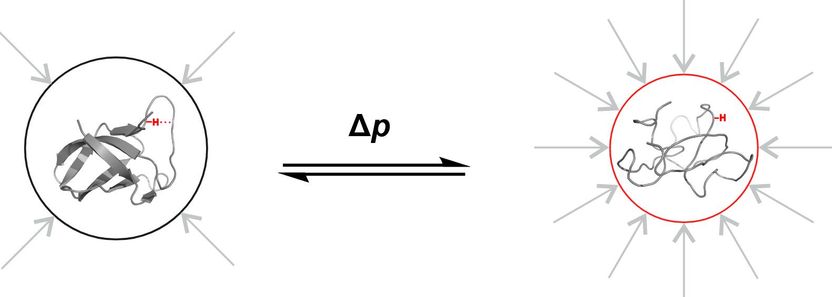
Research under high pressure - Why 3,000 bars are needed to take a comprehensive look at a protein
New algorithm sharpens focus of world's most powerful microscopes - Scientists develop a technique that improves the resolution of cryo-electron microscopy

Using ions to find molecules - Physicists use a single trapped ion to detect ultracold molecules
Novasep appoints two key executives - Stephen Stefano heads up Novasep North American business and Patrick Glaser leads Novasep Synthesis division

DKSH extends partnership with Bruker in China - Distribution agreement to expand coverage for Bruker’s 3D X-ray Microscopy product portfolio for non-destructive imaging technology

Individual protein complex generates electric current - Solar cell consisting of a single molecule
Perten Instrument forms fully owned subsidiary in China
Measuring glucose concentration without enzymes - Sensor of novel material an alternative for blood glucose measurement