Scientists Image Plant "Attack" Signaling System
Techniques pioneered for medical science shed light on plants' internal communications
Scientists at the U.S. Department of Energy's Brookhaven National Laboratory have adapted radiotracer tools and imaging techniques pioneered at Brookhaven for medical science, exploiting the technology to discover new aspects of the way plants respond to stresses such as environmental pollutants, microorganisms, or grazing insects.
Using radioactively "tagged" molecules and sensitive detectors to produce high-resolution images, the scientists demonstrate that jasmonate, a hormone produced by plants in response to stress, moves quickly throughout the plant. This provides evidence that jasmonate may be responsible for "broadcasting" an "attack" warning to trigger widespread defensive action. The studies, which have been published by the journal Planta, also demonstrate that jasmonate affects the movement of sugar, the basic commodity for plant growth.
"It's like an adrenaline rush," said Brookhaven plant scientist Richard Ferrieri, corresponding author on the paper, suggesting that the jasmonate-triggered rush of sugar may help fuel the plant's defensive response.
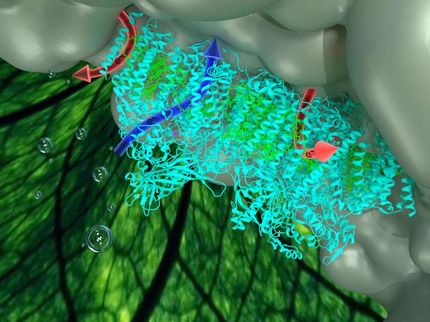
The scientists were particularly impressed with the detail of the images, which allowed them to discern directional movement within the plant's vascular system. "We were able to 'see' jasmonate move within both the phloem, which delivers sugars from the leaves to places where it is used for storage or growth, and the xylem, which delivers water and mineral nutrients from the soil. The findings could have major ecological and evolutionary implications for our broad understanding of signaling in plants," he said.
Scientists have known for some time that, after one part of a plant is damaged, defensive responses soon occur in other regions, showing that information of the attack is somehow transmitted to warn other regions to be on the defence. Jasmonate has been implicated in signaling this information.
To examine the role of this hormone, the Brookhaven scientists developed a method to "label" jasmonate with a radioactive form of carbon (carbon-11), so that its location and movement within a plant can be "imaged" using a technique known as positron autoradiography. This approach for plant studies grew out of basic radiochemistry tools developed at Brookhaven for imaging the movement of drugs and other substances in humans and animals using positron emission tomography (PET), a technique now commonly used in medical diagnosis and research.
As part of the study, the scientists also tracked the movement of radiolabeled sugar, produced by plants as a product of photosynthesis, using the same radioactive isotope, carbon-11. This technique has been used for plant science at only three other laboratories worldwide. Using radiolabeled sucrose, scientists can study the effects of jasmonate and of pharmaceuticals that change specific processes within experimental plants. In the Brookhaven study, jasmonate applied to certain focal leaves increased the active loading of sugar into the vasculature of those tissues, as well as the movement of sugar to all parts of the plant.
"We believe that jasmonate enables more chemical energy to become available to the plant's transport-system, resulting in more sugar delivered to other parts of the organism that are acting defensively," Ferrieri said.
Other news from the department science