Blood test could detect kidney cancer up to 5 years earlier
Scientists have discovered that a marker in the blood could help predict the risk that a person will develop kidney cancer. The study, supported by Cancer Research UK, examined the blood of 190 people who went on to develop kidney cancer, compared to 190 controls who did not.
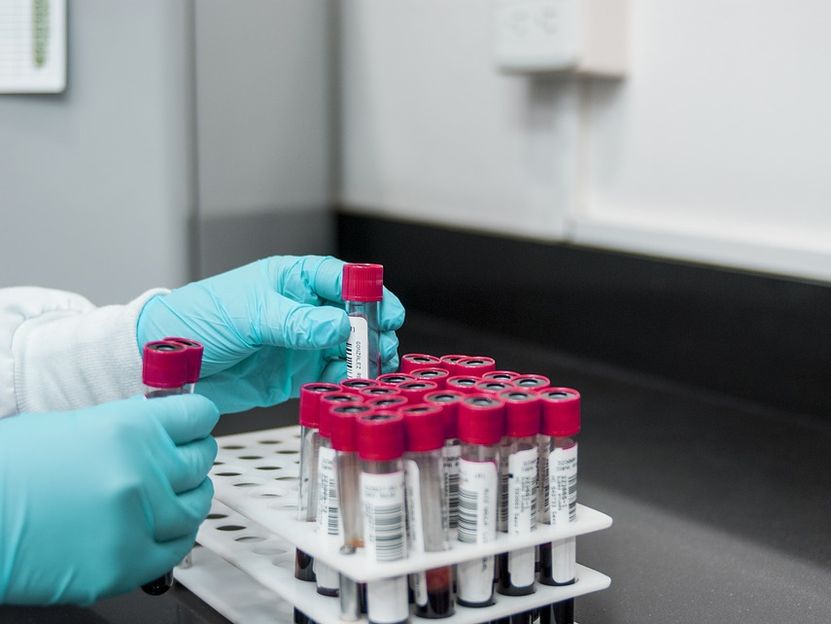
Blood samples, symbolic picture
fernandozhiminaicela; pixabay.com; CC0
The team found that measuring levels of a protein molecule in the blood, called KIM-1, could indicate whether a person was more likely to develop kidney cancer over the following five years. The data also showed that the greater the concentration of KIM-1, the higher their risk of developing kidney cancer. Those with the lowest levels of KIM-1 had a 0.2% predicted risk of kidney cancer over 5 years, compared with a 1-1.4% risk for those with the highest levels, depending on age.
In people with kidney cancer, KIM-1 levels were also found to be linked with poor survival, as those with the highest levels in their blood were less likely to survive. In the future, the scientists think that testing for blood KIM-1 levels could be used alongside imaging to confirm suspicions of kidney cancer, or help to rule out the disease.
Treatment success
Dr David Muller, study author from the School of Public Health at Imperial, said: “This work is a big step forward; KIM-1 is the only blood biomarker shown prospectively to distinguish between people at high and low risk of kidney cancer. But there’s a lot more work to do before we could envisage this in the clinic.
“The next steps are to look more closely at whether KIM-1 levels can help detect tumours that have a good prognosis, so those at an early stage, and to find out if it could be used as a tool to track whether a patient’s treatment is working.”
The study was also supported by the International Agency for Research on Cancer, the U.S National Institutes of Health, and was based on samples taken during the EPIC study. The European Prospective Investigation into Cancer and Nutrition (EPIC) is an ongoing study that recruited more than half a million people to examine links between diet, lifestyle, environmental factors and disease.
Kidney cancer is the 7th most common cancer in the UK and cases are on the rise. When diagnosed at its earliest stage, more than 8 in 10 people will survive their disease for 5 years or more. More than 4 in 10 cases in England are diagnosed at a late stage, however, and just 1 in 10 people survive kidney cancer when diagnosed at the latest stage.
Detecting cancer sooner
Diagnosing the disease earlier therefore has the potential to boost survival, but the majority of early-stage tumours do not present symptoms and many cases are picked up incidentally during imaging for a range of other health conditions.
Professor Charles Swanton, Cancer Research UK’s Chief Clinician, said: “The potential of blood tests for the detection and monitoring of cancers is becoming increasingly apparent, and this work offers further evidence that they could become powerful tools in the clinic.
“There is a pressing need to shift kidney cancer diagnoses towards earlier stages, when treatment is more likely to be successful, and this promising research is progress towards that goal. This work is still in early stages, so prospective studies of larger populations are needed before this approach could be widely adopted.”
Dr Rupal Bhatt, NIH-funded senior author based at Harvard Medical School, said: “It’s now crucial to understand more about how KIM-1 could be incorporated into patients’ treatment.
“We’re excited about progressing this important work further and testing whether KIM-1 levels could help identify patients who may benefit from additional treatment after surgery, and therefore potentially improve their outlook.”
Original publication
Other news from the department science