SOPAT GmbH and Malvern Panalytical announce a distribution agreement for US market
SOPAT GmbH announced a distribution agreement with Malvern Panalytical. Malvern Panalytical is now the exclusive distributor for a complete range of SOPAT photo-optical image analysis instrumentation and software in the United States of America.

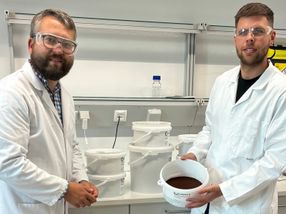
The founders of SOPAT GmbH: Jörn Emmerich, CTO (left) and Dr. Sebastian Maaß, CEO (right)
SOPAT GmbH
“We are thrilled to be working together with Malvern Panalytical in the US market. Having such a strong partner on our side helps us to get in touch with great potential business opportunities on this side of the world. Malvern Panalytical provides a commercial and technical support infrastructure required by our customers in academia and the industry for research and production monitoring. In addition, we are happy to learn from their wealth of experience in this diverse market. We do share the same values and seek the best quality to enhance the productivity of our clients’ processes, both saving resources and reducing costs. Therefore, we are delighted to be able to offer our product range to US customers through Malvern Panalytical.” said Dr. Sebastian Maaß CEO& co-founder, SOPAT GmbH.
“We are excited to bring this innovative, real-time image analysis technology to our customers in the United States. High-resolution visualization and quantitative analysis of particulate systems in situ and in near real time is an important enhancement to the characterization toolkit we deliver to research scientists and process engineers in many industries. SOPAT technology is complementing our range of solutions for on-line and in-process characterization and together with applications expertise of our technical team will deliver added value to our customers working on optimizing their products and processes.” said Alon Vaisman, Head of Sensors and Automation Solutions, Malvern Panalytical.
Other news from the department business & finance













Most read news







More news from our other portals























See the theme worlds for related content
Topic World Particle Analysis
Particle analysis methods allow us to study tiny particles in various materials and reveal their properties. Whether in environmental monitoring, nanotechnology or the pharmaceutical industry, particle analysis gives us a glimpse into a hidden world where we can decipher the composition, size and shape of particles. Experience the fascinating world of particle analysis!
Topic World Particle Analysis
Particle analysis methods allow us to study tiny particles in various materials and reveal their properties. Whether in environmental monitoring, nanotechnology or the pharmaceutical industry, particle analysis gives us a glimpse into a hidden world where we can decipher the composition, size and shape of particles. Experience the fascinating world of particle analysis!