New Endoscopic Technique

Flexible wide-field endoscope provides label-free contrast of tissue based on fluorescence lifetime imaging of tissue autofluorescence

11-Feb-2015 - United Kingdom

fluorescence lifetime imaging (FLIM) of tissue autofluorescence has been shown to provide labelfree contrast between different types and states of tissue. Clinical FLIM can combine lifetime contrast with morphological information to provide a direct comparison between different spatial regions – making it easier to spot differences with respect to “normal” tissue, e.g. for diagnostic screening and potentially enabling margins of diseased tissue to be identified. To date, however, there have been relatively few clinical FLIM studies, partly due to a lack of suitable instrumentation.
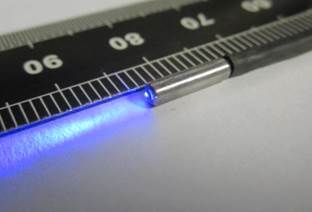
endoscope

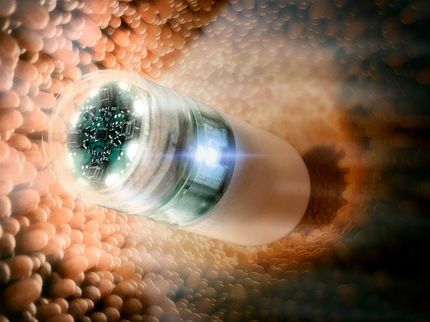
With the aim of applying FLIM to detect and monitor disease in internal organs such as the colon, a British team led by Hugh Sparks (Imperial College London) now developed a flexible wide-field FLIM endoscope based on coherent optical fibre bundles. The device utilizes low average power blue picosecond laser diode excitation sources to induce tissue autofluorescence. Its multimode optical fibre efficiently delivers the excitation radiation to illuminate a 3 mm field of view.

Unfortunately, the multimodal optical fibre propagation necessary to achieve this broad illumination can lead to errors in the lifetime determination due to temporal broadening of the excitation pulses. To address this issue, the researchers characterized the consequent degradation of the spatio-temporal instrument response function (IRF) and incorporated a spatially varying temporal instrument response function in the FLIM analysis.

As prove of principle, the scientists applied their new FLIM endoscope to ex vivo tissue autofluorescence from diseased human larynx biopsies. Using a gain-switched picosecond diode laser operating at 445 nm as the excitation source and an average excitation power of circa 0.5 mW, mm-scale spatial maps of autofluorescence lifetimes could be acquired in about 8 seconds.

To illustrate the instrument’s potential for FLIM at higher acquisition rates, a higher power mode-locked frequency doubled Ti : Sapphire laser was used to carry out FLIM of ex vivo mouse bowel at up to 2.5 Hz using 10 mW of average excitation power at the specimen.

The results demonstrate the potential of the technique to screen for neoplasia. Based on the flexible wide-field FLIM endoscope, new clinical instrumentation may be developed to aid diagnosis and monitoring of therapeutic interventions.

Original publication
Other news from the department science

Most read news

More news from our other portals

See the theme worlds for related content

Last viewed contents

Using AI to identify genetic perturbations from cell images - Newly founded start-up aims to use findings to treat previously incurable fibrosis

Using AI to identify genetic perturbations from cell images - Newly founded start-up aims to use findings to treat previously incurable fibrosis

Design organoids with light - Organoids help researchers understand biological processes in health and disease

Design organoids with light - Organoids help researchers understand biological processes in health and disease

Munich-based lab automation startup raised €2.77M - AI-driven biotech research: Connected labs for faster scientific progress

Munich-based lab automation startup raised €2.77M - AI-driven biotech research: Connected labs for faster scientific progress

ECHA calls for information to avoid unneccessary animal testing

Diagnostic biosensor quickly detects SARS-CoV-2 from nasopharyngeal swabs - New test analyzes patient samples without any sample preparation steps

Diagnostic biosensor quickly detects SARS-CoV-2 from nasopharyngeal swabs - New test analyzes patient samples without any sample preparation steps

The protective armor of superbug C.difficile revealed - Spectacular structure of chain-mail may explain the success of C.diff at defending itself against antibiotics and immune system molecules

The protective armor of superbug C.difficile revealed - Spectacular structure of chain-mail may explain the success of C.diff at defending itself against antibiotics and immune system molecules

Merck and imec Collaborate to Develop Disruptive Microphysiological Systems Platform - The collaboration programme is open to further partners

Merck and imec Collaborate to Develop Disruptive Microphysiological Systems Platform - The collaboration programme is open to further partners

Ångström-Resolution Fluorescence Microscopy - This innovation is poised to usher in a paradigm shift in our approach to study biological systems with thus far unprecedented detail

Ångström-Resolution Fluorescence Microscopy - This innovation is poised to usher in a paradigm shift in our approach to study biological systems with thus far unprecedented detail

A new way to stimulate cellular recycling process

A new way to stimulate cellular recycling process

A milestone on the pathway to Lab 4.0: A new standard for the smart lab - SPECTARIS presents the first industrial communication standard for laboratory and analytical devices

A milestone on the pathway to Lab 4.0: A new standard for the smart lab - SPECTARIS presents the first industrial communication standard for laboratory and analytical devices

Examining puzzling sizes of extremely light calcium isotopes

Examining puzzling sizes of extremely light calcium isotopes

3D microscopy technique allows scientists to trace dangerous heart waves