Light and nanoprobes detect early signs of infection
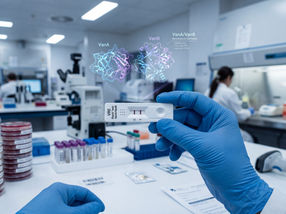
Duke University biomedical engineers and genome researchers have developed a proof-of-principle approach using light to detect infections before patients show symptoms.
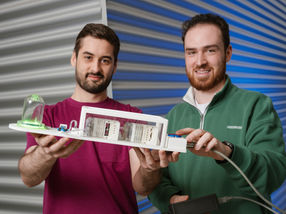
The approach was demonstrated in human samples, and researchers are now developing the technique for placement on a chip, which could provide fast, simple and reliable information about a patient. A diagnostic device based on this chip also could be made portable.
The researchers developed a silver-based nanoparticle that homes in on a specific molecular marker that spills into the bloodstream at the first stages of an infection. When light is aimed at the sample, the nanoparticle attached to a molecular marker will reflect a distinct optical fingerprint.
"We have demonstrated for the first time that the use of these nanoprobes can detect specific genetic materials taken from human samples," said Tuan Vo-Dinh, the R. Eugene and Susie E. Goodson Distinguished Professor of Biomedical Engineering at Duke' Pratt School of Engineering and director of The Fitzpatrick Institute for Photonics at Duke. He is also a professor of chemistry.
The results of the Duke experiments appear in the journal Analytica Chimica Acta. Hsin-Neng Wang, a post-doctoral fellow in Vo-Dinh's laboratory, was the first author of the paper.
Original publication
Other news from the department science
Get the analytics and lab tech industry in your inbox
By submitting this form you agree that LUMITOS AG will send you the newsletter(s) selected above by email. Your data will not be passed on to third parties. Your data will be stored and processed in accordance with our data protection regulations. LUMITOS may contact you by email for the purpose of advertising or market and opinion surveys. You can revoke your consent at any time without giving reasons to LUMITOS AG, Ernst-Augustin-Str. 2, 12489 Berlin, Germany or by e-mail at revoke@lumitos.com with effect for the future. In addition, each email contains a link to unsubscribe from the corresponding newsletter.
Most read news
More news from our other portals
Last viewed contents
Ubiquitous and influential
First 3-D structure of DHHC enzymes reported
Third-highest oxidation state secures rhodium a place on the podium - Discovery is a real surprise

Tears instead of Blood - Sensor with separation capability: diagnosing jaundice using tear fluids
New test could identify smokers at risk of emphysema - CT scans can detect differences in lung blood flow patterns, which identify smokers most at risk of emphysema
Rice study: 'nanostars' could be ultra-sensitive chemical sensors - Scientists observe strong spectral signals from spikes on gold particles
Predicting the mode of action of new anti-cancer drugs with AI - Acceleration of the development of new cancer drugs
Chemists develop MRI-like technique to detect what ails batteries
New corona mass test up to 100 times more sensitive than rapid antigen tests - The innovative corona test "LAMP-Seq"