Special sugar, nanoparticles combine to detect cholera toxin
A complex sugar may someday become one of the most effective weapons to stop the spread of cholera, a disease that has claimed thousands of lives in Haiti since the devastating earthquake last year.
A technique developed by University of Central Florida scientists would allow relief workers to test water sources that could be contaminated with the cholera toxin. In the test, the sugar dextran is coated onto iron oxide nanoparticles and then added to a sample of the water. If the cholera toxin is present, the toxin will bind to the nanoparticles' dextran. This is because dextran looks similar to the cholera toxin receptor (GM1) found on cells' surface in the victim's gut.
The technique likely would be less expensive than those currently available, and it would provide results more quickly, enabling workers to restrict access to contaminated sources and limit the spread of the disease.
"It's really quite amazing," said UCF assistant professor J. Manuel Perez, the lead researcher on the project. "It means we have a quicker diagnostic tool using a simple and relatively cheap sugar-nanoparticle combination."
Early studies also show that the technique could someday be used to treat someone infected with cholera, which is caused by poor sanitation and dirty water, and potentially other diseases, Perez said.
More studies are needed to prove the adaptability of the technique, but its impact could be huge. In countries with poor sanitation, outbreaks caused by drinking contaminated water often prove fatal. Deadly toxins also can result from bioterrorism or food contamination.
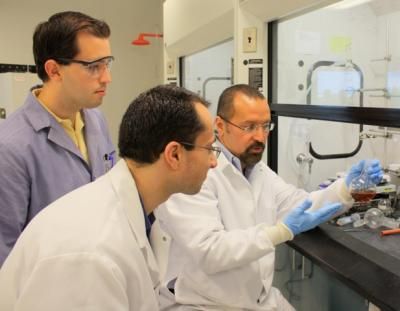
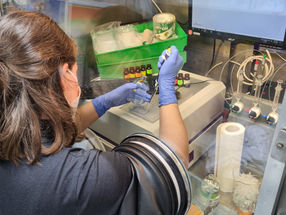
Dr. Perez works in his lab.
Other news from the department science