Bacteria ‘pills’ could detect gut diseases — without the endoscope
“This technology provides a new paradigm for rapid and non-invasive detection of gastrointestinal diseases”
Move over, colonoscopies — researchers report in ACS Sensors that they’ve developed a sensor made of tiny Microspheres packed with blood-sensing bacteria that detect markers of gastrointestinal disease. Taken orally, the miniature “pills” also contain magnetic particles that make them easy to collect from stool. Once excreted from mouse models with colitis, the bacterial sensor detected gastrointestinal bleeding within minutes. The researchers say the bacteria in the sensor could be adapted to detect other gut diseases.
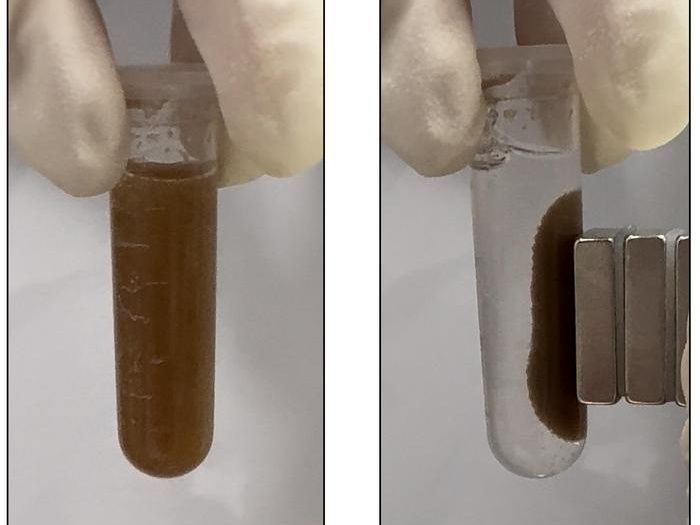
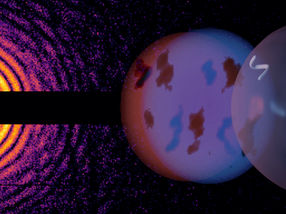
Microspheres that sense gastrointestinal disease are suspended in solution (left), then attracted to the side of a test tube by a magnet (right) so researchers can easily retrieve them from biological samples.
Adapted from ACS Sensors 2025, DOI 10.1021/acssensors.5c01813
“This technology provides a new paradigm for rapid and non-invasive detection of gastrointestinal diseases,” says Ying Zhou, a co-author of the study.
In the U.S., millions of people have colorectal cancer or inflammatory bowel disease, including colitis, which can cause intestinal bleeding, diarrhea and cramping. The gold-standard diagnostic is a colonoscopy using an endoscope, a device with a camera at the end of a long cord that is threaded into the large intestine. Despite its clinical value, many people avoid the procedure because of the preparation involved and its invasiveness. Zhou, Bang-Ce Ye, Zhen-Ping Zou and colleagues are developing gentler methods using bacteria that sense disease biomarkers, such as the red blood cell component heme — a sign of intestinal bleeding.
Previously, the researchers developed heme-sensing bacteria that light up in the presence of blood, but the bacterial sensors break down in the digestive system and are hard to collect. In this current study, they encapsulated their heme-detecting bacteria and magnetic particles inside globs of sodium alginate, a thickening agent used in foods. The process creates tiny hydrogel microsphere sensors that can easily be removed from feces with a magnet after they travel through the body. Initial tests showed that the hydrogel protected the bacteria from simulated digestive fluids but also allowed heme to interact with the bacterial sensor, causing it to glow.
Then, the team administered the microspheres orally to mouse models of colitis, representing disease levels from no activity to severe stages. After the microspheres traveled through the animals’ gastrointestinal systems, the researchers retrieved the sensors from feces with a magnet and found:
- Microsphere cleanup and signal analysis took about 25 minutes.
- As the disease stage progressed, the intensity of the light produced by the sensor increased, which indicated more heme from mouse models with more advanced colitis.
- Assessments of healthy mice given the sensor indicated the microspheres were biocompatible and safe.
Although the sensor still needs to be tested in humans, the researchers say that this method of encapsulating bacterial sensors could diagnose gastrointestinal diseases and monitor treatments and disease progression.
Original publication
Other news from the department science