AI-driven mobile robots team up to tackle chemical synthesis
Chemical research in turbo mode
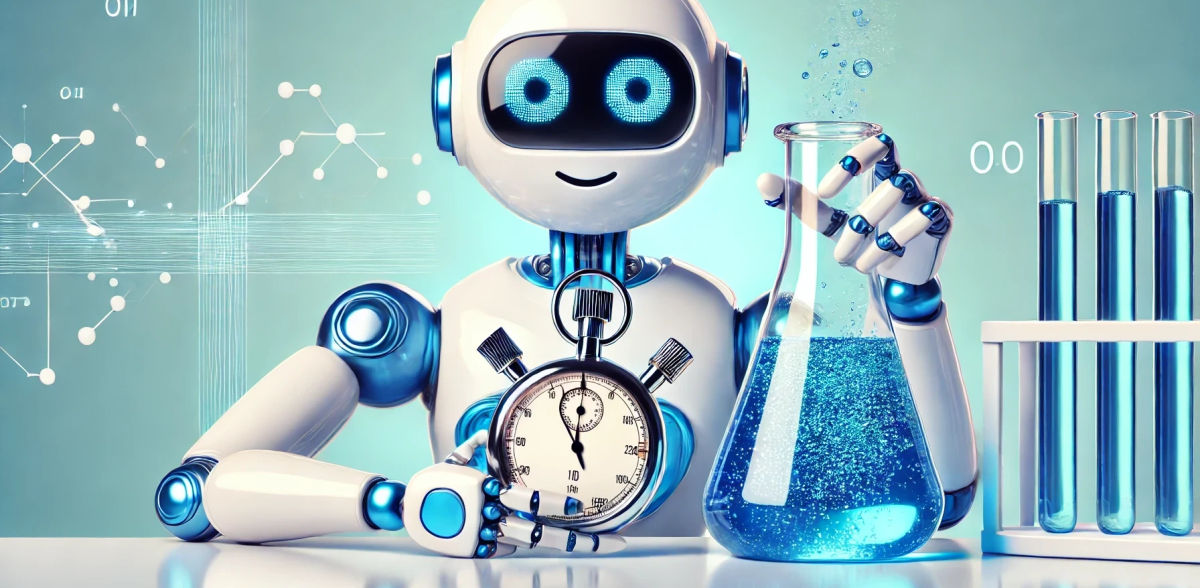
Researchers at the University of Liverpool have developed AI-driven mobile robots that can carry out chemical synthesis research with axtraordinairy efficiency.
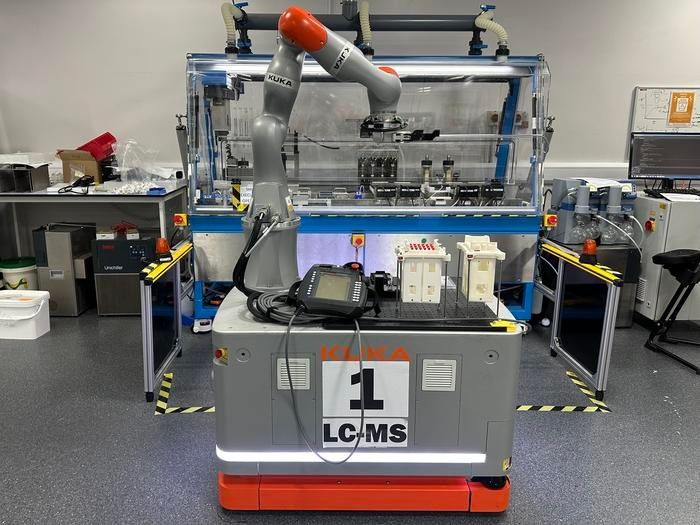
Mobile robots use AI logic to perform exploratory chemistry research tasks.
University of Liverpool
In a study publishing in the journal Nature, researchers show how mobile robots that use AI logic to make decisions were able to perform exploratory chemistry research tasks to the same level as humans, but much faster.
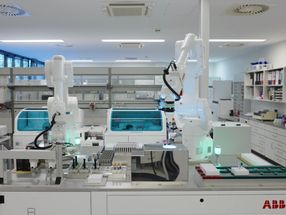
The 1.75-meter-tall mobile robots were designed by the Liverpool team to tackle three primary problems in exploratory chemistry: performing the reactions, analysing the products, and deciding what to do next based on the data.

The two robots performed these tasks in a cooperative manner as they addressed problems in three different areas of chemical synthesis—structural diversification chemistry (relevant to drug discovery), supramolecular host-guest chemistry, and photochemical synthesis.
The results found that with the AI function the mobile robots made the same or similar decisions as a human researcher but these decisions were made on a far quicker timescale than a human, which could take hours.
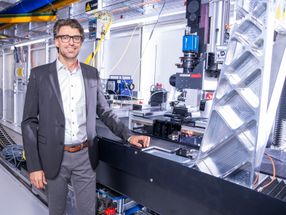
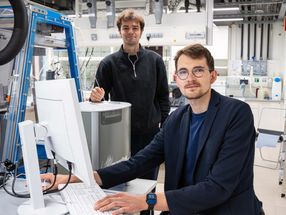
Professor Andrew Cooper from the University of Liverpool’s Department of Chemistry and Materials Innovation Factory, who led the project explained: “Chemical synthesis research is time consuming and expensive, both in the physical experiments and the decisions about what experiments to do next so using intelligent robots provides a way to accelerate this process.
“When people think about robots and chemistry automation, they tend to think about mixing solutions, heating reactions, and so forth. That’s part of it, but the decision making can be at least as time consuming. This is particularly true for exploratory chemistry, where you’re not sure of the outcome. It involves subtle, contextual decisions about whether something is interesting or not, based on multiple datasets. It’s a time-consuming task for research chemists but a tough problem for AI.”
Decision-making is a key problem in exploratory chemistry. For example, a researcher might run several trial reactions and then decide to scale up only the ones that give good reaction yields, or interesting products. This is hard for AI to do as the question of whether something is ‘interesting’ and worth pursuing can have multiple contexts, such as novelty of the reaction product, or the cost and complexity of the synthetic route.
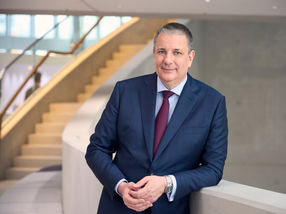
Dr Sriram Vijayakrishnan, a former University of Liverpool PhD student and the Postdoctoral Researcher with the Department of Chemistry who led the synthesis work, explained: “When I did my PhD, I did many of the chemical reactions by hand. Often, collecting and figuring out the analytical data took just as long as setting up the experiments. This data analysis problem becomes even more severe when you start to automate the chemistry. You can end up drowning in data.”
“We tackled this here by building an AI logic for the robots. This processes analytical datasets to make an autonomous decision—for example, whether to proceed to the next step in the reaction. This decision is basically instantaneous, so if the robot does the analysis at 3:00 am, then it will have decided by 3:01 am which reactions to progress. By contrast, it might take a chemist hours to go through the same datasets.”
Professor Cooper added: “The robots have less contextual breadth than a trained researcher so in its current form, it won’t have a “Eureka!” moment. But for the tasks that we gave it here, the AI logic made more or less the same decisions as a synthetic chemist across these three different chemistry problems, and it makes these decisions in the blink of an eye. There is also huge scope to expand the contextual understanding of the AI, for example by using large language models to link it directly to relevant scientific literature.”
In the future, the Liverpool team wants to use this technology to discover chemical reactions that are relevant to pharmaceutical drug synthesis, as well as new materials for applications such as carbon dioxide capture.
Two mobile robots were used in this study, but there is no limit to the size of the robot teams that could be used. Hence, this approach could scale to the largest industrial laboratories.
Original publication
Other news from the department science