Takara Bio and Eppendorf cooperate
Automation of Takara Bio’s Chemistries on Eppendorf’s Automated Pipetting Systems for Significantly Higher Efficiency
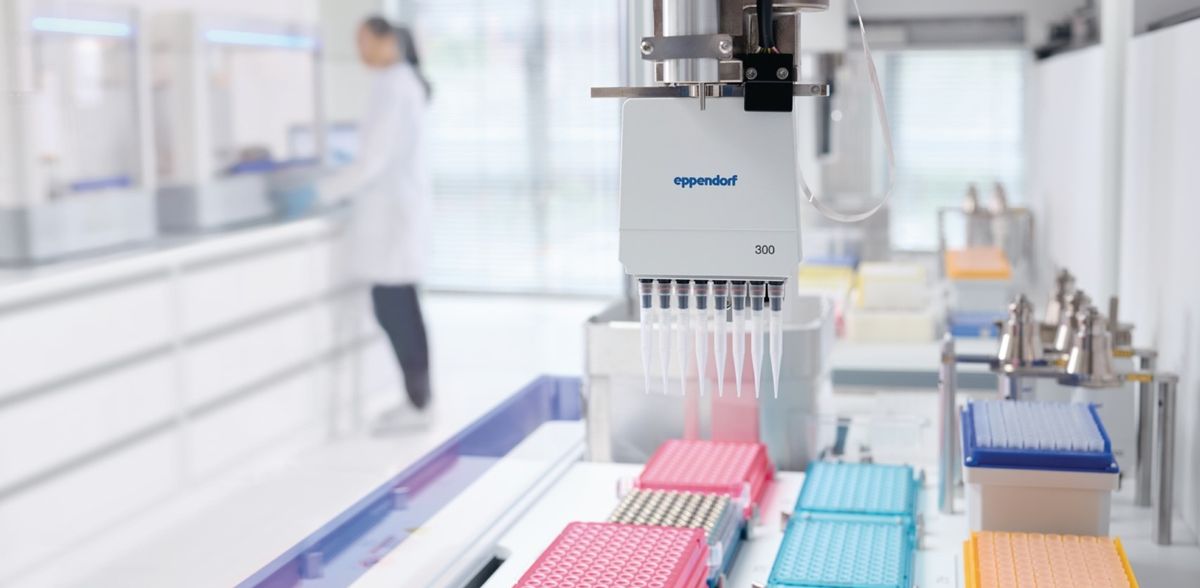
Takara Bio Inc. (Takara Bio) and Eppendorf SE, two renowned leaders in the life science industry, are pleased to announce their collaboration through a strategic co-marketing agreement. This partnership aims at jointly developing cutting-edge solutions to automate Takara Bio’s chemistries on Eppendorf epMotion® automation platforms.
“The integration of Takara Bio's innovative chemistry solutions with Eppendorf's state-of-the-art automation systems will significantly enhance the efficiency and reliability of various laboratory processes, ultimately accelerating scientific discoveries and improving overall research outcomes,” said Yuiko Matsumoto, Product Manager at Takara Bio USA, Inc. Josef Lott, Product Manager at Eppendorf, added, “By automating Takara Bio’s chemistries on Eppendorf’s platforms, researchers will benefit from streamlined workflows, reduced hands-on time, and increased reproducibility, leading to enhanced experimental accuracy and productivity.”
As part of this collaboration, both companies are excited to announce that an application note using Takara Bio’s In-Fusion® Snap Assembly cloning technology on the Eppendorf epMotion 5075 is available now on both Eppendorf and Takara Bio websites, and another protocol using Takara Bio’s SMARTer® stranded total RNA-seq kit on the Eppendorf epMotion 5075 is already in the pipeline for development.
These protocols will serve as a starting point for the implementation of automated workflows, enabling scientists to leverage the combined expertise of Takara Bio and Eppendorf in their day-to-day laboratory operations.
The partnership signifies a commitment to driving innovation in life science research by providing comprehensive solutions that address researchers’ evolving needs. By leveraging each company's unique strengths and technologies, this collaboration aims to empower scientists with advanced tools for a wide range of applications, including genomics, proteomics, and cell biology.
Both Takara Bio and Eppendorf are excited about the potential of this collaboration to automate central applications in laboratories around the globe. By combining their strengths, the two companies are well-positioned to provide researchers with easy-to-implement solutions that drive scientific progress and enable breakthrough discoveries.
Other news from the department business & finance