Sensitive detection of molecules

Short pulses of strong laser light make the concentration of molecules visible

13-Mar-2020 - Germany

To observe molecules, one has to use sensitive tools. Such measurements would be important for determining the concentration of minute particles in blood samples or during neuronal information transfer in the brain. A team of Max Planck scientists has taken a decisive step in this direction - they recently published their results in the journal Science Advances.
MPQ / Thorsten Naeser

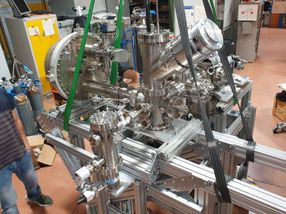
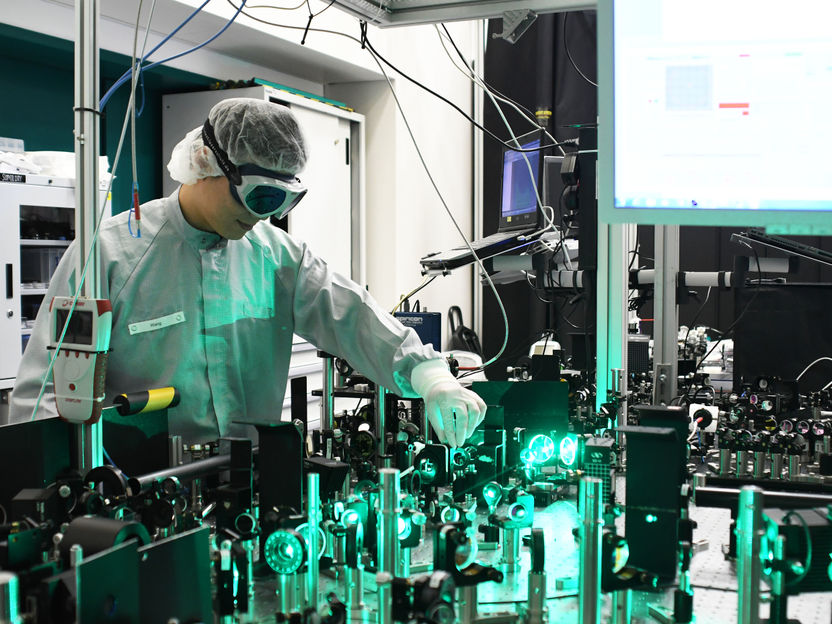
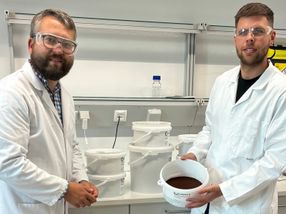
Experimental setup in the laboratory

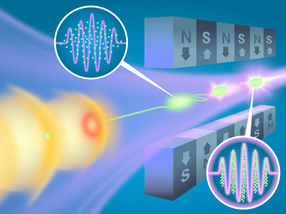
Hanieh Fattahi is a research group leader at the Max Planck Institute for the Science of Light. In a research project with her team from the Max Planck Institute of Quantum Optics in Garching, Germany, she has succeeded to develop a sensitive instrument to measure concentration of molecules. When near-infrared light interacts with molecules, it causes them to vibrate. The vibrating molecules emit coherent light at highly characteristic wavelengths. The new technology uses femtosecond pulses (an inconceivably short time unit of 10-15 seconds) to detect these emitted wavelengths by molecules.

Molecular vibrations in the femtosecond range

As a first demonstration, the researchers used their laser source to study water molecules. "For the first time, we were able to detect the complex electric field of light absorbed by water molecules in the near infrared spectral range," Fattahi says.

Based on these results, Hanieh Fattahi expects to use the developed laser architecture to perform spectroscopic analyses of molecular vibrations in the femtosecond range and how to apply this technique to imaging.

Original publication
Other news from the department science

Most read news
More news from our other portals
See the theme worlds for related content

Topic World Spectroscopy

Investigation with spectroscopy gives us unique insights into the composition and structure of materials. From UV-Vis spectroscopy to infrared and Raman spectroscopy to fluorescence and atomic absorption spectroscopy, spectroscopy offers us a wide range of analytical techniques to precisely characterize substances. Immerse yourself in the fascinating world of spectroscopy!

20+ products
5+ whitepaper
15+ brochures
View topic world
Topic World Spectroscopy

Topic World Spectroscopy

Investigation with spectroscopy gives us unique insights into the composition and structure of materials. From UV-Vis spectroscopy to infrared and Raman spectroscopy to fluorescence and atomic absorption spectroscopy, spectroscopy offers us a wide range of analytical techniques to precisely characterize substances. Immerse yourself in the fascinating world of spectroscopy!

20+ products
5+ whitepaper
15+ brochures

Last viewed contents

Four-legged, dog-like robot ‘sniffs’ hazardous gases in inaccessible environments - Portable mass spectrometry for on-site detection of hazardous volatile organic compounds via robotic extractive sampling

Four-legged, dog-like robot ‘sniffs’ hazardous gases in inaccessible environments - Portable mass spectrometry for on-site detection of hazardous volatile organic compounds via robotic extractive sampling

Research team decodes symbiotic interactions in marine algae using raman spectroscopy - Implications for biotechnology and environmental protection

Research team decodes symbiotic interactions in marine algae using raman spectroscopy - Implications for biotechnology and environmental protection

Researchers use functional MRI to study small-scale strokes

Analytica 2024: a guide to Laboratory 4.0 - Greater efficiency through laboratory robots and artificial intelligence

Analytica 2024: a guide to Laboratory 4.0 - Greater efficiency through laboratory robots and artificial intelligence

New sensors can detect single protein molecules - Modified carbon nanotubes could be used to track protein production by individual cells.

New sensors can detect single protein molecules - Modified carbon nanotubes could be used to track protein production by individual cells.

Chemists design 'miniecosystems' to test drug function

Chemists design 'miniecosystems' to test drug function

Why ICP-OES User Are Moving up to the Latest Technology -

Why ICP-OES User Are Moving up to the Latest Technology -

Changes to Executive Board of Carl Zeiss AG - Dr. Ludwin Monz will be stepping down from his position as President and CEO of the Executive Board of Carl Zeiss Meditec AG at his own request

Changes to Executive Board of Carl Zeiss AG - Dr. Ludwin Monz will be stepping down from his position as President and CEO of the Executive Board of Carl Zeiss Meditec AG at his own request

LUMiSizer | Nanoparticle analyzers | LUM

LUMiSizer | Nanoparticle analyzers | LUM

Machine learning assisted structure analysis reveals SARS-CoV-2 virus tactics - The proteins of Covid-19

Machine learning assisted structure analysis reveals SARS-CoV-2 virus tactics - The proteins of Covid-19

Tumor diagnostics: AI model detects more than 170 types of cancer - Looking into the genome instead of into the tissue

Tumor diagnostics: AI model detects more than 170 types of cancer - Looking into the genome instead of into the tissue

Adipose analysis on microfluidic chips - Platform works with minute quantities of liquid to grow cells and study their development