Scientists identify schizophrenia's 'Rosetta Stone' gene
Breakthrough reveals gene's influence in a vulnerable period of the brain's development
Scientists have identified a critical function of what they believe to be schizophrenia's "Rosetta Stone" gene that could hold the key to decoding the function of all genes involved in the disease.
The breakthrough has revealed a vulnerable period in the early stages of the brain's development that researchers hope can be targeted for future efforts in reversing schizophrenia.
In a paper published in the journal Science, neuroscientists from Cardiff University describe having uncovered the previously unknown influence of a gene in ensuring healthy brain development.
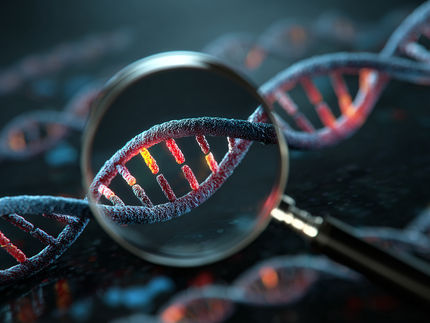
The gene is known as 'disrupted in schizophrenia-1' (DISC-1). Past studies have shown that when mutated, the gene is a high risk factor for mental illness including schizophrenia, major clinical depression and bipolar disorder.
The aim of this latest study was to determine whether DISC-1's interactions with other proteins, early on in the brain's development, had a bearing on the brain's ability to adapt its structure and function (also known as 'plasticity') later on in adulthood.
Many genes responsible for the creation of synaptic proteins have previously shown to be strongly linked to schizophrenia and other brain disorders, but until now the reasons have not been understood.
The team, led by Professor Kevin Fox from Cardiff University's School of Biosciences, found that in order for healthy development of the brain's synapses to take place, the DISC-1 gene first needs to bind with two other molecules known as 'Lis' and 'Nudel'.
Their experiments in mice revealed that by preventing DISC-1 from binding with these molecules - using a protein-releasing drug called Tamoxifen at an early stage of the brain's development - it would lack plasticity once it grows to its adult state, preventing cells (cortical neurons) in the brain's largest region from being able to form synapses.
The ability to form coherent thoughts and to properly perceive the world is damaged as a consequence of this.
Preventing DISC-1 from binding with 'Lis' and 'Nudel' molecules, when the brain was fully formed, showed no effect on its plasticity. However, the researchers were able to pinpoint a seven-day window early on in the brain's development - one week after birth - where failure to bind had an irreversible effect on the brain's plasticity later on in life.
"We believe that DISC-1 is schizophrenia's Rosetta Stone gene and could hold the master key to help us unlock our understanding of the role played by all risk genes involved in the disease," said Professor Fox.
"The potential of what we now know about this gene is immense. We have identified a critical period during brain development that directs us to test whether other schizophrenia risk genes affecting different regions of the brain create their malfunction during their own critical period.
"The challenge ahead lies in finding a way of treating people during this critical period or in finding ways of reversing the problem during adulthood by returning plasticity to the brain. This, we hope, could one day help to prevent the manifestation or recurrence of schizophrenia symptoms altogether."
Professor Jeremy Hall, an academic mental health clinician and director of Cardiff University's Neuroscience and Mental Health Research Institute, said:
"This paper provides strong experimental evidence that subtle changes early on in life can lead to much bigger effects in adulthood. This helps explain how early life events can increase the risk of adult mental health disorders like schizophrenia."
Schizophrenia affects around 1% of the global population and an estimated 635,000 people in the UK will at some stage in their lives be affected by the condition. The projected cost of schizophrenia to society is around £11.8 billion a year.
The symptoms of schizophrenia can be extremely disruptive, and have a large impact on a person's ability to carry out everyday tasks, such as going to work, maintaining relationships and caring for themselves or others.

Other news from the department science
















Most read news






More news from our other portals



























Last viewed contents

Electronic skin: multisensory hybrid material - Even more sensitive than a human fingertip

Crystallography for the misfit crystals - Advanced algorithms plus an exceptional X-ray laser can reveal the structures of not-so-neat-and-tidy materials unattainable by other techniques
Watching drug activity in single molecule
Smaller is better for nanotube analysis

Blood-based test accurately identifies viral infection before symptoms develop - The study, conducted prior to COVID-19, has broad potential for pandemic responses
'Sifting' liquid at the molecular level - Drexel University engineers develop method for using nanotubes to separate liquids
Fastest sensor for heat flow tested - Relevant for alternative fuels and hydrogen
Online Microscopy Platform: See-through for Everyone! - One can focus through the high-resolution specimens just like on a microscope, in order to see details in sharp focus that are located in different layers
Research under high pressure - Why 3,000 bars are needed to take a comprehensive look at a protein
New algorithm sharpens focus of world's most powerful microscopes - Scientists develop a technique that improves the resolution of cryo-electron microscopy
