The secret behind NIST's new gas detector? Chirp before sniffing
Trace gas detection, the ability to detect a scant quantity of a particular molecule — a whiff of formaldehyde or a hint of acetone — in a vast sea of others, underlies many important applications, from medical tests to air pollution detectors to bomb sniffers. Now, a sensor recently developed at the National Institute of Standards and Technology (NIST) that is hundreds of times faster and more sensitive than other similar technologies may make such detectors portable, economical and fast enough to be used everywhere.
According to the NIST investigators, the new sensor overcomes many of the difficulties associated with trace gas detection, a technique also used widely in industry to measure contaminants and ensure quality in manufacturing. A trace level of a particular gas can indicate a problem exists nearby, but many sensors are only able to spot a specific type of gas, and some only after a long time spent analyzing a sample. The NIST sensor, however, works quickly and efficiently.
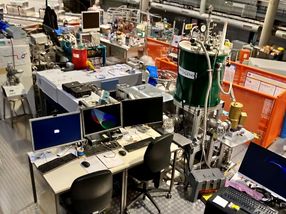
"This new sensor can simultaneously detect many different trace gases at very fast rates and with high sensitivity," says NIST chemist Kevin Douglass. "It's also built from off-the-shelf technology that you can carry in your hands. We feel it has great commercial potential."
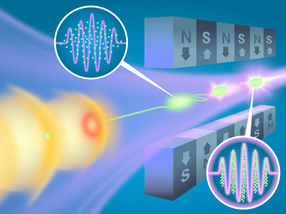
The key to the new sensor is the use of radiation at "terahertz" frequencies — between infrared and microwaves. Terahertz waves can make gas molecules rotate at rates unique to each type of gas, which implies the waves hold great promise for identifying gases and measuring how much gas is present. The NIST team has developed the technology to rotate the molecules "in phase" — imagine synchronized swimmers — and detect the spinning molecules easily as they gradually fall out of phase with each other.
A major hurdle the new technology overcomes is that it is now possible to look at nearly all possible gas molecules instantly using terahertz frequencies. Previously, it was necessary to expose molecules to a vast range of terahertz frequencies—slowly, one after another. Because no technology existed that could run through the entire frequency band quickly and easily, the NIST team had to teach their off-the-shelf equipment to "chirp."
"The sensor sends a quick series of waves that run the range from low frequency to high, sort of like the 'chirp' of a bird call," says Douglass. "No other terahertz sensor can do this, and it's why ours works so fast. Teaching it to chirp in a repeatable way has been one of our team's main innovations, along with the mathematical analysis tools that help it figure out what gas you're looking at."
Original publication

Other news from the department science