How DNA can be decoded more easily
New Software Simplifies Analysis of “Jumping Genes”

Research by Professor Ralph Panstruga and his team at RWTH is helping to significantly simplify DNA sequence analysis. Their findings have now been published in Nature Communications.
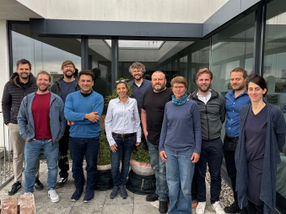
Until now, detecting and analyzing specific sections of genetic material has been a highly complex and time-consuming task. A team led by RWTH Professor Ralph Panstruga from the Unit of Plant Molecular Cell Biology has developed a tool to streamline this process.
TEtrimmer is software designed to identify and compare DNA segments known as transposable elements (TEs), or “jumping genes.” The study, carried out in collaboration with Professor Tony Heitkam (Chair of Molecular Botany) and Assistant Professor Lisa Fürtauer (Department of Molecular Plant Physiology), is now available in Nature Communications.
Transposable elements are repetitive DNA segments that can move within genomes. First discovered in 1948 by Nobel Prize-winning geneticist Barbara McClintock in corn plants, they are now known to occur in nearly all studied organisms – and in humans, they make up nearly half of the genome. Once dismissed as “junk DNA,” they are now recognized as playing central roles in evolution, organismal development, and even immune system function. They can also carry regulatory sequences that switch genes on or off.
Despite their importance, TEs remain notoriously difficult to analyze. Mutations, fragmentation, and nested insertions make accurate annotation – correctly identifying TEs across the genome – extremely complex. Existing software often produces incomplete or inaccurate results, forcing experts to review and correct data manually.
That is where the RWTH researchers’ study, “TEtrimmer: A Tool to Automate the Manual Curation of Transposable Elements,” comes in. The study introduces TEtrimmer, a software tool that combines phylogenetic methods (used to study evolutionary relationships) with machine learning to group TE sequences, and applies a new sliding-window strategy to filter poorly conserved regions. It also features a user-friendly graphical interface and detailed reporting.
TEtrimmer bridges the gap between painstaking manual annotation and unreliable automated tools. It makes the analysis of transposable elements not only faster and more accurate, but also accessible to a much wider scientific community.
Original publication
Other news from the department science