Researchers uncover new water monitoring technique
New method simultaneously monitors clumps and the mixing intensity in a single step
water is a vital resource, and clean water is a necessity. Texas A&M University researchers have developed a new technique to monitor one of the key processes of purifying water in real time.
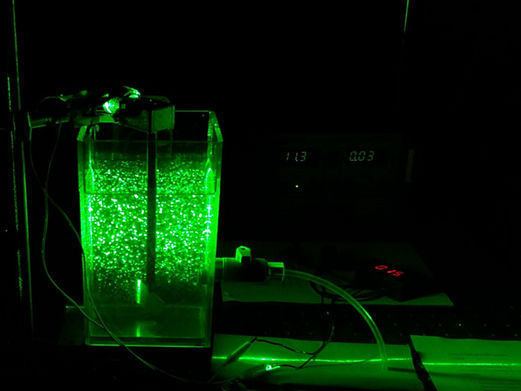
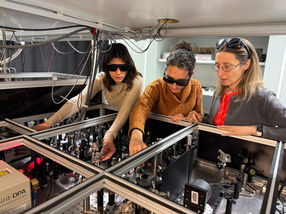
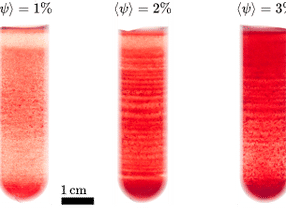
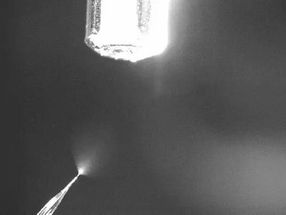
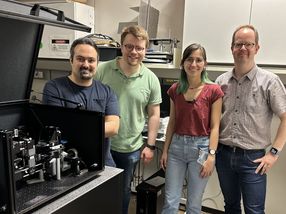
Researchers used a green laser on a jar filled with water to show how the water moves and how contaminants clump together.
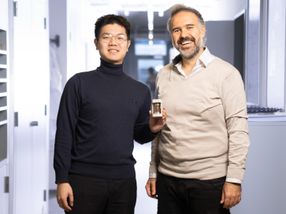
Dr. Kuang-An Chang, Texas A&M Engineering
Raw water contains microscopic pathogens that are too small to remove during water and wastewater treatment easily. Chemicals are added to form large clumps called flocs, which are easily filtered out. Flocculation is the process used in water treatment to remove suspended particles from the water.
"Coagulant chemicals need to be added to purify drinking water and remove turbidity (cloudiness) and microbes that are too small to be visible to the naked eye," said Dr. Kuang-An Chang, professor in the Zachry Department of Civil and Environmental Engineering at Texas A&M.
But it is crucial to properly mix the water and chemicals so the pathogens properly clump. If mixing is low, clumps won't form. If mixing is too intense, clumps will form but quickly break apart.
The new method simultaneously monitors the size and shape of the clumps and the mixing intensity in a single step, in real time, allowing for more accurate measurements. The value of the research lies in the fact that mixing is one of the most energy-consuming processes during water and wastewater purification.
The results of this study were recently published in the journal ACS ES&T Engineering and featured on the cover of its February issue.
"We developed a brand-new technique to non-intrusively monitor the mixing so that we can precisely control it, quantify heterogeneities within the reactor and potentially optimize it to create flocs of desired characteristics while simultaneously minimizing energy consumption," he said.
This first-of-its-kind technique can be used to improve flocculation, meaning successfully removing contaminants by growing large enough clumps while minimizing the energy used.
"All previous research did this in two steps," Chang said. "In the old approach, first, artificial particles of known characteristics would be added to monitor mixing. Then, a second experiment would be done with ‘identical’ settings and the actual clumps would be monitored.
"We essentially halved the workload and improved precision because there are always statistical differences any time you do two experiments."
This interdisciplinary project was a collaboration between Chang, who focuses on fluid dynamics, and Dr. Shankar Chellam, professor of civil and environmental engineering and A.P. and Florence Wiley Professor III, who focuses on water/wastewater treatment.
Three graduate students performed the experimental work and associated numerical analysis: Kaleisha Miller, Kyungho Kim and Wei-Liang Chuang, who is now an assistant professor at National Sun Yat-sen University in Taiwan.
Original publication
Other news from the department science