New Insights into Kidney Disease with Tropical Frog Models
AI analyzes data from light-sheet microscopy
Using cutting-edge genetic engineering, UZH researchers have developed a model to study hereditary kidney disease with the help of tropical frogs. The method allows them to collect large amounts of data on anomalies, which can then be analyzed using artificial intelligence. The research opens up new opportunities in the search for new treatment approaches for the hitherto incurable disease.
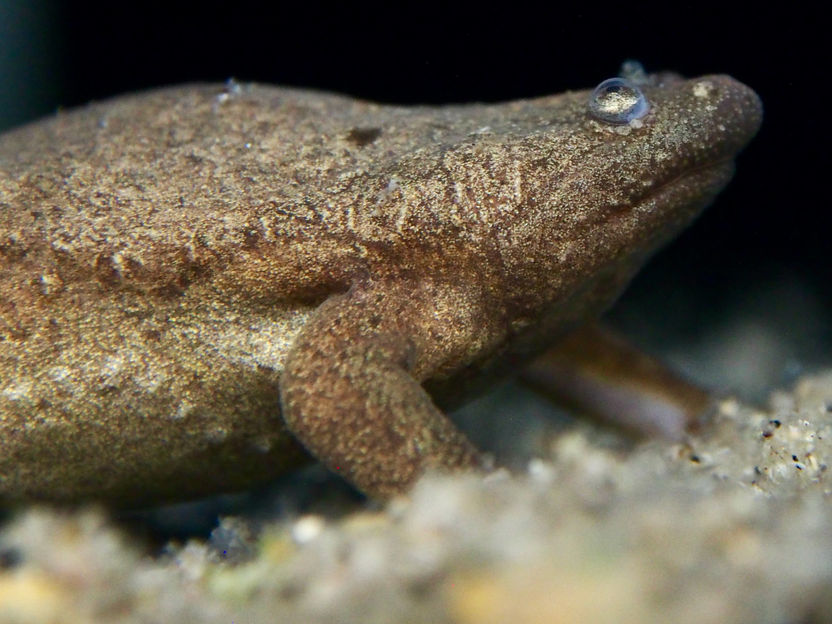
Researchers used the tropical frog "Xenopus tropicalis" to model human hereditary diseases.
Soeren Lienkamp
Frogs’ anatomy and organ function are strikingly similar to those of humans. An international team led by Soeren Lienkamp, professor at the Institute of Anatomy at UZH, has now exploited this similarity by using a tiny tropical frog called "Xenopus tropicalis" to model human genetic diseases. The researchers focused on polycystic kidney disease, a congenital and currently incurable form of progressive kidney deterioration, and replicated it in frogs.
Observing disease processes in real time
Using CRISPR/Cas9, a methodology for turning off gene function, the scientists targeted genes known to play a role in cystic kidney disease. “Our novel frog models develop cysts in the kidneys within only a few days, allowing us to observe these disease processes in real time for the first time,” says lead author Thomas Naert. While most genetic studies are performed on mice, frogs have features that make them well-suited for larger scale studies. “One frog couple can produce hundreds or even thousands of eggs,” says Naert. “That’s why you see such large numbers of tadpoles in the Swiss lakes in springtime.” Similarly, in the lab large numbers of Xenopus tropicalis tadpoles can be manipulated to develop cystic kidney diseases.
AI analyzes data from light-sheet microscopy
To analyze the data from such a large number of animals, the team employed a technique called light-sheet microscopy, which produced a 3D reconstruction of the entire tadpole and all its organs. Much like magnetic resonance imaging, light-sheet techniques make it possible to see through tissues in tadpoles to find disease-affected organs. The collected data was then processed using artificial intelligence to allow rapid, automated assessment of disease. “While it would normally take my team several days or even weeks to analyze data from hundreds of tadpoles, artificial intelligence can now do this task in a matter of hours,” says Lienkamp.
The findings from frog models analyzed in this way provide new insights into the early processes of polycystic kidney disease. These insights will form the basis for developing new treatment approaches for affected patients.
Original publication
Other news from the department science






Most read news



More news from our other portals


















Last viewed contents

Analytica conference 2020 for the first time virtual - Topics in focus: Antibiotic resistance and the “laboratory of the future”
Schizophrenia manifests itself in the brain structure - The symptoms of schizophrenia vary greatly from person to person
The race is on for new lithium ion batteries - Battery consortium headed by BASF receives € 21 million sponsorship from German Ministry of Education and Research
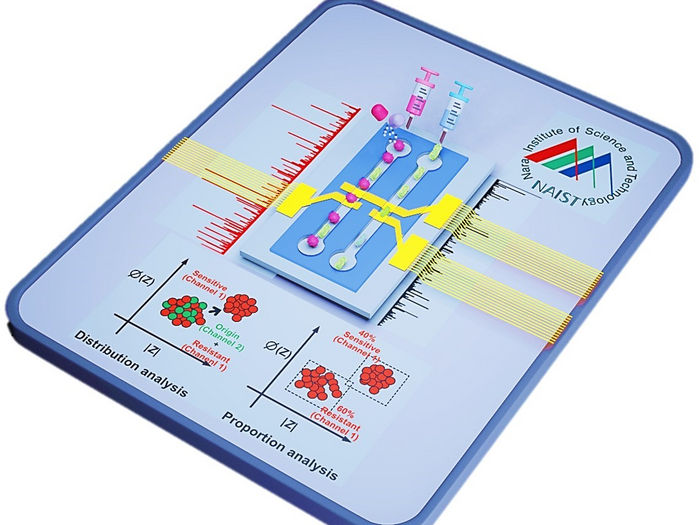
Antibiotic resistance testing no longer impeded by time - Researchers have developed a novel method for antibiotic resistance testing that might transform microbial screening in clinical and research labs
A new way to stimulate cellular recycling process

Thermo Fisher Scientific and QIAGEN N.V. Agree on Amended Terms to Acquisition Agreement - Offer price increased
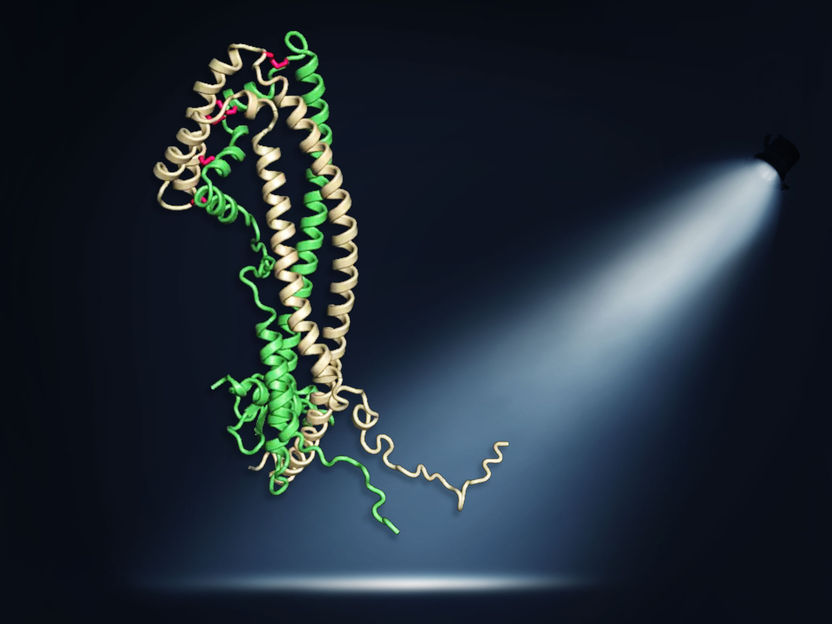
New insights into the function of a risk factor for Alzheimer’s disease - Researchers decipher the structure-function relationship of the multifunctional protein clusterin for the first time

Rigaku opens Rigaku Technology Center Taiwan - Advancing regional growth through engineering and collaboration in Taiwan and beyond

Multiplexed Morse signals from cells
Lab901 and Biofortuna to collaborate on automated PCR Dx for HLA and Coeliac disease
Closing in on the elusive rotational-vibrational CH5+ spectra