Diagnostic biosensor quickly detects SARS-CoV-2 from nasopharyngeal swabs
New test analyzes patient samples without any sample preparation steps
According to many experts, early diagnosis and management are critical for slowing the spread of SARS-CoV-2, the new coronavirus that causes COVID-19. Therefore, the race is on to develop diagnostic tests for the virus that are faster, easier and more accurate than existing ones. Now, researchers reporting in ACS Nano have developed a field-effect transistor-based biosensor that detects SARS-CoV-2 in nasopharyngeal swabs from patients with COVID-19, in less than one minute.
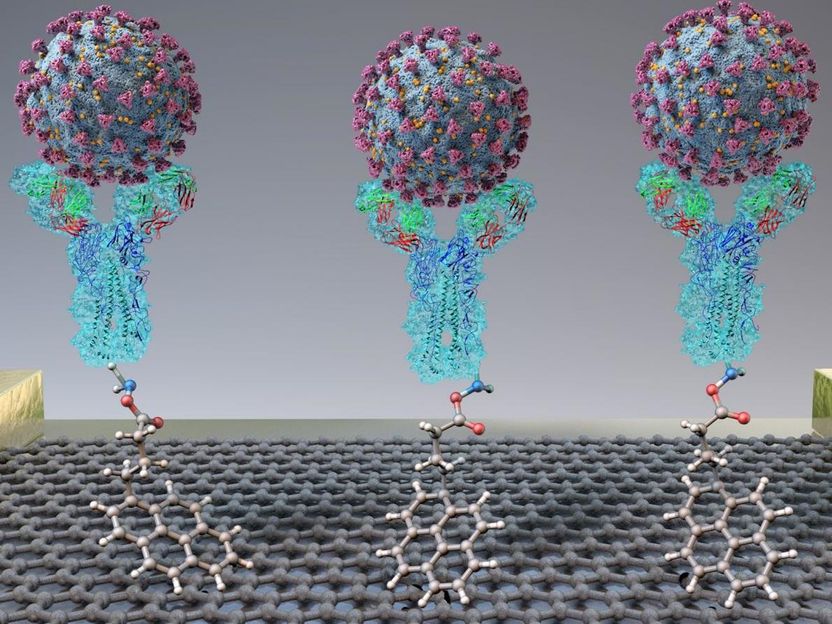
A new test quickly detects SARS-CoV-2 (spheres) through binding to antibodies (Y-shapes) on a field-effect transistor.
Adapted from ACS Nano 2020, DOI: 10.1021/acsnano.0c02823
Currently, most diagnostic tests for COVID-19 rely on a technique called real-time reverse transcription-polymerase chain reaction (RT-PCR), which amplifies SARS-CoV-2 RNA from patient swabs so that tiny amounts of the virus can be detected. However, the method takes at least 3 hours, including a step to prepare the viral RNA for analysis. Edmond Changkyun Park, Seung Il Kim and colleagues wanted to develop a faster diagnostic test that could analyze patient samples directly from a tube of buffer containing the swabs, without any sample preparation steps.
The team based their test on a field-effect transistor -- a sheet of graphene with high electronic conductivity. The researchers attached antibodies against the SARS-CoV-2 spike protein to the graphene. When they added either purified spike protein or cultured SARS-CoV-2 virus to the sensor, binding to the antibody caused a change in the electrical current. Next, the team tested the technique on nasopharyngeal swabs collected from patients with COVID-19 or healthy controls. Without any sample preparation, the sensor could discriminate between samples from sick and healthy patients. The new test was about 2-4 times less sensitive than RT-PCR, but different materials could be explored to improve the signal-to-noise ratio, the researchers say.
Original publication

Other news from the department science















These products might interest you